
Nouvelle
From Geneva to Yerevan | International Geneva @ UN Biodiversity Conference

The 2026 UN Biodiversity Conference will take place in Yerevan, Armenia from 19 to 30 October 2026. This major event, convened under the theme “Taking Action for Nature” includes concurrent meetings of the governing bodies of the Convention and its Protocols: the 17th meeting of the Conference of the Parties to the Convention (COP17), the twelfth meeting of the Conference of the Parties serving as the Meeting of the Parties to the Cartagena Protocol on Biosafety (CP-MOP12), and the sixth meeting of the Conference of the Parties serving as the Meeting of the Parties to the Nagoya Protocol on Access to Genetic Resources and the Fair and Equitable Sharing of Benefits arising from their Utilization (NP-MOP6).
About the 2026 UN Biodiversity Conference
The 2026 UN Biodiversity Conference will take place in Yerevan, Armenia, from 19 to 30 October 2026. This major event, convened under the theme “Taking Action for Nature” included concurrent meetings of the governing bodies of the Convention and its Protocols, including the 17th meeting of the Conference of the Parties to the Convention (COP17), the twelfth meeting of the Conference of the Parties serving as the Meeting of the Parties to the Cartagena Protocol on Biosafety (CP-MOP12), and the sixth meeting of the Conference of the Parties serving as the Meeting of the Parties to the Nagoya Protocol on Access to Genetic Resources and the Fair and Equitable Sharing of Benefits arising from their Utilization (NP-MOP6).
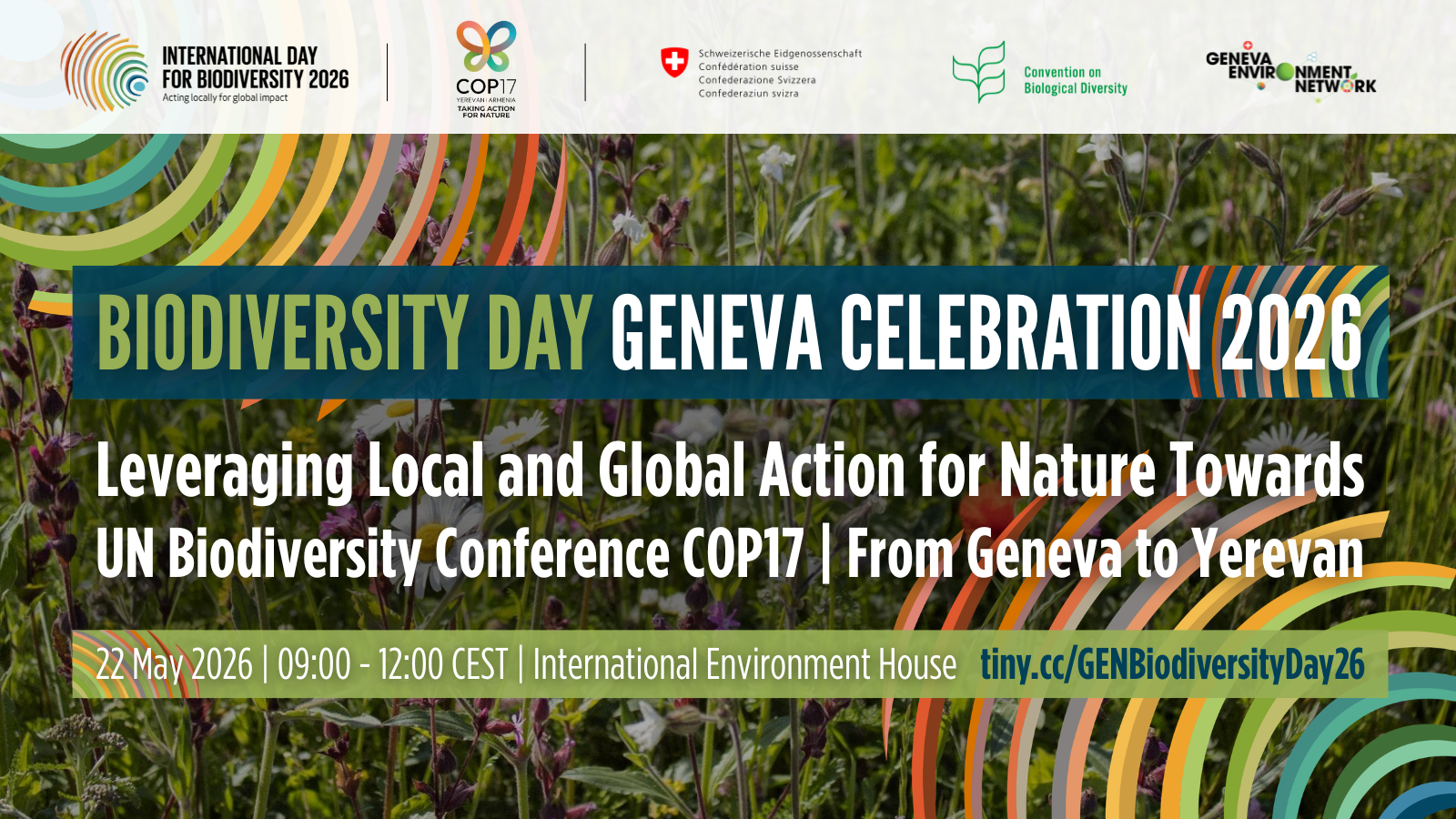
Leveraging Local and Global Action for Nature Towards UN Biodiversity Conference COP17 | From Geneva to Yerevan | International Day for Biological Diversity
In preparation for the 2026 UN Biodiversity Conference, leading experts from key Geneva-based UN institutions and processes speaking at the Geneva Celebration of the International Day for Biological Diversity provided updates on preparations for this major milestone. They also reflected on the need for inclusive, participatory and impactful whole-of-society action for nature.
GEN Events
In preparation for the 2026 UN Biodiversity Conference, the Geneva Environment Network and its partners have organized multiple events.


Geneva Stakeholders Engagement
As a global hub for biodiversity governance, there will be a strong multilateral Geneva presence at the UN Biodiversity Conference, providing contributions to the events and discussions. Additional organizations will be included as the Conference approaches.

CITES
CITES (the Convention on International Trade in Endangered Species of Wild Fauna and Flora) is an international agreement between governments. It aims to ensure that international trade in specimens of wild animals and plants does not threaten the survival of the species.

Convention on Wetlands
The Convention on Wetlands is the intergovernmental treaty that provides the framework for the conservation and wise use of wetlands and their resources.

International Labour Organization
ILO supports the integration of biodiversity with the promotion of decent work.

ISO
ISO standards play a crucial role in supporting global efforts to combat biodiversity loss and implement the Kunming-Montreal Global Biodiversity Framework (GBF).

IUCN
IUCN (International Union for Conservation of Nature) is a membership Union of government and civil society organisations. It works to advance sustainable development and create a just world that values and conserves nature.

OHCHR
A safe, clean, healthy, and sustainable environment is essential to the full enjoyment of a wide range of human rights, including the rights to health, food, water and sanitation.

UNEP Europe Office
UNEP delivers science-based solutions to prevent, halt and reverse the decline of nature and foster sustainable development, maintaining nature’s contributions to people and sustaining a healthy planet.

UN Trade and Development
UNCTAD launched in 1996 the BioTrade Initiative to support the objectives of the Convention on Biological Diversity. Since then, the Initiative has developed a unique portfolio of global, regional and country programmes as well as a network of partners and practitioners.

World Health Organization
WHO develops biodiversity-informed public health plans, global evidence summaries on biodiversity and health, assists countries in assessing health vulnerabilities from biodiversity loss and monitors biodiversity-informed health policies to ensure human rights, equity, and Health for All are upheld.

WBCSD
WBCSD’s Nature Action Imperative supports members in incorporating nature into decision-making, while developing credible and impactful nature strategies aligned with leading voluntary and regulatory frameworks.

WWF
WWF works to help local communities conserve the natural resources they depend upon; transform markets and policies toward sustainability; and protect and restore species and their habitats. Its efforts ensure that the value of nature is reflected in decision-making from a local to a global scale.
Links
- Addressing Biodiversity Loss and the Role of Geneva
- International Day for Biological Diversity | GEN
- CBD COP 17 Roundup Newsletter | UN Biodiversity
Latest News
- Business for Land at COP17 to strengthen partnerships for regenerative landscapes | UNCCD | 14 August 2026
- What is COP17’s Secret Ingredient? | UN Volunteers | 14 August 2026
- UNCCD ‘Land’ COP17 | UNDP | 10 August 2026
- Mongolia-led project to tackle land degradation, as UNCCD COP17 approaches | IUCN | 7 August 2026
- The hidden cause of rising food prices, water shortages and migration | WWF | 6 August 2026
- This month’s biggest land story was 110 quadrillion kilometres long | Cultivate | 3 August 2026
- Why is the UN COP17 summit on droughts and land restoration so important? | WWF | 29 July 2026
- WWF UNCCD COP17 Expectations | WWF | July 2026
- Business4Land | UNCCD
- COP Resource Hub | Sustainable Development Solutions Network