
Événement Conférence
Strengthening the Science-Policy Interface to Address the Triple Planetary Crisis

17 Déc 2025
09:00 – 14:00
Lieu: International Environment House II
Organisation: Geneva Environment Network, Suisse
Geneva, as a global center for multilateral diplomacy and environmental governance, plays an essential role in addressing the interconnected triple planetary crisis of climate change, biodiversity and land degradation, and pollution and waste confronting our planet. Building on the launch of the seventh edition of the Global Environmental Outlook (GEO-7) at the Seventh United Nations Environment Assembly (UNEA-7), and in the lead-up to the inaugural session of the Plenary of the ISP-CWP as well as the plenaries of other science-policy platforms, this event served to raise awareness of science-policy processes and underscore their critical contribution to shaping informed international decision-making.
About this Event
Science-Policy Interfaces (SPIs) are critical for translating scientific knowledge into effective and actionable policy. As the world confronts the triple planetary crisis—climate change, biodiversity loss, and pollution—the demand for robust, interdisciplinary, and inclusive SPIs has never been more important.
In response to each of these interconnected crises, independent, international, and intergovernmental bodies have been established to support policymakers in making informed, science-based decisions, such as:
- For the climate change crisis — the Intergovernmental Panel on Climate Change (or IPCC), established in 1988, with a secretariat in Geneva.
- For biodiversity loss crisis — the Intergovernmental Science-Policy Platform on Biodiversity and Ecosystem Services (or IPBES), established in 2012, with a secretariat in Bonn.
- For the pollution crisis — the Intergovernmental Science-Policy Panel on Chemicals, Waste and Pollution (or ISP-CWP), established in 2025, completing the ‘trifecta‘ of international science-policy bodies to respond to the triple planetary crisis.
These and other SPIs play an important role in support of global Multilateral Environmental Agreements (MEAs) negotiated and agreed upon by Member States to promote international cooperation, as well as the global deals that set agreed goals and targets to tackle the triple planetary crisis — Paris Agreement, the Kunming-Montreal Global Biodiversity Framework, Global Framework on Chemicals – For a Planet Free of Harm from Chemicals and Waste (GFC) — and the instruments for their implementation at the national level.
On the occasion of the inaugural session of the Plenary of the ISP-CWP, scheduled to take place in Geneva in February 2026, the Geneva Environment Network hosted a Science-Policy Day. The event takes place after the launch of the seventh edition of the Global Environmental Outlook (GEO-7) at the Seventh United Nations Environment Assembly (UNEA-7).
Through lightning talks, fireside chats and an interactive fair, this event provided opportunities to engage and exchange with leading experts, stakeholders and Members States working in the interface of science and policy, fostering collaboration to advance solutions for today’s environmental challenges.
- Doors Open | From 8.30 CET
- Welcome & Opening Remarks | 9.00-9.15 CET
- Lightning Talks: Triple Planetary Crisis | 9.15-9.30 CET
- Fair / Science-Policy Marketplace | Until 10.00 CET
- Lightning Talks: Triple Planetary Crisis | 10.00-10.15 CET
- High-Level Panel | The Value of Science-Policy Interfaces to Address the Triple Planetary Crisis | 10.15-11.00 CET
- Lightning Talks: Triple Planetary Crisis | 11.00-11.15 CET
- Recent and Upcoming Milestones in Addressing the Triple Planetary Crisis | ISP-CWP P1 & IPBES-12 & IPCC-64 | 11.15-12.00 CET
- Fireside Chat: How Can Governments and Stakeholders Engage in SPIs Moving Forward | 12.00-12.35 CET
- Closing | 12.35-12.45 CET
- Fair and Networking Reception | From 12.45 CET
Interactive Science-Policy Fair
The International Environment House II opened its doors for the Interactive Science-Policy Fair, showcasing how international Geneva is translating knowledge into effective and actionable policy. In the face of the triple planetary crisis of climate change, biodiversity loss, and pollution, many actors in Geneva, as a global center for multilateral diplomacy and environmental governance, are actively working in the interstices of science and policy to address the planetary crisis.
Taking place in parallel to discussions, the Fair showcased Geneva expertise through the work on environmental issues, chemical governance, health, human rights, trade and many relevant areas of work. The Fair raised awareness of science-policy processes and their role in shaping informed international policy, with an emphasis on fostering collaboration and highlighting links and synergies among SPIs.
Many thanks to the different organizations that shared their work on science-policy at the Fair!
Welcome and Opening
Opening the day, this section was an occasion to underscore the indispensable role of Science-Policy Interfaces in bridging knowledge and action, enabling policymakers to make informed, evidence-based decisions to confront the triple planetary crisis of climate change, nature loss, and pollution. From the IPCC on climate change, to IPBES on biodiversity, and now the ISP-CWP on pollution, these international bodies reflect a collective commitment to strengthening cooperation and advancing solutions aligned with global agreements such as the Paris Agreement, the Kunming-Montreal Global Biodiversity Framework, and the Global Framework on Chemicals. Setting the stage for the discussions, distinguished representatives emphasized our shared responsibility to ensure that science continues to guide policy toward a healthier, more sustainable planet for all.
By order of intervention, speakers included:

Ivonne Higuero
Secretary-General, CITES

H.E. Amb. Felix Wertli
Switzerland Ambassador for the Environment

Abdalah Mokssit
Secretary, IPCC

Luthando Dziba
Executive Secretary, IPBES

Jacqueline Alvarez
Head, Chemicals and Health Branch, UNEP
Summary
Ivonne HIGUERO | Secretary-General, CITES
- The triple planetary crisis has been at the center of discussions over the past week, and this meeting takes place as biodiversity loss, pollution and climate change are confronted. These issues were also very much in focus during the CITES Conference of Parties (COP) and at the United Nations Environment Assembly (UNEA). Addressing all of these problems requires continuing multilateralism and coordinated action as cornerstones for tackling these global challenges.
- Coordination has been discussed extensively, and it is encouraging to see the IPCC, IPBES and the new sister panel dealing with pollution, waste and chemicals present together. Better coordination among all of these bodies is needed to address the three challenges currently being confronted.
- Science-policy interfaces (SPIs) are the bridges between rigorous knowledge and effective policy. They ensure that evidence guides ambition and that ambition translates into impact.
- Financial crises and geopolitical issues are also being confronted, creating a need to band together, generate evidence for decision-making and be impactful by working together.
- Over the past decades, the international community has built a remarkable science-policy architecture.
- The Intergovernmental Panel on Climate Change, established in 1988 with its secretariat in Geneva, serves as a cornerstone of global climate science.
- The Intergovernmental Science-Policy Platform on Biodiversity and Ecosystem Services, established in 2012 and located in Bonn, strengthens the science-policy interface for biodiversity and ecosystem services and is used extensively by CITES.
- The assessment on the sustainable use of wildlife has been very useful for decision-making under CITES.
- Completing what can be called the trifecta, the Intergovernmental Science-Policy Panel on Chemicals, Waste and Pollution (ISP-CWP) was established this year, marking a new milestone in tackling the third planetary crisis.
- All three panels are represented at this event. Together, these panels and other scientific bodies underpin the implementation of multilateral environmental agreements and global frameworks, including CITES, the Paris Agreement, the Kunming-Montreal Global Biodiversity Framework (KMGBF) and the Global Framework on Chemicals for a Planet Free of Harm from Chemicals and Waste.
- In this evolving context, strengthening the SPI is essential.
- For CITES, the science-policy interface is not an abstract concept; it is the very foundation of the Convention. When decisions are taken on which plant or animal species should be added to the Appendices, evidence based on science is absolutely important. Decisions on international wildlife trade are grounded in scientific assessments and non-detriment findings. These include consideration of species population status and trends, distribution, threats, trade trends, patterns of harvest and mortality, and management measures.
- Some of these questions are addressed through assessments produced by bodies such as IPBES. Collaboration with IPBES, the Convention on Biological Diversity (CBD), the Convention on Migratory Species and other multilateral environmental agreements offers real opportunities to strengthen coordination across climate, biodiversity and trade agendas.
- This event is especially timely, following the launch of the seventh edition of the Global Environment Outlook at UNEA 7 last week. The event also precedes the inaugural plenary of the ISP-CWP to be held in Geneva in February next year.
- Today’s programme includes lightning talks, fireside chats, panel discussions and an interactive fair. Engagement will take place with leading experts, policymakers and stakeholders.
- The objective is to transform knowledge into action and action into hope.
- At the end of a challenging year, several major achievements stand out.
- Biodiversity finance commitments were agreed at the resumed session.
- The 60th ratification of the Agreement on Marine Biological Diversity of Areas Beyond National Jurisdiction in September set in motion its entry into force in January 2026.
- The WTO Fisheries Agreement entered into force last September.
- Many participants are gathering after the seventh session of the United Nations Environment Assembly, where decisions and resolutions were adopted to move environmental agendas forward.
- The twentieth meeting of the CITES Conference of the Parties concluded on 5 December in Samarkand, Uzbekistan, following two demanding but remarkable weeks.
- The meeting shaped the future of the Convention and reaffirmed its role in ensuring that international trade in wildlife does not threaten species survival, as CITES has done for over 50 years.
- Decisions adopted in Samarkand advanced the Convention’s strategic vision and reinforced its contribution to the Kunming-Montreal Global Biodiversity Framework, particularly on sustainable use and reducing threats to species.
- We must carry forward the spirit of Samarkand, the spirit of cooperation, dialogue, and shared responsibility.
- Celebrate the spirit of Geneva and its centuries-long role as a hub for peace, diplomacy and multilateralism.
H.E Amb. Felix WERTLI | Switzerland Ambassador for the Environment
- This event takes place at the end of a long year marked by many multilateral meetings. These included the Convention on Biological Diversity meeting in Rome, the climate COP, the Basel, Rotterdam and Stockholm (BRS) conventions COPs, the plastics negotiations, and UNEA last week.
- Across all of these processes, the importance of science has been clearly demonstrated.
- Effective protection of the environment and human health requires science.
- Effective environmental policies require strong science-policy interfaces.
- The past year has not been easy for multilateralism and for multilateral environmental negotiations.
- At the same time, important progress has been achieved and it is important to recall these positive steps.
- One key achievement is the establishment of the ISP-CWP. The decision to establish the panel was taken in 2022 at UNEA 5.2.In a very short period of time, the panel has not only been established but its first plenary session is scheduled to take place in February in Geneva.
- With the establishment of this panel, three science-policy panels are now in place: the IPCC for climate change, IPBES for biodiversity, the ISP-CWP for the pollution cluster.
- Confidence was expressed that the new panel will collaborate with the other two panels.
- The new panel will also support the chemicals and waste cluster by providing important information.
- Switzerland is strongly committed to science-policy interfaces. Science-policy interfaces are key tools for effective and evidence-based policymaking.
- The purpose of the Science Policy Day is to bring together stakeholders, scientists, and government representatives. The event provides a space to discuss how to make the best use of science-policy interfaces, how to improve them and how to strengthen collaboration.
- Behind the panels, behind the science, there’s always human beings, if we’re able to connect we can develop ideas together.
Abdalah MOKSSIT | Secretary, IPCC
- SPIs provide scientific and actionable knowledge to support effective action and decision-making addressing the triple planetary crisis of climate change, biodiversity loss and pollution.
- Responses to the triple planetary crisis must be integrated and complementary to be effective.
- The IPCC is the first of the science-policy panels and for nearly four decades has shown how science can truly bridge knowledge and action.
- Credibility is the key word. Credibility comes from the combination of two qualities: strong scientific independence and clear intergovernmental ownership. This balance has been central to the success of the IPCC in enabling policymakers worldwide to take informed, evidence-based decisions on climate action.
- Being policy-relevant, policy-neutral and non-prescriptive is not a procedural detail but a critical part of the IPCC’s DNA. This provides a solid foundation for building trust.
- Clear roles, transparent processes, diverse and independent author teams and robust review procedures give the IPCC scientific authority, legitimacy, and credibility, especially when informing critical policy choices.
- Inclusivity is equally critical. When more voices are heard, science becomes more relevant. Under the leadership of the IPCC Chair, Professor Jim Skea, real progress has been made on inclusivity.
- Stronger links have been established with partners, closer engagement has been developed, and collaboration has increased with the other two panels on biodiversity and on chemicals, waste, and pollution.
- Genuine and systematic collaboration between the three panels can strengthen coherence, learning and impact across all segments of the triple planetary crisis.
- Collaboration is an essential element for this panel and deserves particular emphasis.
- As the longest-standing assessment panel within the United Nations system, the IPCC has developed a model built on credibility, policy relevance and inclusivity. This model has been adopted by other panels, including IPBES.
- Together with IPBES, the IPCC has contributed to shaping the architecture of the newly established panel on chemicals, waste and pollution, completing the landscape of environmental scientific assessment panels.
- Collaboration among the three panels is essential to address the interdisciplinary nature of the work. Strengthening collaboration is one of the three core aims of the vision set by the IPCC Chair for the seventh assessment cycle.
- All panels need to focus on science. Panels should focus on science rather than fundraising, even in difficult financial situations. The role of the panels is to produce science, not to search for resources. This meeting provides an opportunity to explore how to mobilize resources so that authors working on a voluntary basis can focus on scientific work rather than fundraising. Sustainable operation of all panels requires financial contributions. Continued financial support is essential for the long-term sustainability of science-policy panels.
- Sustained engagement and support are fundamental to IPCC work and enable the continued provision of the evidence base relied upon by policymakers to address climate change.
- The IPCC brings 37 years of experience to the science-policy interface. This experience allows the IPCC to act as a consultant to other panels.
Luthando DZIBA | Executive Secretary, IPBES
- One of the most recent IPBES assessments, the nexus assessment, considers the interlinkages between biodiversity, water, food, health and climate. A key conclusion of the assessment is that challenges are interconnected, yet responses are often siloed, segmented, sectoral and fragmented.
- This meeting represents a call to think in an integrated way and to appreciate that an interconnected world faces interconnected challenges. Responses to these challenges need to be integrated.
- Today can be seen as the beginning of a reframing, not only in conversations but in decision-making and, more importantly, in action.
- Addressing current challenges requires thinking differently from the way things have often been done in the past.
- The way IPBES operates, and the groundwork already laid by its sister organization, ensures that scientific assessments are credible, relevant, and legitimate through peer review and transparency.
- Scientific independence underpins the legitimacy of policymaking.
- This approach is not only about producing assessments but also about co-production with policymakers. Co-production ensures that policymakers own the outcomes and can implement the decisions emerging from integrated processes.
- The credibility of science is increasingly questioned, reinforcing the need to ensure that robust, independent science underpins policy and decision-making.
- Commitment remains to delivering this science in a collaborative way.
- Working only within the biodiversity sector, regardless of effort, results in limited impact. Working collaboratively across sectors delivers greater impact.
- A strong and established collaboration exists with the IPCC. Collaboration is also expected to be strong with the new ISP-CWP. Extensive exchanges have already taken place on ways of working together. This collaborative approach underpins engagement with policy, decision-making and, most importantly, action.
- We need to take this conversation beyond decision makers and policy makers but to all of us, all the actors, civil society, to youth, women, to all actors, build on private sector, to ensure it is not just something that stays where big decisions are made but all of us are involved to integrate in a way that helps us to solve complex problems we face today.
Jacqueline ALVAREZ | Head, Chemicals and Health Branch, UNEP
- There are three planetary crises, three global frameworks responding to the planetary crisis, and now three science-policy panels.
- These remarks will focus on the power of the past, the present, and the future.
- In the past, many activities have taken place over the years through UNEP and through the work of many actors in different roles and capacities. From reports to engagement with different stakeholders, a diversity of views has been consolidated into what can be called legacies. UNEP and the international community have given birth to different panels and initiatives in recent years.
- Attention now turns to the present, because the present is what shapes the future. Many reports and findings already exist on heavy metals, yet heavy metals remain unresolved. Endocrine-disrupting chemicals remain unresolved. Antimicrobial resistance (AMR) represents a very big and very challenging topic. Two resolutions from UNEA mandate continued work on AMR.
- The most recent UNEA over the past two weeks was extremely challenging and unpredictable in many respects. Despite these challenges, multilateralism prevailed, with resolutions adopted and a continuation of ongoing work ensured.
- The present matters because the future is shaped by what is done today.
- The future remains in human hands through decisions taken now.
- We must ask the right questions of science-policy bodies. Relevance depends on the questions that are asked.
- Science-policy bodies must not be policy-prescriptive. Authority depends on asking the right questions to help solve real problems. All science-policy bodies remain independent and have the capacity to shape what they are willing to undertake.
- Without asking the right questions, including questions that incorporate social and financial dimensions, change will not happen.
- A strong foundation of scientific knowledge already exists. What remains lacking in many cases is action following the science, and that action often comes too slowly. The need to accelerate action remains unresolved. Without rapid action, serious consequences will follow.
- If antimicrobial resistance is not addressed today, the world risks returning to a Fleming era by 2050.
- Failure to act now raises serious questions about future survival. The power of three exists today because the present moment offers the opportunity to shape the future.
High-Level Panel | The Value of Science-Policy Interfaces to Address the Triple Planetary Crisis
The High-Level Panel on The Value of Science-Policy Interfaces to Address the Triple Planetary Crisis brought together distinguished leaders, experts, and policymakers to reflect on the indispensable role of Science-Policy Interfaces (SPIs) in shaping effective responses to today’s most pressing global challenges. As the world confronts the interconnected crises of climate change, biodiversity loss, and pollution, the need for robust, interdisciplinary, and inclusive SPIs in preventing misinformation and vested interests to prevail over scientific evidence has never been greater. This High-Level Panel reflected on innovative and sustainable ways in which the established bodies such as the Intergovernmental Panel on Climate Change (IPCC), the Intergovernmental Science-Policy Platform on Biodiversity and Ecosystem Services (IPBES), the newly created Intergovernmental Science-Policy Panel on Chemicals, Waste and Pollution (ISP-CWP), and the Global Environment Outlook assessments can continue guiding the next generation of policy decisions toward a healthier, more resilient, and sustainable planet. It also reaffirmed the collective responsibility of governments, institutions, and civil society to uphold the integrity of science as the cornerstone of global environmental governance.
Speakers included, by order of intervention:

Ko Barrett
Deputy Secretary-General, WMO

Jim Skea
Chair, IPCC

David Obura
Chair, IPBES

Steven Stone
Deputy Director, Industry and Economy Division, UNEP
H.E. Amb. Felix Wertli
Switzerland Ambassador for the Environment

Jane Muncke
Managing Director and Chief Scientific Officer, Food Packaging Forum | Moderator
Summary
Ko BARETT | Deputy Secretary-General, WMO
- This year marks the celebration of the seventy-fifth anniversary of the World Meteorological Organization. The organization builds on a much older, non-UN-based predecessor.
- WMO is the specialized UN agency dealing with weather, climate and water. The core work of the organization focuses on coordinated observation networks. These networks provide a continuous pulse on the state of the planet.
- Data and information are provided in a free and open way so that everyone can access them.
- This approach has been maintained throughout the organization’s history, even during very challenging geopolitical times, including world wars.
- No one can do it alone, we need each other, need to share info on what’s happening all around the planet so we can each use that information for our own purposes.
- This is particularly important for the SPI where more and more, it is clear that unbiased, trusted and authoritative information forms the basis for sound decision-making.
- Within the triple planetary crisis, WMO’s primary focus is on climate. Solid scientific information underpins important policy decisions in the climate space.
- The connection to policy also helps ensure that scientific work remains relevant. The relationship between science and policy is a two-way street, with benefits flowing in both directions.
- Everyone needs to find personal ways of navigating science-policy engagement.
- For some, including here, communicating science does not always mean focusing only on facts and figures. Facts and figures remain important to show that arguments rest on scientific evidence. At the same time, scientists often hesitate to talk about feelings. Feelings help communicate why scientific findings matter. Sharing personal experiences of environmental change can help convey urgency and relevance.
Jim SKEA | Chair, IPCC
- This intervention responds to two questions. One question concerns strengthening science-policy interfaces. The other concerns the professional journey from being a scientist and academic to serving as Chair of the IPCC.
- The role as IPCC Chair remains fully compatible with being a scientist and an academic. There is nothing incompatible about those identities.
- A defining feature of my professional career has been interdisciplinarity and movement across scientific disciplines.
- Although my first degree was in physics, later roles involved broader interdisciplinary engagement.
- Thirty years ago, I was the director of the UK Economic and Social Research Council’s Global Environmental Change Programme.
- This was followed by serving as Director of the UK Energy Research Centre, during a period when the UK rediscovered energy policy. That work involved engagement with electrical engineers, economists, and regulatory specialists.
- Those efforts contributed to recommendations on electricity market reform. These reforms supported the UK’s large expansion of renewable energy.
- I was also on the UK Committee on Climate Change, which recommended ambitious climate targets and chaired the Just Transition Commission in Scotland for five years.
- All of this experience helped navigate what can be described as the grey zone between science and policy. This includes navigating the boundary between policy relevance and policy prescription.
- This experience proved particularly valuable during the last IPCC cycle. During that cycle, leadership was provided as Co-Chair of Working Group III on mitigation. This working group is among the most politically exposed within the IPCC.
- On strengthening science-policy interfaces, the IPCC is not new. The IPCC has existed for 37 years. The IPCC is already a strong body. The panel had significant impact during the last cycle, including through the Special Report on 1.5 degrees.
- That strength requires careful management in a world where multilateralism faces increasing pressure.
- In such a context, there is a risk that science could be perceived as being co-opted to support particular interests or causes.
- A central principle is the need to stick to the science. Science must be communicated impartially. Diverse points of view and perspectives must inform IPCC findings. The role of the IPCC is to provide foundations for policy. The role is not to guide policy. Maintaining that distinction requires constant care.
- Operationally, continuous improvement remains possible. Gender parity has been largely achieved within the IPCC. A balance between developed and developing country contributors has also been achieved. Further work is needed to engage more diverse knowledge systems.
- IPCC procedures refer to experts rather than scientists. Expertise exists outside laboratories and universities. This includes Indigenous knowledge, local knowledge and practitioner knowledge. Processes are being considered to support better engagement with these knowledge systems.
- Stronger cooperation among science-policy interfaces is also needed. Scientific communities are already relatively well connected. The same scientists often contribute to IPBES and the IPCC. Significant overlap is also expected with the new panel on chemicals, waste and pollution. The greater challenge lies in improving coordination among intergovernmental science-policy interfaces. Scientists already collaborate effectively, as reflected in the scientific literature.
David OBURA | Chair, IPBES
- The expansion of science-policy interfaces reflects the growing importance of science in the current context. After thirteen years of IPBES, reflection is timely on where the platform has come from.
- A core focus of IPBES lies in its name: biodiversity and ecosystem services. This can be understood as nature and nature supporting people. This represents a complex topic within the environmental space.
- From the beginning, a conceptual framework was developed to address the complexity of interactions between people and nature.
- This framework identifies nature and nature’s contributions to people as key dimensions supporting a good quality of life. It also captures indirect and direct drivers influencing these relationships.
- The framework has guided all IPBES assessments since its adoption.
- In addressing the triple planetary crisis, the framework helps identify where IPBES work dovetails with that of other bodies.
- Climate change appears as a key driver within the framework, aligning with IPCC work.
Pollution, including chemicals and waste, also appears as a driver within the framework. - This structure helps identify how knowledge can be integrated to better support decision-making.
- From the outset, IPBES has emphasized the inclusion of multiple values of nature and diverse worldviews from different cultures. This includes the integration of Indigenous and local knowledge. Efforts focus on blending natural and social sciences with Indigenous and local knowledge to support decision-making across scales.
- The first round of assessments culminated in the Global Assessment published in 2019. This assessment established IPBES on the global stage and set the baseline for future work.
- Since then, a second round of assessments has been implemented through a rolling work programme. This approach reflects the complexity of issues linking nature and people.
- The work programme identifies critical areas requiring focused assessment. Topics have included sustainable use, values and invasive species.
- For stakeholders, it is notable that two assessments were approved in December 2024. A further assessment will be considered by the plenary in February 2026. These assessments address nexus interlinkages between nature and economic sectors, transformative change, and business and biodiversity. They focus on societal actors and the challenges faced from an economic perspective. The assessments ask how decision-making occurs within economic sectors that depend on nature and impact nature. They explore how actions can be rationalized to minimize environmental footprints.
- A second Global Assessment is planned for release in 2028.
- Strengthening science-policy interfaces is especially critical in today’s challenging context. IPBES contributions focus on understanding how nature supports economies and societies. The conceptual framework is robust and effective for synthesizing knowledge, though it can be challenging to communicate. The framework identifies how actors influence and depend on nature across local, regional and global scales. It helps clarify actions that can support decision-makers.
- Countries remain the primary clients of IPBES through the plenary and membership structure. The framework also supports decision-making by companies and local-level actors. It helps guide actions aimed at remaining within sustainability limits. These actions differ depending on location and actor type. Personal experience shapes engagement with science-policy interfaces.
- Work as a Kenyan marine ecologist on coral reefs has provided direct insight into the links between nature and people’s lives. Small-scale fisheries illustrate dependence on nature and vulnerability to climate change and other pressures. This perspective aligns with a view of conservation that integrates people with nature rather than separating them.
- The IPBES science framework supports addressing these challenges comprehensively. The Transformative Change Assessment identified three underlying drivers of current crises. These drivers include systems of domination, inequalities among people and countries, and tensions between short-term and long-term outcomes. This scientific framework is particularly relevant at the current global moment.
- IPBES will continue contributing to and strengthening science-policy interfaces alongside other bodies. Integration across multilateral spaces remains essential for effective decision-making at global and local levels.
Steven STONE | Deputy Director, Industry and Economy Division, UNEP
- The negotiations in Nairobi over two weeks were very challenging. The process was difficult, as expected, and ultimately successful. The session was successful because a ministerial declaration was adopted. Some countries chose not to associate themselves with the declaration, but all present adopted it, and that is important.
- The ministerial declaration highlighted the seventh Global Environment Outlook. GEO-7 was launched last week and received global media coverage.
- The message of GEO-7 is clear and familiar. The world is off track on many multilateral commitments, including the Paris Agreement, the nature agreement and the Global Framework on Chemicals adopted in Bonn in 2023. A global framework on chemicals now exists.
At the same time, novel entities continue to push beyond planetary boundaries.
UNEA-7 was difficult but ultimately successful. - Science played an important role at UNEA-7. Contributions were heard from the IPCC, IPBES and other science-policy bodies.
- UNEP’s Chief Scientist moderated a panel that included leadership involved in establishing the science-policy panel on pollution prevention adopted earlier this year.
- The new intergovernmental science-policy panel on chemicals, waste and pollution is often described as the new kid on the block.
- It is new, and it is critically important. Toxicity is often invisible, not easy to see but it hits us over time, it hits our children, it hits our genetics, our ability to reproduce. It is mission critical. Nature loss can be felt. Climate change is unavoidable. The first plenary of the panel will take place in Geneva in February and will establish rules and procedures.
- Rules and procedures matter. Discussions at UNEA-7 showed that if rules and procedures are not right, you won’t get to the science but will get controversy. Getting the foundations right is essential to enabling strong scientific work.
- Another science body merits attention. The International Resource Panel, hosted by UNEP, focuses on material flows. One of the five system changes identified by GEO-7 concerns materials, waste and circularity. The International Resource Panel examines how resources flow into goods and services and the resulting environmental footprints. This panel complements the climate, nature and pollution science-policy panels.
- Another critical science-policy space concerns antimicrobial resistance. An independent panel on AMR is under development. AMR featured prominently at UNEA-7. This space requires careful attention due to its potential impacts.
- The overall message from Nairobi is clear. The process was difficult and challenging, but successful. At this moment, objective science, impartial science, and credible science is more important than ever.
H.E Amb. Felix WERTLI | Switzerland Ambassador for the Environment
- The question addressed here is why science-policy interfaces are so important for governments.
- At the most basic level, policymaking requires science and knowledge. It also requires understanding what knowledge already exists and where the gaps are.
- Access to information is equally critical. Every year, around 13,000 studies on chemicals alone are published. Almost no government can absorb and process that volume of information on its own. Science-policy interfaces help address this challenge.
- The next step is the ability to use this information to trigger policy options. This is why science-policy interfaces are so important for governments. They serve as a reference point for best available science. They assess scientific evidence and translate complex research into policy-relevant, but not policy-prescriptive, options. They trigger action at the global level by informing conventions and frameworks. They also trigger action at the national level by supporting coherence across ministries.
- Science does not only include natural sciences. It also includes social sciences, economics and health. Science-policy interfaces therefore operate within complex ecosystems. These ecosystems benefit from environments that allow interaction and exchange, such as this setting.
- Trust in science depends on clear rules and procedures that ensure credibility. Recent experiences show growing pushback against science. The GEO-7 process illustrated how sensitive these issues have become, as agreement on a Summary for Policymakers was not possible. This demonstrates that scientific authority cannot be taken for granted.
Strong procedures are therefore essential. Consensus does not mean veto. Consensus reflects the emerging collective view. When some actors cannot support certain elements, they may choose to dissociate, but common findings must still be accepted.
Science is not negotiable. Scientific findings can be uncomfortable for policymakers. Rejecting evidence is not an acceptable solution. Concerns have also arisen in other processes, including recent climate negotiations, where scientific references faced pushback.
Science-policy interfaces play a key role in addressing these challenges. They require adequate resources to function effectively. They must be inclusive, allowing participation from scientists and member states from all regions.
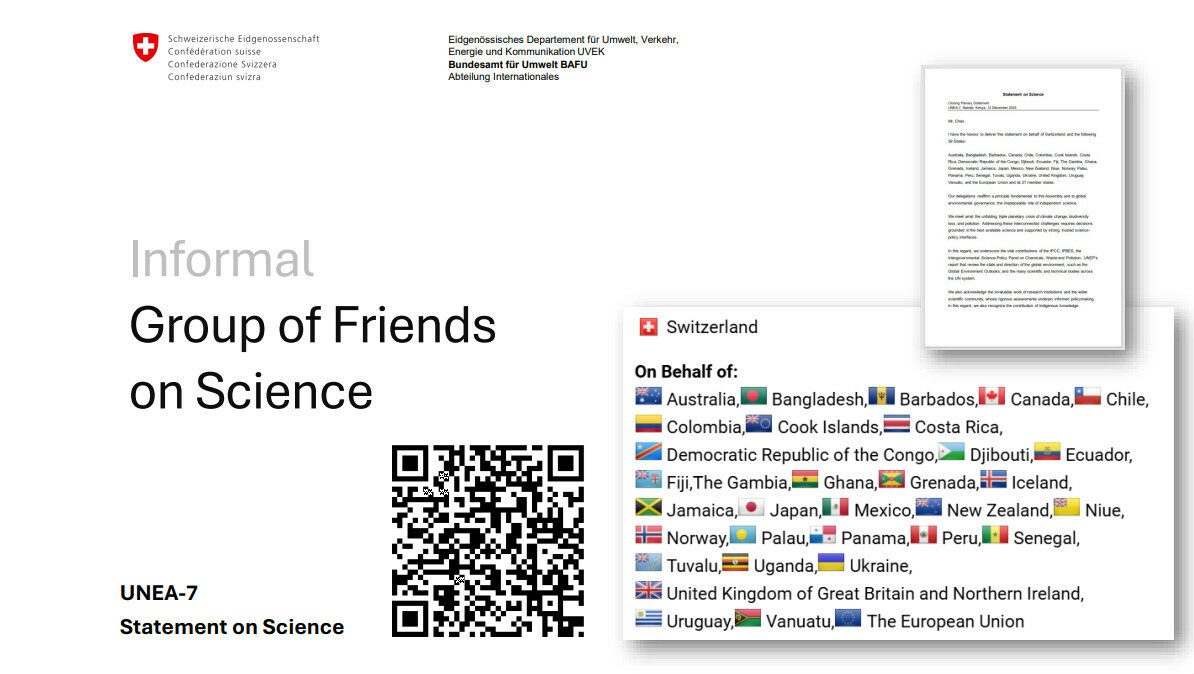
- At UNEA, a statement supported by sixty countries was developed to defend science-based policymaking. This statement sets out three key priorities.
- The first is recognizing the role of science in addressing the planetary crises and defending evidence-based decision-making.
- The second is protecting scientific integrity from political or financial interference.
Science must remain independent, policy-relevant and not policy-prescriptive. - The third priority is strengthening inclusive science-policy interfaces for informed decision-making.
- Member States should reinforce transparent and well-resourced interfaces that integrate scientific expertise, including Indigenous knowledge.
- Building on this effort, work is underway to establish a Group of Friends on Science. This group will help ensure that science is properly reflected in negotiations. It will also help safeguard the integrity of science and ensure that the scientific voice is heard.
Recent and Upcoming Milestones in Addressing the Triple Planetary Crisis
This session put a spotlight on recent and upcoming milestones in tackling the triple planetary crisis, including the upcoming plenaries – the governing bodies of the science-policy interfaces – made up of representatives of Member States. These include the inaugural plenary of the Intergovernmental Science-Policy Panel on Chemicals, Waste and Pollution, the 12th plenary of IPBES, and 64th plenary of IPCC. Heads of the Secretariat of the SPIs and leading experts joining the panel discussed:
- Expectations for IPBES 12, to be held in the Manchester, United Kingdom of Great Britain and Northern Ireland (UK) in February 2026, which will consider. among other items, a methodological assessment of the impact and dependence of business on biodiversity and nature’s contributions to people.
- Updates on IPCC-64, to take place in Bangkok, Thailand, in March 2026, where delegates will advance work related to the seventh assessment cycle.
- Preparations for the ISP-CWP P1, to be held in Geneva in February 2026 where Members are expected to agree on a number of items necessary for the Panel’s operationalization, including electing the first Chair and the Bureau of the Panel. Members are also expected to advance work on the rules and procedures necessary to launch the Panel’s substantive work.
- Meetings of the Conference of the Parties of MEAs, translating science into policy.
Speakers included, by order of intervention:

H.E. Amb. Hasmik Tolmajian
Permanent Representative of the Republic of Armenia to the United Nations Office and other International Organizations in Geneva
Luthando Dziba
Executive Secretary, IPBES
Abdalah Mokssit
Secretary, IPCC
Jacqueline Alvarez
Head, Chemicals and Health Branch, UNEP

Sebastian König
Chief Scientist Environment International & IPCC and IPBES National Focal Point, International Affairs Division, Swiss Federal Office for the Environment

Andreas Obrecht
Policy Lead, Nature Action Agenda, World Economic Forum

David Azoulay
Managing Attorney, Geneva Office & Director, Environmental Health Program, Center for International Environmental Law’s (CIEL)
Summary
H.E Amb. Hasmik TOLMAJIAN | Permanent Representative of the Republic of Armenia to the United Nations Office and other International Organizations in Geneva
- This discussion offers an important opportunity to reflect on how science-policy interfaces can help respond more effectively to the triple planetary crisis of biodiversity loss, climate change and pollution.
- Armenia highly values this timely discussion, particularly as it takes place ahead of several important global milestones. These milestones include the inaugural plenary of the Intergovernmental Science-Policy Panel on Chemicals, Waste and Pollution.
- They also include upcoming plenaries of the Intergovernmental Science-Policy Platform on Biodiversity and Ecosystem Services and the Intergovernmental Panel on Climate Change.
- Looking ahead, they also include the seventeenth meeting of the Conference of the Parties to the Convention on Biological Diversity, which Armenia will have the honour to host in October 2026.
- These milestones are not isolated events. They reflect the growing maturity of the global science-policy architecture.
- As host of CBD COP 17, Armenia sees science as the foundation of negotiations. Science matters because it provides credibility and coherence to collective action.
- Without strong, trusted and inclusive science–policy interfaces, decisions risk becoming fragmented, short-sighted and disconnected from realities on the ground.
- Armenia’s vision for biodiversity protection is integrated, science-driven and community-focused. Conservation and sustainable use of biodiversity must be informed by the best available scientific data.
- At the same time, Indigenous and local knowledge, national circumstances and socio-economic realities must be recognized.
- In this regard, Armenia appreciates the important work of IPBES in providing evidence-based guidance for the implementation of global biodiversity commitments. IPBES assessments have significantly enhanced understanding of biodiversity trends, drivers of loss and pathways for transformative change.
- As preparations for COP 17 advance, the incoming Armenian presidency looks forward to seeing how IPBES findings support policy discussions and decision-making. This support is essential during both the preparatory process and the COP itself.
- This is particularly important because CBD COP 17 is mandated to deliver a critical milestone. That milestone is the first global review of collective progress in implementing the Kunming–Montreal Global Biodiversity Framework.
- The review will assess the current state of implementation, identify gaps and chart the most effective pathways to achieve the framework’s targets and objectives for 2030 and 2050. This milestone can only be delivered if the global review is underpinned by a strong scientific foundation. Science will be essential to drive and shape effective policy solutions.
- Ahead of the triple COP year, Armenia also attaches great importance to synergies among the three major science–policy bodies. The triple planetary crisis is deeply interconnected, just like the multilateral environmental agreements addressing it. Climate change accelerates biodiversity loss. Biodiversity degradation weakens climate resilience. Pollution undermines ecosystems, land and human health. This is what scientific evidence clearly shows.
- If these challenges reinforce one another, efforts toward coherent implementation of multilateral environmental agreements must be strengthened. Such coherence can be reinforced through strong and constructive synergy among the three science–policy panels.
- COP 17 in Armenia offers an opportunity to strengthen coherence across these processes. By bringing together biodiversity, climate, land and pollution perspectives, more integrated solutions can be fostered. As incoming president, Armenia envisions COP 17 as a turning point for science-driven policy choices. The aim is to guide implementation of the Kunming–Montreal Global Biodiversity Framework in a manner that is climate-sensitive and pollution-aware.
- COP 17 should serve as a moment of convergence, translating scientific knowledge into accountable outcomes and practical choices for a better future.
- As host country, Armenia is committed to creating space at COP 17 for dialogue among scientists, policymakers, Indigenous peoples and local communities, youth and other stakeholders. Discussions will be promoted that are forward-looking, solution-oriented and grounded in evidence.
- The goal is to ensure that science remains at the heart of collective efforts to halt biodiversity loss, address climate change and eliminate pollution for the health of the planet and future generations.
Luthando DZIBA | Executive Secretary, IPBES
- IPBES is the Intergovernmental Science-Policy Platform on Biodiversity and Ecosystem Services. It was established in 2012 in Panama following several years of consultations among governments and stakeholders. IPBES currently has 152 member states.
- The main mission of IPBES is to strengthen the knowledge foundations for better policy through science.
- This mission supports conservation and sustainable use of biodiversity, sustainable development and long-term human well-being.
- The IPBES Plenary is the highest decision-making body of the platform. Efforts are made to accommodate stakeholders and observers, including states that are not yet members.
IPBES is supported by two main bodies.The Bureau serves as the administrative body.
The Multidisciplinary Expert Panel provides technical and scientific advice to the platform. The work of these bodies is supported by expert groups and by the IPBES Secretariat. - Two guiding principles are particularly important.
- First, IPBES provides policy-relevant information but not policy-prescriptive advice. This principle shapes how IPBES approaches its work.
- Second, IPBES ensures credibility, relevance and legitimacy through peer review and transparent review by governments and experts. IPBES fosters collaboration with biodiversity-related multilateral environmental agreements, other UN bodies, scientific networks and knowledge holders.
- A pioneering aspect of IPBES is the recognition and inclusion of Indigenous and local knowledge. A common question is whether science alone is sufficient. IPBES assessments show that some of the world’s remaining reservoirs of biodiversity are managed by Indigenous peoples and local communities. These communities hold thousands of years of knowledge on living with and managing nature. Not drawing on this knowledge would be a mistake. Incorporating diverse knowledge systems does not dilute science. It strengthens the assessment and synthesis of available knowledge.
- IPBES undertakes assessments at the request of governments. This follows scoping processes and the selection of experts. Assessments are presented to plenary sessions for approval by governments. Considerable effort is then devoted to improving uptake of the findings. Several assessments were published in 2016 and 2018.
- The Global Assessment approved in 2019 has been particularly influential. Since then, additional assessments have been completed. These include the Nexus Assessment on interlinkages between biodiversity, water, food, health and climate change. They also include the Transformative Change Assessment. These assessments generate significant media attention and raise public awareness.
- The most important impact comes when findings are taken up in policy decisions. The Global Assessment informed target-setting for the Kunming–Montreal Global Biodiversity Framework. It also informed other reports, decisions and commitments by governments. Strengthening uptake remains a key priority. More commitment and resources are needed to improve how assessment findings are used.
- IPBES is currently implementing a rolling work programme up to 2030. The Nexus and Transformative Change Assessments have been approved. In February, the Business and Biodiversity Assessment will be considered for approval. This assessment examines business dependence on biodiversity and business impacts on biodiversity. It explores ways to measure these relationships to inform action by businesses, governments and other actors.
- A second Global Assessment has recently been launched. This assessment will help governments review progress in implementing the Kunming-Montreal Global Biodiversity Framework. It will also support discussions on the post-2030 global biodiversity agenda. The Global Assessment is accompanied by a Monitoring Assessment and special planning assessments.
- IPBES 12 will take place in Manchester from 3 to 8 February 2026. A major agenda item will be approval of the methodological assessment on business impacts and dependencies on biodiversity and nature’s contributions to people.
- The objective of this report is to strengthen the knowledge base supporting business efforts to live in harmony with nature by 2050. The report aims to develop coherent language, concepts and methodologies. It focuses on measuring both business dependencies on biodiversity and business impacts on biodiversity. Understanding dependencies is particularly important. While impacts are relatively well understood, dependencies remain less visible. Without awareness of dependencies, risks associated with biodiversity loss cannot be fully understood. Degrading biodiversity undermines economic activity, livelihoods and long-term profitability.
- Additional work areas include capacity building, strengthening knowledge foundations and supporting policy uptake.
- IPBES also undertakes periodic reviews of its effectiveness. These reviews assess strengths, weaknesses and areas for improvement. The plenary will consider the findings of the most recent review. Requests for new assessments will also be considered.
- The Multidisciplinary Expert Panel and the Bureau have advised allowing time between IPBES 12 and IPBES 13. This period would be used to strengthen uptake and to explore future programmes and strategies beyond the current work programme
Jaqueline ALVAREZ | Head, Chemicals and Health Branch, UNEP
- The five main functions of the ISP-CWP can be outlined clearly: horizon scanning, conducting assessments, providing up-to-date information, facilitating information sharing, and final function, which was particularly complex to negotiate, is the integration of capacity building into the work and functions of the panel.
- These five functions closely resemble what IPBES and the IPCC already do. In that sense, these functions are not new.
- The February meeting will begin on 1 February with meetings of the regional groups and briefings by the Secretariat.
- From 2 to 6 February, the work will continue on what can be described as building the skeleton of the house currently under construction.
- In Punta del Este in June, the foundational document was adopted. That document defines the overall functions, roles, structure and governance of the panel. Several additional elements still need to be completed to fully establish the foundation of the panel.
- During the Geneva meeting, new officers will be elected. The previous process concluded with the establishment of the panel. A new phase now begins with a new group of officers who will guide and moderate the work of the panel until the next meeting. The plenary will also consider the physical location of the Secretariat. Two proposals are currently on the table for hosting the Secretariat. The plenary will need to review and consider these offers.
- The rules of procedure will be addressed, particularly the rules governing the plenary.
- Progress has already been made, as many elements from the foundational document can be translated quickly into procedural arrangements. This step is important because it clarifies how the panel will operate in practice.
- Another key issue for consideration is intersessional work. The panel needs to define whether and how work can take place between the first and second plenaries. UNEA last week requested that the panel become operational very quickly. This means that the first plenary in February plays a critical role. The work undertaken during that week will be essential to launching the work programme without delay.
- The specific questions to be addressed by the panel will be defined through this process. Interaction with IPBES, the IPCC and other bodies is essential. Science-policy panels need to communicate with one another.
- Multilateral environmental agreements need to communicate with the panels. Panels need to communicate with multilateral environmental agreements and with the Global Framework on Chemicals. These relationships are essential and critical. Avoiding duplication is important. Co-creation across institutions is the real objective. This is a collective journey.
Abdalah MOKSSIT | Secretary, IPCC
- The IPCC was established in 1988 by the World Meteorological Organization and UNEP as its parent organizations. Its strict mandate is to assess research, not to conduct research. This distinction is essential.
- The IPCC works through plenaries. On average, two plenaries are held each year. The IPCC has an elected Bureau and an Executive Committee that meets monthly.
- The science-policy interface of the IPCC is built through what can be described as ten steps.
These steps demonstrate coordination between scientists and governments from the very beginning of any report. The process starts with a scoping meeting. The scoping meeting is attended by experts nominated by governments and selected by the Bureau. The scoping meeting defines the outline of the report, including the introduction, executive summary and chapters. The next step is the drafting team. Drafting authors are experts nominated by governments and selected by the Bureau. The drafting team prepares the first draft of the report. The first draft is sent for expert review. Any expert can register as a reviewer through self-declaration. This openness is a core feature of the IPCC process. - Authors are required to consider every comment received. The interaction between governments and scientists continues throughout the process. The Summary for Policymakers is then prepared and sent to governments for review. All comments are addressed. Comments may be accepted, modified or rejected, but all are recorded transparently on the IPCC website.
- The IPCC operates like a glass house, where everything is visible.
- The IPCC is now in its seventh assessment cycle. Work started almost two years ago and has continued without interruption. All outlines for the reports have been approved. All Lead Author Meetings have taken place. The most recent meeting was held in Paris during the first week of December.
- For the first time in IPCC history, around 660 experts participated in a single Lead Author Meeting. The meeting included nearly 700 participants. It was the largest Lead Author Meeting ever organized by the IPCC. This demonstrated the Chair’s vision of inclusivity. The balance across regions was excellent. Gender balance was excellent. The balance between newcomers and experienced IPCC contributors was excellent. Approximately 60 percent of participants were newcomers and 40 percent had prior IPCC experience.
- The IPCC brings 37 years of experience to this cycle. A key feature of this cycle is the number of experiments being undertaken. For the first time, experimentation is occurring at a large scale.
The objective is to reinforce the voice of science and increase inclusivity. - The IPCC is also exploring the responsible use of artificial intelligence through two dedicated expert meetings. The next plenary will take place in March in Bangkok at the United Nations headquarters. This plenary will largely focus on routine business. Approval of the timeline will be postponed until the following plenary.
- A Bureau meeting will take place in Geneva in the last week of February. Bureau meetings include around 40 Bureau members and government representatives. In practice, these meetings function like a semi-plenary. The Bureau meeting will prepare the agenda for the March plenary. The Bureau and plenary will examine possible experiments to improve the quality of the seventh assessment cycle.
- The IPCC will also consider revising its rules and procedures. After nearly four decades of operation, updating these procedures is necessary.
- The IPCC will explore increased involvement of young scientists. Options such as scholarship programmes and chapter scientist roles will be discussed. These measures aim to strengthen inclusivity and improve the quality of IPCC outputs.
- The objective is to create the conditions for consensus on approving the timeline for the seventh cycle. The outline has already been approved. The focus is now on finalizing the timeline.
Sebastian KÖNIG | Chief Scientist Environment International & IPCC and IPBES National Focal Point, International Affairs Division, Swiss Federal Office for the Environment
- Much has been said about future milestones, but it is helpful to look briefly at the past and then circle back to what lies ahead.
- Since the mid-19th century, more than 700 multilateral environmental agreements have been concluded. Approximately 250 of these agreements are still in force today.
- Since 1972, there has been a significant increase in the number of conventions. This reflects a global choice to address specific environmental concerns multilaterally through conventions.
- The Montreal Protocol is a well-known example of success. It has reduced ozone-depleting substances by 98 percent. Its effectiveness rests on universal ratification, clear targets, and strong scientific backing.
- At the same time, this approach has led to a degree of proliferation and fragmentation. Many issues have been addressed in silos. Scientific observation and evidence have shown that environmental challenges cannot always be addressed through single, isolated approaches. Climate change and biodiversity loss illustrate this clearly.
- The warming stripes and biodiversity loss trends show how deeply intertwined these challenges are. This calls for approaches that explicitly address interconnections.
- One response is to promote synergies among multilateral environmental agreements. An example is the Bern process, which focuses on biodiversity-related conventions and uses indicators and monitoring to foster coherence.
- Another response concerns governance and the interaction between science and policy. The relationship between the IPCC and the UNFCCC provides a clear example. The IPCC’s work on the 1.5-degree goal informed policy discussions under the UNFCCC. This policy relevance then fed back into subsequent IPCC assessments, including the Sixth Assessment Report.
This illustrates the importance of timely interaction between science and policy. - Alignment of timelines is crucial. The timing of scientific outputs determines their policy relevance. Science-policy interfaces must ensure that their products align with policy processes.
- Coherence among science-policy interfaces is equally important. This event is one attempt to ensure dialogue, coherence and consistent messaging. It brings together scientific communities and policy communities that are often themselves siloed.
- Looking ahead, there are many ways to increase coherence among science–policy interfaces. Interaction at the scientific level is essential.
- Experts should engage across platforms, including reviewing and contributing beyond their primary disciplinary focus.
- There is also an obligation at the policy level. National ministries often work thematically and remain separated. Improved coordination between environmental, energy and other ministries is necessary. This coordination must be continuous and not dependent on specific timelines.
- There are important milestones ahead. In 2028, the IPCC will mark its 40th anniversary. It would be meaningful to have all Seventh Assessment Report working group reports delivered by that year. This timeline aligns with the delivery of the second IPBES global assessment.
- Past collaboration between IPBES and the IPCC provides a useful precedent.
- A joint workshop between experts from both communities is planned for 2026 and will be hosted in Switzerland. This workshop aims to strengthen coherence between science–policy interfaces ahead of the 2028 assessments.
- Finally, attention must also be given to the Intergovernmental Science-Policy Panel on Chemicals, Waste and Pollution. Decisions taken for this panel will influence overall coherence. Alignment of its timing with the IPCC and IPBES is essential to maintain consistency across the science-policy architecture.
Andreas OBRECHT | Policy Lead, Nature Action Agenda, World Economic Forum
- We are an international organization that convenes leaders from all walks of life to discuss and work on issues of global relevance for different stakeholders. Climate and nature are core issues that we address. A multistakeholder approach is applied throughout the work.
- The organization acts as a neutral convener. Communities and initiatives are convened throughout the year. Flagship events are organized. Knowledge products are developed in close cooperation with business partners and other stakeholders.
- One encouraging fact that emerged this month is that the green economy is growing fast.
It is the second fastest-growing sector after the technology sector. This momentum can be leveraged despite geopolitical challenges and pressures on the multilateral system. - There are also significant opportunities, including here in Geneva. Work with business partners and other stakeholders focuses on sectoral transitions towards nature-positive outcomes. Scientific information underpins this work, including assessments from the IPCC and IPBES. The outputs of these bodies are critically important.
- Scientific assessment results take time to translate into action. This is normal. The work of the IPCC, IPBES and the new panel should be seen as a continuum. Engagement with these processes extends over time rather than only at the moment of publication.
- The IPBES policy support function is particularly valuable. Several reports draw directly on outputs from the policy support function.
- There is an opportunity for the policy support function to engage earlier in the process. This could include engagement before the commissioning of assessments. Such engagement could help shape the questions that assessments address.
- More direct engagement with stakeholders, including businesses and youth, could be beneficial. The business sector itself is highly diverse, ranging from small enterprises to large multinational corporations. This diversity creates additional opportunities for targeted engagement.
- The establishment of the third science-policy panel is welcomed. There is strong interest in following its development and work. Developments across upcoming events are being followed closely. Continued engagement is anticipated.
- Strong leadership from the science-policy interfaces is appreciated, as it plays a critical role in mobilizing action.
David AZOULAY | Managing Attorney, Geneva Office & Director, Environmental Health Program, Center for International Environmental Law (CIEL)
- These remarks focus primarily on the upcoming plenary of the Intergovernmental Science-Policy Panel on Chemicals, Waste and Pollution. This panel is the one I have been most closely involved in. It is also the newest panel. It is still being built, and therefore it offers the greatest opportunity to shape outcomes.
- The other science-policy bodies are well established and functioning. The new panel is the one currently under construction.
- Two worrying trends are visible in the science-policy interface.
- The first is the growing questioning and undermining of science. At the same time, academics and scientists are engaging more directly in policy spaces than ever before. This type of engagement was almost unheard of in the past.
- The second worrying trend is the undermining of multilateral decision-making.
This includes efforts to restrict both the space available to multilateral institutions and the scope of their decisions. - One example emerged during negotiations to establish the ISPCWP. The establishment of the panel was a success, but it came at a cost. That cost included bracketing references to the protection of health and the environment from the panel’s objectives. While there may be agreement on the intent, the dynamics that led to this compromise are deeply concerning.
- This trend is connected to a major issue that has not been sufficiently addressed today: conflict of interest. For decades, humanity has faced health and environmental challenges that threaten the survival of civilization. These impacts do not arise spontaneously. They are driven by identifiable actors. Some of these actors benefit from maintaining the status quo. Their power and influence depend on the continuation of harmful practices. These same actors have misrepresented, concealed, or denied evidence of harm.
- Treating such actors as trustworthy partners in designing and implementing solutions is not credible. Without addressing this reality, failure will continue. Environmental degradation, climate change, biodiversity loss and health impacts will worsen.
- Managing impacts at the margins is not sufficient. Without structural change, outcomes will not improve.
- This issue is particularly relevant for the ISPCWP. Conflict of interest policies are on the agenda for the upcoming plenary. These policies will signal whether we can expect the panel to actually address these issues.
- Two imperatives shape the upcoming plenary. First, conflict of interest must be addressed clearly and credibly. This must be reflected in the policies adopted.
- Second, action cannot be delayed. There is already sufficient scientific knowledge to act on climate, biodiversity, and pollution. Panels provide policy-relevant information, not policy prescriptions. Policy action cannot wait for future assessments.
- From civil society, continued contributions will focus on expertise, transparency, and accountability. Transparency leads to better decisions and stronger policies.
- Civil society will continue to create space for the voices of vulnerable and affected communities. These voices must not only be heard but taken into account as the basis for future policy decisions.
Fireside Chat: How Can Governments and Stakeholders Engage in SPIs Moving Forward
Evidence from various science-policy interfaces shows that tackling the triple planetary crisis requires active participation and meaningful engagement from both governments and stakeholders. In light of recent and upcoming milestones in tackling the triple planetary crisis, this fireside chat shared experiences, reflections, and lessons learned on how governments and stakeholders can better engage in SPIs moving forward.
By order of intervention, speakers included:

Sonia I. Seneviratne
Vice-chair, Working Group I, IPCC & Professor, Head of Institute for Atmospheric and Climate Science, Chair of Land-Climate Dynamics, ETH Zurich

Lindsey Fielder Cook
Interim Deputy Director and Representative for the Human Impacts of Climate Change, QUNO

Whitney Fleming
Leverhulme Early Career Research Fellow School of Environmental & Natural Sciences, Bangor University | ONet Member Organization

Dorothea Hug Peter
Scientific Officer, SCNAT - Swiss Biodiversity Forum

Abiola Olanipekun
Chief, Science and Technical Assistance Branch, Basel, Rotterdam and Stockholm Conventions

Brenda Koekkoek
Senior Coordination Officer, Minamata Convention on Mercury
Jane Muncke
Managing Director and Chief Scientific Officer, Food Packaging Forum | Moderator
Summary
Sonia I. Seneviratne | Vice-chair, Working Group I, IPCC & Professor, Head of Institute for Atmospheric and Climate Science, Chair of Land-Climate Dynamics, ETH Zurich
- How you deal with conflict of interest and why it is important?
- In terms of conflict of interest, this is an area where improvements are possible. At the IPCC, bureau members are required to submit conflict of interest declaration forms. These forms are reviewed by a dedicated conflict of interest committee.
- Recently, discussions have taken place within the bureau about how conflict of interest is handled more broadly. This discussion relates in particular to the nomination and selection of authors and experts contributing to IPCC reports.
- Experts are first nominated by governments or scientific organizations. They are then selected. Conflict of interest forms are submitted only after selection. This approach is not optimal.
- Once authors are selected, it becomes difficult to replace them if a conflict of interest is identified, because finding another person with exactly the same expertise is challenging.
- There has been informal discussion about whether conflict of interest declarations should be submitted at the time experts apply to be authors. This would allow conflict of interest considerations to form part of the review and selection process.
This is an issue that could be discussed further in upcoming bureau meetings. - Concerns have arisen because some selected authors are employed by fossil fuel companies. This raises questions about conflict of interest. Around 90 percent of carbon dioxide emissions leading to climate change result from fossil fuel burning. When authors are employed by fossil fuel companies, even if they are technically qualified, the optics are problematic.
- There is also a question of loyalty. An individual may face tension between loyalty to their employer and responsibility to the IPCC.
Lindsey Fielder Cook | Interim Deputy Director and Representative for the Human Impacts of Climate Change, QUNO
- Over the nine years we have been observers, we have seen shifts both in what is happening at the IPCC in terms of political pressure and science communication, and also in our role as observers. Initially, our role was very much to support, encourage, and communicate.
- The IPCC has a remarkable way of engaging observers. Observers are invited to speak and contribute after states have had the chance to work on specific sentences or paragraphs during approval sessions. This is something I would love to see in other multilateral processes.
- If there is one thing I would change, it is that the IPCC would use its red line more often. That red line is the ability to push back on inappropriate political influence in plenary when that influence attempts to weaken scientific findings.
- The IPCC has the authority to say that language cannot be changed because it would challenge the integrity of the science. That red line is one of the main reasons I value working with the IPCC, alongside my work in other multilateral processes such as the Human Rights Council and the climate negotiations.
- Another change I would make is to strengthen confidence in the plenary and among chairs to limit state interventions to three minutes, regardless of how powerful the country is. I would encourage chairs to actively enforce that rule.
- I would also encourage stronger support for scientists so that inappropriate political efforts to weaken the science can be pushed back by scientists themselves.
- What we have seen over the last nine years is a period of pushback. We are in a time of denial. We are in a time of increased military spending. We are in a time of fear. We are not seeing the transitions that are needed. We are not seeing enough focus on root causes. Human beings are not good at stopping themselves.
- The IPCC should focus more clearly on root causes. It should not be afraid to name what real transformation looks like and what constitutes false solutions.
- The IPCC needs to be very clear about risks. This includes risks associated with high-risk options, such as reliance on carbon capture and storage beyond what is physically possible. It includes being explicit about limits to carbon dioxide removal.
- Allowing options that are not only unsustainable but dangerous weakens the scientific message. The IPCC also needs to highlight the risks of solar radiation modification, which introduces novel risks and is not ready for deployment at scale.
- Those risks need to remain clearly reflected in the reports. As observers, we often find ourselves fighting to keep that risk language in the text, because some states attempt to remove it.
- Observer for 9 years, have seen shifts for both what’s happening at IPCC, political pressures, science comms and in terms of our role as observers
- IPCC has remarkable way for observers to contribute – would love to see in other processes
Whitney Fleming | Leverhulme Early Career Research Fellow School of Environmental & Natural Sciences, Bangor University | ONet Member Organization
- I would like to start with a brief story that some of you may be familiar with. In 1915, Sir Ernest Shackleton led an expedition to Antarctica that went badly wrong. His boat was rediscovered only in 2022. To escape an impossible situation, he and a small group of men undertook a 1,300-kilometre journey across open ocean to save their crew. That story illustrates what I would call critical optimism.
- Not a naïve belief that things will simply get better, but a deep understanding that if we want things to change, we must act, and we have to act deliberately. That sense of critical optimism is something that unites members of ONET.
- ONET, the Open-Ended Network of IPBES Stakeholders, is a collective of individuals from around the world who want to contribute positively to our understanding of what is happening to global biodiversity.
- The network is also a major contributor to the process that precedes the IPBES plenary.
- This year, on 2 February, just before the plenary, ONET will hold Stakeholder Day. Stakeholder Day is open to anyone who wants to participate. On that day, stakeholders collectively identify points they would like IPBES to consider and address during the plenary.
- The IPBES stakeholder group is made up of two types of stakeholders: contributors and end users. Contributors include knowledge holders and scientists, such as myself. My own work focuses on human health and well-being in relation to biodiversity. End users include policy makers and businesses.
- ONET has several core objectives. These include fostering two-way communication between its members and IPBES, as well as supporting the dissemination of IPBES products. We currently work through an initiative-based process. Any member can bring forward an initiative to promote ideas.
- One example is a teaching initiative designed to support this exact objective.
- We also aim to broaden outreach to a diverse range of potential users, to strengthen the platform’s deliverables, and to mobilize resources for capacity building.
- Our approach is self-organized. This will be ONET’s tenth year participating in this plenary. The network is run by stakeholders through a facilitation team.
- As mentioned earlier, this facilitation team is composed entirely of women. This reflects the reality that much of the labor of stakeholder engagement often falls on women, as demonstrated by the people who organize Stakeholder Day.
- We strive to be inclusive, engaging policy makers and anyone around the world who wishes to contribute.
- ONET is intended to remain open-ended, inclusive, and, we hope, a permanent and ongoing initiative.
Dorothea Hug Peter | Scientific Officer, SCNAT – Swiss Biodiversity Forum
- I engage in the science-policy interface at both the national and international levels.
- The Swiss Biodiversity Forum is part of the Swiss Academy of Sciences, and more specifically part of its science–policy platform. Our role is to work on the science-policy interface at the national level. We work very closely with the Federal Office for the Environment. We prepare reports and fact sheets, and we also provide direct feedback.
- For example, we contributed feedback to the recent update of the National Biodiversity Strategy and Action Plan, which was prepared following the adoption of the new global biodiversity framework.
- We have a group of expert members and a bureau that supports this work.
One of the most important elements of these interactions is trust, built through close collaboration. - In Switzerland, we often speak about having short distances. This means we can directly call colleagues at the Federal Office for the Environment to exchange on issues. They can also call us. This allows for very direct input in both directions.
- One of the major challenges, which has already been mentioned several times today, is the interdisciplinary nature of environmental crises. Biodiversity is affected by most of the decisions that governments take.
- We try to be interdisciplinary and transdisciplinary in the expertise we bring together.
For example, our committee includes a linguist who works on narratives around biodiversity. Her input is extremely valuable for our work. - At the same time, we still interact with government structures that remain largely siloed. There are efforts to bring these structures together, but this could be strengthened significantly. Government entities that may see themselves as far removed from biodiversity need to consider the impacts of their decisions on biodiversity.
- The national science-policy interface plays a crucial role. I believe IPBES is doing very strong work, and I also engage there.
- We provide scientific advice during IPBES plenaries, and we run the national IPBES platform. This work gains particular value when it is taken to the national level.
- Many policy decisions are made at the national level.
This is where national specificities, local contexts, and local knowledge matter most.
Strengthening science-policy interfaces at this level is therefore extremely important.
Abiola Olanipekun | Chief, Science and Technical Assistance Branch, Basel, Rotterdam and Stockholm Conventions
- Looking at more than two decades of BRS experience, this is a clear testament that science-policy action works. It demonstrates how important it is for scientists to be embedded in policy-making processes, particularly when it comes to the sound management of chemicals and waste.
- Across the three conventions – Basel, Rotterdam and Stockholm – we see strong engagement of experts and scientists, not only through assessment but also through direct support to policy design. Industry engages by sharing data and driving safer chemical innovation. Civil society and communities engage by providing early warning signals and local evidence.
- One critical milestone for BRS was the adoption of the Science-to-Action initiative in 2015. Parties agreed that it was essential to ensure that scientific knowledge and policy action are linked. There was a clear recognition that the gap between science and policy needed to be bridged so that policy makers could take informed decisions using the latest scientific information.
- The Science-to-Action initiative focuses on several key elements.
- It strengthens the science–policy interface by ensuring that the best available scientific knowledge is accessible, understandable and relevant for decision makers.
- It translates science into action through practical tools, guidance, policy-relevant outputs, and risk management and regulatory measures.
- It enhances stakeholder engagement by promoting collaboration among governments, scientists, industry, civil society and international organizations.
This collaboration is essential to support informed and coordinated action. - It also builds national capacities.Through technical assistance and training, we support countries in using available knowledge at the national level to implement the BRS Conventions.
- Drawing from the BRS experience, there are several key takeaways.
- Science drives action when it is trusted, embedded in decision-making processes, inclusive, and directly linked to policy choices.
- Scientists are not on the sidelines. They are not brought in at the last minute. Science is embedded from the very beginning of the policy-making process to support informed government decisions.
- Strengthening the science–policy interface is a governance choice. That choice must be followed by strong and sustained stakeholder collaboration.
- Getting science-policy interaction right for chemicals and pollution strengthens our response to the entire triple planetary crisis. It also reshapes how science serves society and future generations.
- Finally, the BRS Conventions already provide platforms for governments and stakeholders. These platforms exist. What is needed now is for them to be fully and continuously used.
Brenda Koekkoek | Senior Coordination Officer, Minamata Convention on Mercury
- A series of global mercury assessments led by UNEP over the past 25 years has been instrumental in the evolution and development of the Minamata Convention. The Convention entered into force in 2017 and is now actively mobilizing change.
- As we move forward, it is increasingly clear that we need more interconnected thinking to address the remaining challenges. No single process, meeting, or report can address everything on its own.
- One clear example is artisanal and small-scale gold mining (ASGM). This remains the most challenging and complex issue under the Convention. It is still the largest global user of mercury.
- The impacts of ASGM on people and biodiversity are among the most severe. Unfortunately, the problem is not decreasing. Gold prices are rising in today’s economy, and this is exacerbating the challenge.
- Broadening the perspective helps mobilize greater attention and resources. This is essential to identify and implement effective measures to reduce and eliminate mercury use globally, across more than 80 countries. This is a major development issue.
- Our parties recently met at COP-6, held from 3 to 7 November here in Geneva. At that meeting, collaboration with both the new panel, the ISPCWP, and with IPBES was explicitly recognized. This is an area where we now need to move forward more concretely.
- We cannot wait for the ISP-CWP to begin its work before engaging. Mercury pollution is linked to the energy transition, mining, biodiversity loss, deforestation, human health, food contamination, and global trade, among other issues.
- To date, no global assessment has focused specifically enough on mercury across its full life cycle to be directly applicable to the Minamata Convention. We look forward to helping make this connection more substantive so that it can better support parties in decision-making.
- There may be opportunities to develop spin-off assessments from existing global assessments that could zoom in more closely on mercury or specific chemicals.
There is also potential to look at ASGM through a wider and more integrated lens. - My final point is that priority must be given to incorporating science from the Global South. Mercury behaves differently in different environments. Most mercury problems currently occur in the Global South, and there are significant scientific gaps that still need to be filled.
- It is therefore equally important to incorporate traditional and indigenous knowledge.
We have a long-standing collaboration with the global scientific community through the International Conference on Mercury as a Global Pollutant. This conference takes place every two years, and the next meeting will be held in October 2026 in India. - Engaging with committed and experienced scientific communities like this can help mobilize action through existing science–policy interfaces. We hope that increased collaboration will help elevate the chemicals, waste and pollution agenda globally.
Lightning Talks: Triple Planetary Crisis
The event featured lightning talks – three and a half-minute presentations (half of the PechaKucha format 10×20) – highlighting one key insight, a pressing question, or a practical example related to tackling climate change, biodiversity loss, and pollution from a science-policy perspective. Scientists, policymakers and science-policy interface focal points were invited to present their ideas on a topic of their choosing – ranging from financing and meaningful participation to raising awareness and implementation. These presentations aimed to explore what it takes to advance the science-policy interface and drive action on the triple planetary crisis.
Mialy Rann | Science-Policy Officer, GSPI
Dorothy Ngajilo | Health and Labour Officer, Global Framework on Chemicals Secretariat
Samuel Amos | Coordinator, GEO Youth Initiative, GEO Secretariat
Jerker Tamelander | Director, Science, Policy & Implementation Services, Ramsar Convention on Wetlands
Natasha Mahezabin | Climate Change Technology Expert, Climate Change and Food Security Unit, WIPO
Bénérike Kamdem | President and Co-Founder, Interdisciplinary Institute for Environmental Health Research and Information (PIRSE-IEHRI) | Chief Resident, Department of Primary Care Médicine (SMPR), Geneva University Hospitals
Nicola Schoenenberger | Director, Conservatory and Botanical Garden of the City of Geneva
Tobias Brosch | Professor, Chair for Psychology of Sustainable Development, University of Geneva
Ziad Sahlab | President, Science Policy Action Network (SPAN), EPFL
Summary
Nicola SCHOENENBERGER | Director, Conservatory and Botanical Garden of the City of Geneva
- A flora is a list of all plant species growing spontaneously in a certain area. This work follows a very classical and traditional botanical approach. Botany is a science that has existed for more than three hundred years.
- A flora includes correct scientific names and synonyms. It also includes morphological descriptions, images, distribution maps, conservation status, ecological characteristics, uses and vernacular names of known species.
- The aim of this project is to create and curate a global flora. Today, around 380,000 plant species are known globally. The online workflow aims to compile data for 80 percent of these species by 2030 and publish them online.
- At present, coverage stands at around 50 percent. At the same time, roughly 100,000 plant species remain unknown to science. This represents more than 20 percent of global plant diversity and these species still await scientific description.
- In parallel, 40 percent of all plant species are threatened with extinction. These species are included on the IUCN Red List. The main drivers of this threat are habitat loss, overexploitation and illegal trade, pollution, climate change and invasive alien species. This reflects the triple planetary crisis.
- The Franklin tree is shown as an example. It is a member of the tea family, native to the southeastern United States, and is extinct in the wild.
- Around 600 plant species have gone extinct over the past 250 years. This documented number is considered a significant underestimate.
- Many species have not been searched for again in recent times. Some species may never have been described in the first place.
- The current rate of extinction is higher than the rate at which new species are described. Biodiversity is therefore being lost before it is even discovered.
- An example from Madagascar is shown, a tree species newly described by the speaker’s team in Geneva. The species is endangered due to logging and the national and international trade of its wood.
- Seventy-five percent of newly described plant species are threatened with extinction. This represents a very high proportion.
- Describing a species and giving it a scientific name is like giving it a right of existence. It is comparable to a birth certificate. Without this step, threat status cannot be assessed. The species cannot be included in checklists, Red Lists or legal frameworks that would enable protection.
- Describing biodiversity is therefore the first essential step in safeguarding it.
- World Flora Online is a global consortium of 56 botanic gardens and botanical institutions worldwide. It is a growing network that bridges fundamental science and application, and taxonomy and conservation. All major botanical institutions participate in this effort.
- A World Flora Association has recently been created in Geneva to provide consolidated governance. Support is welcomed for efforts to conserve global plant diversity. Those interested are invited to visit and engage further at the botanic gardens.
Mialy RANN | Science-Policy Officer, GSPI
- The Geneva Science Police Interface (GSPI) promotes collaboration between multilateral actors and scientists.
- Prior to joining GSPI, I was as a lead author for the Transformative Change Assessment, which was adopted in December. The Transformative Change Assessment reviewed more than 7,000 sources and drew on scientific literature and other forms of knowledge. The assessment identified and guided attention toward existing strategies for achieving transformative change.
- Global assessments such as those of IPBES are not only a synthesis of knowledge or an exercise in knowledge synthesis. Global assessments also function as forums for science-policy dialogue.
- During assessment discussions, particularly for the Summary for Policymakers, countries present their positions, take time to learn about the evidence and express how they interpret that evidence. This process is extremely important and can be difficult and demanding for scientists.
- Participation in plenary discussions on transformative change demonstrates how challenging and sometimes mind-boggling this process can be.
- Co-production at the core of global assessments requires different skills and competencies on both the science and policy sides.
- Scientists need to understand the policy context and the positions of countries.
- Policymakers need to be open to the evidence and willing to engage with it, especially when it does not align with existing views.
- Global assessments also represent a major exercise in communication.
- Scientists must step out of their comfort zones, moving from scientific writing to accessible and tangible language for policymakers.
- Policymakers, during text negotiations, must express views on how scientific content can be made usable for uptake and relevant to specific contexts.
- This process has become increasingly difficult, particularly in recent negotiations.
- SPIs face the challenge of protecting the integrity of science while fulfilling mandates to integrate policy input.
- Maintaining dialogue between science and policy remains essential, especially in the current troubling global context.
- A range of SPIs and intermediary collaboration mechanisms play a vital role in finding innovative ways to sustain this dialogue and overcome emerging challenges.
- At GSPI, together with partners, space is provided to develop skills and competencies for effective science-policy interface work. Continued engagement highlights the growing importance of building trust among stakeholders. Engagement in this space requires humility and empathy. This approach helps transform global assessments into not only the voice of science, but also spaces for learning and mutual understanding.
Tobias BROSCH | Professor, Chair for Psychology of Sustainable Development, University of Geneva
- A common question is why a psychologist participates in the IPCC. This question arises more often from policymakers than from scientists. There is sometimes amusement about the idea of psychology at the IPCC. The role is not to provide psychotherapy. The role exists because climate change is no longer only a problem of natural science or technology.
- In 2025, climate change can be described as a behavioural problem. Emissions are produced or avoided through millions of daily decisions. These decisions are made by individuals, organisations, institutions and politicians. On a technical level, there is strong agreement on what needs to be done to address climate change.
- Climate science is clear. Many technical solutions and policy pathways already exist.
- A gap remains between knowledge and implementation. Policies are not implemented at the scale required. This gap is where behavioural sciences play a crucial role.
- Effective climate policies require understanding how humans think, feel, decide and act. Behavioural science shows that humans are not purely rational actors. People do not simply integrate information to make optimal decisions.
- Research shows that people systematically undervalue outcomes that lie far in the future. This presents a major challenge for climate action, where benefits are long-term and inconveniences are immediate. This bias is built into human cognition.
- People are also loss-averse. Loss aversion means losses are felt more strongly than gains of equal magnitude. This creates resistance to lifestyle changes. People prefer avoiding losses to achieving potential future gains.
- Emotions also play a central role in decision-making. Emotions such as fear, anger, guilt and hope strongly influence attention, motivation and action. Emotions are omnipresent in human behaviour. They are neither a universal solution nor always an obstacle.
- Understanding emotional dynamics is essential for promoting large-scale sustainable behaviour change.
- Experience at the science–policy interface shows strong demand for behavioural insights. These insights are often integrated too late in the policy process. Earlier integration would improve policy design.
- Behavioural science can help anticipate resistance and reactance. It can help leverage known psychological dynamics to improve policy uptake.
- One example is ongoing work with the UN-based think tank Beyond Lab. This work focuses on the HOPE method. The HOPE method aims to leverage hope to drive action, shape habits and support critical thinking. The objective is to provide a practical tool for the UN system.
The tool can support workshops, policy design and policy campaigns, including in the IPCC context. - Behavioural sciences can contribute in three major ways.
- They can synthesise knowledge on policies that work for humans rather than idealised rational actors.
- They can help clarify which policies are socially acceptable and politically feasible.
- They can support implementation without triggering strong backlash.
- They can help integrate human behaviour more explicitly into climate scenarios and response pathways.
- They can also improve how reports are written to make them more accessible and actionable.
- Strong science–policy interfaces are essential to address the planetary crises.
- A perspective that accounts for how humans actually function is indispensable.
- Integrating behavioural sciences into science-policy interfaces is not a luxury. It is a necessity.
Natasha MAHEZABIN | Climate Change Technology Expert, Climate Change and Food Security Unit, WIPO
- The central image shows the message immediately. The world is shifting from green to grey due to climate change. At the same time, climate technologies are advancing very fast.
- Many technologies are available today, including renewables, electric vehicles, artificial intelligence and others.
- Despite all these innovations, emissions continue to rise and climate impacts continue to grow.
- The challenge is not innovation alone. The challenge is connection and deployment.
- Climate change cannot be addressed simply by pushing new technologies into the market.
- Effective action requires matching real needs with real solutions at the right scale, at the right time and in the right place.
- This approach supports both individuals and policymakers.
- This is the key insight presented today. This approach requires trust, visibility and collaboration, not just new technologies. Technology providers and solution seekers often work in silos. As a result, need owners do not see what solutions are available.
- At the same time, many technologies remain in laboratories or pilot stages and do not scale. Solutions often arrive too late or not at all.
- This is where WIPO GREEN plays a role. WIPO GREEN is a global marketplace that connects solution seekers with technology providers. The WIPO GREEN database is a global and free platform that includes both green technologies and expressed needs. The platform operates across sectors including energy, water, transportation and waste. The database includes more than 140,000 green technologies. Anyone can register, share solutions, share needs and use an AI-based matchmaking tool. The platform is accessible in 164 languages.
- A flagship publication, the Green Technology Book, is published every year. The publication showcases clear and practical solutions to address emerging climate challenges.
Editions have focused on climate change adaptation, mitigation, energy solutions and disasters. This year’s special edition focused on energy solutions in Asia and the Pacific region. - Two examples from the publication illustrate the range of solutions.
One example is a power-generating mat that produces electricity when stepped on, capable of powering small devices. This demonstrates how simple innovations can transform everyday movement into clean energy. - Another example is a smart aquaculture vessel that produces more than three million fish per year. The vessel uses automated breeding tanks onboard, saving energy and transportation time.
- In addition to the database and publication, acceleration projects are implemented. These projects focus on matchmaking and connecting real needs with practical solutions on the ground. The projects work with local partners.
- One example comes from Peru, where drone systems are being tested for crop farming. Partnerships play a key role in this work.
- More than 160 partners are engaged, along with an ambassador programme that promotes the initiative.
Jerker TAMELANDER | Director, Science, Policy & Implementation Services, Ramsar Convention on Wetlands
- This intervention presents the Global Wetland Outlook and its key findings.
- The Global Wetland Outlook assesses wetlands globally, and this year’s edition focuses particularly on the value that wetlands bring to society, especially in economic terms.
- The numbers are stark. The report summarizes the best available data on existing wetlands and the services they provide.
- The bottom line is that the value of wetlands to society is at least equivalent to almost 8 percent of global GDP. This means that if wetlands are taken care of over the next 50 years, they will continue to deliver value of about 200 trillion US dollars.
- The current situation for wetlands is concerning. Wetlands are being lost at a rate of at least half a percent per year. This has been a continuing trend for more than half a century. As a result, more than a quarter of the world’s wetlands have been lost over the past 50 years.
- In addition, a quarter of the remaining wetlands are degraded. This situation translates into significant economic risk to society.
- To attain the global targets adopted by countries under the Global Biodiversity Framework, particularly Target 3, a major expansion of wetland conservation is required. This would mean placing an area of wetlands under conservation equivalent to half the size of Brazil, or approximately the entire Shenzhen area.
- Similarly, for wetland restoration, addressing only lost wetlands would require restoring more than 130 million hectares.
- If degraded wetlands are also included, the restoration requirement rises to more than 300 million hectares.
- At the same time, financing for wetlands is nowhere near commensurate with the value they deliver or with the level of ambition set out in global frameworks.
- Only around a quarter of one percent of global GDP supports biodiversity action.
- Of that amount, only a very small fraction supports wetlands.
- This is disproportionate, given that wetlands deliver close to 8 percent of global economic value.
- There is a need to capture wetland value in a different way than has been done to date.
- This value needs to be accounted for much more effectively in policymaking and used as a basis for policy decisions.
- There is also a need to explore different and more innovative financing models that combine multiple sources of investment.
- The Global Wetland Outlook was launched just two weeks before the Conference of the Parties.
- The report immediately supported and was referenced in seven different resolutions adopted by the 173 contracting parties.
- The report also informed and helped shape the strategic plan of the Convention that was adopted.
- The media uptake was significant, with coverage approximately twenty times greater than that of the previous Global Wetland Outlook. This indicates that the message is reaching a wide audience.
- The message is that problems can be tracked and decisions can be informed, but critical gaps remain in how information is used within decision-making systems.
- Significant data gaps also remain. Wetlands are far less well understood than many other ecosystem types. Environmental accounting for wetlands is much less developed than for forests or ocean systems. Data on wetlands therefore needs to be strengthened, along with planning and decision-making systems.
- To act on these findings, an initiative has been established together with Group on Earth Observations partners and space agencies. This initiative focuses on improving data on wetland extent and condition. The data will support environmental accounting and decision-making at national levels. The initiative aims to empower countries with national wetland inventories that can be used for multiple purposes.
Dorothy NGAJILO | Health and Labour Officer, Global Framework on Chemicals Secretariat
- This lightning talk focuses on the idea of the missing chair.
- Rooms like this one exist everywhere, where decisions about chemicals, pollution and climate are made every day. There is often one chair that is empty or missing in these rooms.
- That missing chair represents the people who face these challenges first-hand.
- It represents people working at the frontline of chemical exposure, often in places where policies have not yet caught up to protect them.
- It also represents communities and families who breathe the air and drink the water shaped by decisions made upstream.
- It represents workers in places where heat exposure, chemical exposure and pollution coexist every day.
- As a result, already overstretched health systems end up absorbing many of these impacts.
- These systems are required to deal with challenges they were not designed to handle in the first place.
- Science helps make sense of these lived experiences and turn them into evidence.
- In rare cases where that evidence reaches policymakers, it may or may not be used to inform policy.
- Even when it is used, the picture remains incomplete.
- The empty chair matters because it represents voices that rarely enter the rooms where decisions meant to protect them are made.
- That chair does not need to remain empty.
- When all voices are invited to the table, decisions become more grounded in reality.
- When every seat is filled in these rooms, decisions can protect everyone, including communities, workers and the planet as a whole.
Ziad SAHLAB | President, Science Policy Action Network (SPAN) | EPFL
- The Science Policy Action Network, or SPAN, is a student association based at EPFL.
- The goal of SPAN is to guide students and young researchers in navigating the science–policy interface.
- Recent global surveys, including surveys conducted on campus, show concerning results regarding perceptions of science-policy and science advice systems. These surveys indicate that the current systems leave much to be desired.
- Both scientists and policymakers can do more to improve how science advice is produced and used. This is particularly important in the context of the triple planetary crisis. Addressing these challenges requires strong scientific input to guide evidence-based policymaking.
- An assessment was conducted on campus to identify obstacles preventing young scientists and students from engaging in science–policy interfaces.
- Three major obstacles were identified.
- The first obstacle is a lack of awareness. In technical universities such as EPFL, students are trained to address sustainability challenges from a scientific perspective, but not from a policy perspective.
- The second obstacle is a lack of interest. Many students do not view science advice as part of their future career paths.
- The third obstacle is a lack of tools. Even motivated students often lack the skills and shared vocabulary needed to communicate effectively with policymakers.
- SPAN was created to address these obstacles. To tackle the lack of awareness, outreach events are organized on campus. These events bring together experts from both science and policy. Speakers share their experiences and discuss challenges faced at the science–policy interface and how they can be addressed.
- To tackle the lack of interest, networking events are organized. Early-career scientists engaged in science advice are invited to share their professional journeys. These events highlight pathways from academic research to policy engagement.
- Networking events also aim to build a supportive community of young researchers navigating the science–policy interface together.
- Action forms the core of SPAN’s work. Workshops are organized to equip students with practical skills for engaging in science-policy discourse. These include workshops on negotiation skills. They also include training on policy brief writing. Policy brief workshops involve collaboration with case study providers. Students engage hands-on with real-world policy challenges. Completed policy briefs are published on the SPAN website.
- A major upcoming project focuses on collaboration with EPFL professors. The goal is to secure accreditation with the UNFCCC. This would allow EPFL students and young researchers to participate directly in climate conferences. Such participation would provide first-hand exposure to climate negotiations.
- SPAN is a young organization, active for approximately one and a half years. Despite this, the initiative has already reached nearly ten percent of the PhD population on campus. The goal is to expand this reach further. Expansion to other universities is also planned.
Bénérike KAMDEN | President and Co-Founder, Interdisciplinary Institute for Environmental Health Research and Information (PIRSE-IEHRI) | Chief Resident, Department of Primary Care Médicine (SMPR), Geneva University Hospitals
- This lightning talk focuses on endocrine disruptors and how interdisciplinary science can inform effective policy and decision-making.
- Thousands of endocrine disruptors are present in everyday products, including children’s toys, plastics, food packaging and personal care items.
- These substances interfere with hormonal systems and pose particular risks during critical developmental windows such as pregnancy and early childhood.
- Decades of peer-reviewed research demonstrate that endocrine disruptors alter, among other effects, reproductive health and hormonal regulation and increase susceptibility to certain cancers.
- Evidence also suggests that endocrine disruptors contribute to the global burden of non-communicable diseases across populations.
- Endocrine disruptors present distinct toxicological features, including non-monotonic dose–response relationships.
- Low doses can produce significant biological effects.
- Research reveals diverse molecular structures and mechanisms of action.
- Emerging evidence demonstrates that endocrine disruptors exert transgenerational effects through epigenetic mechanisms.
- Early-life exposure can lead to health consequences later in life, as certain compounds accumulate in adipose tissue.
- The global plastics industry generates approximately 500 billion US dollars in annual revenue.
- Published estimates of the social costs associated with endocrine disruptor exposure range from 510 billion to 3.74 trillion US dollars in years of life lost.
- Despite this knowledge, regulatory frameworks on endocrine disruptors remain based on threshold responses and classical toxicological mechanisms.
- This gap between contemporary scientific understanding and regulatory practice represents a persistent governance challenge
- Scientific evidence on endocrine-disrupting chemicals often remains siloed across disciplines and institutions.
- This fragmentation creates structural barriers to comprehensive assessment and coordinated policy responses.
- Interdisciplinary approaches enable an integrated understanding of endocrine disruptors, whose impacts traverse biological, environmental and social systems.
- These substances operate across multiple regulatory domains and governance levels.
- A global perspective is necessary to capture this complexity.
- Interdisciplinary collaboration fosters knowledge exchange among specialists.
- When recommendations emerge from multisectoral consensus, they gain enhanced
- legitimacy and policy influence.
- An interdisciplinary approach is essential due to the effects of endocrine disruptors on organisms and ecosystems.
- Effective responses to the triple planetary crisis require structured science-policy dialogue.
- The Interdisciplinary Institute for Environmental Health Research and Information facilitates the science-policy interface for evidence-informed decision-making.
Samuel AMOS | Coordinator, GEO Youth Initiative, GEO Secretariat
- This lightning talk focuses on youth engagement in science-policy processes.
- The triple planetary crisis of climate change, biodiversity loss and pollution is deeply interconnected.
- These deep interconnections are one of the reasons for gathering here today.
- While the crises are interconnected, responses often remain fragmented.
- The real challenge is not only understanding the planet but connecting communities and shaping solutions across knowledge systems and generations.
- Large amounts of data are now available, far more than can be easily handled.
- According to a World Economic Forum white paper published in 2024, Earth observation satellites are expected to generate more than two exabytes of data by 2032.
- The challenge is no longer data availability. The challenge is turning large and complex datasets into information that is accessible, understandable, and usable for policy decision support.
- Interconnected solutions require bringing together technical expertise, Indigenous knowledge, political will and the innovative power of youth.
- This is where the Group on Earth Observations plays a role. GEO brings Earth observation data together by connecting science, policy, Indigenous knowledge, and innovation. GEO is not only about sharing data but about building a common understanding of the planet and the challenges communities face.
- Youth contribute digital fluency, interdisciplinary thinking, and a strong sense of urgency.
- In 2023, during the GEO Ministerial Summit in Cape Town, the GEO community officially welcomed the Youth Declaration on Earth Observations.
- This declaration sent a clear message that youth are not future stakeholders but present enablers.
- The GEO community of practice goes beyond networking. It supports and encourages youth participation in the co-creation and co-design of Earth observation solutions addressing pressing challenges.
- In 2025, during the GEO IDE event in Rome, young professionals developed a prototype in just a few days to detect fine-scale infestations.
- This work responded to a real challenge faced by a campsite owner in the city.
- The process involved engagement with local experts and scientists from different organizations.
- The resulting Earth observation solutions supported local business owners facing challenges linked to climate change, biodiversity loss and pollution.
- Through capacity building, co-creation and partnerships, youth turn Earth observation data into policy-relevant stories.
- Data alone does not change policy; dialogue does. Youth help translate planetary signals into conversations that decision-makers can act on.
- For youth engagement to strengthen the SPI, participation must be meaningful.
- Participation should not be symbolic or limited to photo opportunities.
- Youth need to be in the room when questions are framed, not invited only after conclusions are written.
- Better inclusion leads to better decisions.
- To play this role effectively, access to data, tools, mentors and policy spaces is essential.
- Innovation does not happen in isolation. It happens where trust and opportunity meet. Strengthening the science-policy interface requires empowering youth who can connect data, dialogue and action.
- Youth are ready. The Earth observation sector is ready. The question is no longer whether youth should be involved, but how fast involvement can happen, because the planet cannot wait.
Closing and Launch of Networking Reception concurrent with the Fair
The closing remarks highlighted that the strength of Science-Policy Interfaces lies not only in their ability to translate knowledge into action, but also in their capacity to foster collaboration across disciplines, institutions, and nations, making the IPCC, IPBES, and the newly established ISP-CWP essential tools to guide evidence-based responses to the triple planetary crisis. These include the continued implementation of global agreements such as the Paris Agreement, the Kunming-Montreal Global Biodiversity Framework, and the Global Framework on Chemicals, moving forward the shared responsibility to ensure that science remains at the heart of policy, and the Multilateral Environment Agreements driving collective action toward a healthier, more resilient, and sustainable future for all.
By order of intervention, speakers included:
Ivonne Higuero
Secretary-General, CITES
H.E. Amb. Felix Wertli
Switzerland Ambassador for the Environment
Jane Muncke
Managing Director and Chief Scientific Officer, Food Packaging Forum | Moderator
Summary
Ivonne Higuero
- We have all learned a great deal today, including from sectors that we do not usually work in. That is why these kinds of interactions are so important.They allow us to learn from each other, to hear about best practices, and to recognize how many similarities exist across our work.
- This has been a really valuable experience. Having so many impressive speakers and panelists has been remarkable, and I am very grateful and truly in awe that this could be brought together.
- Through these discussions, we have reaffirmed our shared commitment to three things.
- First, strengthening the science-policy interface.
- Second, fostering interdisciplinary and inclusive approaches. We heard repeatedly about the need for interdisciplinarity and for the inclusion of all stakeholders.
- Third, advancing solutions that are as substantial as the crisis we are confronting.
As we conclude, I want us to carry forward the Geneva spirit of cooperation, dialogue and shared responsibility. We look forward to building more bridges between science and policy to guide us towards solutions that can transform knowledge into action, and action into hope.
- People must remain at the center of what we do. This came through very strongly today.
- Many of the species we seek to conserve live side by side with communities. Those communities need to be involved, consulted, and included as part of the process to ensure habitats are maintained.
- The same applies to indigenous knowledge and local communities. They must be in the room and part of decision-making.
- We must ensure that both people and planet are at the center of everything we do.
- Only then can we achieve a healthier and more sustainable future, not only for this generation, but also for generations to come.
Jane Muncke
- One key thing I learned and taken away from today is that toxcitiy connects us all and our shared experiences of being human. We have one planet, we are collectively together in charge of ensuring we do justice to our stewardship to this planet to pass it on to future generations
- A lot of knowledge has been shared today and now we have to understand how we can put that knowledge into action. Yes, there are data gaps. Yes, we need to continue closing those data gaps, and scientists will do that, because curiosity always gets the better of us. But the real question is how we turn knowledge into action.
- At the core of this are two things I want to highlight
- 1) The rules of procedure are really important and as Steven said earlier, “rules and procedures need to be right, if not, you will get controversy not science”
- In this context, we briefly touched on the critically important issue of conflict of interest. It was interesting to hear how the IPCC handles this and to acknowledge that there is room for improvement. I would strongly encourage the ISP-CWP, as it develops its rules of procedure, to take note of what works well within the UN system.
- There are good precedents. The International Agency for Research on Cancer has strong rules on expert engagement. The WHO Framework Convention on Tobacco Control provides another strong example.
- Inclusivity is also key – we need indigenous knowledge, global diversity, age and gender diversity, disciplinary diversity.
- We cannot fix this with just one expertise we have to focus on how we do this in an interdisciplinary way.
- 2) Communication – how do we encounter each other, listen to each other and speak to each other?
- As a scientist with a background in science, science communication, and even comedy, I can say that speaking from the heart matters.
- Scientists must be allowed to be a little emotional. We do not only speak in facts all the time. Yes, facts matter, and we speak from evidence when we wear our scientific hats. But when we come together like this, we are also human beings speaking to other human beings.
- This is my wish to science educators, universities, and governments that support science education. Please prioritize science communication in scientific curricula.
- Scientists who are trained to solve the problems our world is facing need the skills required for science communication. This does not mean everyone needs to give TED Talks. It means having a basic understanding of audience. It means thinking about who you are speaking to. It means empathy.
- It also matters who is speaking. That brings us back to issues of agenda and conflict of interest. We often talk about negotiating in good faith. To do that, we must understand who is sending the message. These are basic issues that should be taught at universities.
- As stated earlier, “hope is stronger than fear” and let’s move forward being carried by that critical optimism and hope.
H.E. Amb. Felix Wertli
- This was a very rich discussion. I learned a lot and I am taking many things away from today.
- One image I am taking with me is the image of the missing chair. It was a powerful example of communication. That image captured, in a very simple way, the question of how we bring people to the table. It reminds us that we are doing this work for those who are most affected, and yet often not present. How we do this better is one of the strongest reminders I take away from today.
- I am convinced that a lot is already being done. We do many similar things, though not always in the same way. We work with different rules of procedure and different methodologies. There is still much more we can learn from each other to better connect our work.
- I was also very impressed by the science-policy panels themselves. When you look at their budgets, they are relatively small. When you look at their impact, it is much larger. This is possible because universities and research institutions contribute enormous amounts of work.
- Governments invest what are, in relative terms, modest financial contributions, but these generate very large collective impacts.
- Looking ahead, the coming years will be challenging. Resources are becoming scarcer. We will need to do more with less. We need to broaden the donor base. We also need to mobilize more contributions from developed countries, because existing resources are not sufficient.
- Better connections between science-policy panels at the global and national levels can help us achieve more together.
- Someone mentioned the International Resource Panel. That is another example of where integration is needed.
- Today we often speak about three planetary crises, but economic factors and resource use are equally central.
- I was also very encouraged by the marketplace outside. Seeing so many associations and organizations together shows how important ecosystems of collaboration are. We need to connect better with each other.
- We are very pleased with the prospect of hosting ISP-CWP here in Geneva. We know that establishing new panels is not easy. The first step has been taken. The foundations are in place.
- Now we need to make the case and demonstrate value. For that, we need a supportive ecosystem. We need the conventions. We need the frameworks. We need initiatives like GEO.
- Finally, you heard about the Group of Friends on Science. I strongly encourage governments to join this alliance. This network exists to defend science and to make the best possible use of science in decision-making. You are all invited to support this work.
Highlights
Video
Live from International Environment House
Photo Gallery
To be added soon. Additional photos can be found on the GEN Flickr account and on the BRS Flickr account.


Fair Participants
Many actors in Geneva are actively working to strengthen the science-policy interface to address the triple planetary crisis. Below is a list of stakeholders participating in the Interactive Science-Policy Fair.

Basel, Rotterdam and Stockholm Conventions
The Basel, Rotterdam and Stockholm conventions are multilateral environmental agreements, which share the common objective of protecting human health and the environment from hazardous chemicals and wastes.

Convention on International Trade in Endangered Species of Wild Fauna and Flora
CITES (the Convention on International Trade in Endangered Species of Wild Fauna and Flora)is an international agreement between governments. Its aim is to ensure that international trade in specimens of wild animals and plants does not threaten the survival of the species.

Convention on Wetlands
The Convention on Wetlands is the intergovernmental treaty that provides the framework for the conservation and wise use of wetlands and their resources.

Food and Agriculture Organization of the United Nations Liaison Office in Geneva
The FAO Liaison Office in Geneva (FAO in Geneva) is working with partners to achieve FAO’s corporate goal and the wider Sustainable Development Agenda.

Green Growth Knowledge Partnership
The Green Growth Knowledge Partnership (GGKP) is a global community of organizations and experts dedicated to providing the policy, business and finance communities with actionable knowledge: leveraging knowledge partnerships and digital technologies to accelerate green and circular economy transitions.

Geneva Science-Policy Interface
GSPI an independent platform based at the University of Geneva with the mission to promote science-informed solutions to complex global challenges. We foster engagement between scientists and policy actors from Geneva-based international organisations.

IEHRI-PIRSE
IEHRI-PIRSE is a Swiss think tank that brings together interdisciplinary expertise to understand and address complex interactions between human health and the environment. Facing contemporary health challenges with major societal implications, we develop a systemic approach that transcends disciplinary boundaries.

IPBES
The Intergovernmental Science-Policy Platform on Biodiversity and Ecosystem Services (IPBES) is an independent intergovernmental body established by States to strengthen the science-policy interface for biodiversity and ecosystem services for the conservation and sustainable use of biodiversity, long-term human well-being and sustainable development.

IPCC
The IPCC was created to provide policymakers with regular scientific assessments on climate change, its implications and potential future risks, as well as to put forward adaptation and mitigation options.
Through its assessments, the IPCC determines the state of knowledge on climate change. It identifies where there is agreement in the scientific community on topics related to climate change, and where further research is needed.

ISO
The International Organization for Standardization, brings global experts together to agree on the best way of doing things – for anything from making a product to managing a process. As one of the oldest non-governmental international organizations, ISO has enabled trade and cooperation between people and companies all over the world since 1946. The International Standards published by ISO serve to make lives easier, safer and better.

Minamata Convention on Mercury
The Minamata Convention draws attention to a global and ubiquitous metal that, while naturally occurring, has broad uses in everyday objects and is released to the atmosphere, soil and water from a variety of sources. Controlling the anthropogenic releases of mercury throughout its lifecycle has been a key factor in shaping the obligations under the Convention.

Open-ended Network of IPBES Stakeholders (ONet)
The Open-ended Network of IPBES Stakeholders (ONet) is recognised and underpinned by the Intergovernmental Science-Policy Platform on Biodiversity and Ecosystem Services (IPBES). ONet is a space for stakeholders to organise among the community, engage with IPBES, and support the platform’s work: in service of biodiversity and nature’s contributions to people.

Science Policy Action Network (SPAN) | EPFL
Science Policy Action Network (SPAN), aims to provide a community for early-career scientists to bridge the gap between science and policy! We aim to raise awareness of scientists’ roles for evidence-based policy, highlight relevant careers, train on transferable skills, generate policy recommendations as early-expert researchers, and open doors to a diverse networks of organizations, faculty, and policy-makers.

UNECE Convention on Long-Range Transboundary Air Pollution
The UNECE Convention on Long-range Transboundary Air Pollution is the first international treaty to deal with air pollution on a broad regional basis. The Convention entered into force in 1983, laying down the general principles of international cooperation for air pollution abatement and setting up an institutional framework which has since brought together research and policy. Over the years, the number of substances covered by the Convention and its protocols has been gradually extended, notably to ground-level ozone, persistent organic pollutants, heavy metals and particulate matter.

UNEP & the Global Environmental Outlook
One of the UNEP’s key roles is gathering and sharing new science and knowledge. Emerging data and trends are important to catch early so that stakeholders can set the right policies and take decisions in time. By keeping the environment under review, the UNEP seeks to enhance countries’ capacity to access, analyze, use, and communicate information so that nature gets the chance to survive and thrive. The stand will also present outcomes from the Seventh Edition of the Global Environmental Outlook (GEO-7) launched at UNEA-7.

UNEP Work on Chemicals and Pollution
UNEP promotes collaborative approaches that demonstrate the economic, environmental and health advantages of sustainable chemicals and waste management. Countries are actively addressing challenges related to air, soil, and water pollution, as well as exposure to harmful chemicals, through Multilateral Environmental Agreements (MEAs) and the Global Framework on Chemicals (GFC).

UNEP/GRID-Geneva
GRID-Geneva is part of the Early Warning and Assessment Division of the UN Environment Programme’s global group of environmental information centres, known as the Global Resource Information Database (GRID) network. GRIDs-Geneva and Nairobi were the first centres to be launched in mid-1985.

University of Geneva
UNIGE enjoys worldwide recognition and ranks amongst the top 100 best universities in the world. A polyvalent institution, it fosters the emergence of inter- and multidisciplinary fields in both research and teaching. It constantly strengthens its links with international Geneva, whilst contributing to the cultural, social and economic development of the region, notably through the promotion of research and its expertise in a wide range of fields.

UNU-CPR | United Nations University
United Nations University Centre for Policy Research (UNU-CPR) is a think tank within the United Nations that carries out policy-focused research and capacity-building on issues of strategic interest and importance to the UN and its Member States. The Geneva office is the research lead for the Secretary General’s Scientific Advisory Board (SAB). The SAB is composed of independent scientists and UN Chief Scientists and regularly publishes Science Briefs on emerging scientific and technological developments impacting the UN system on different aspects.

WIPO Green
WIPO GREEN is an online platform for technology exchange. It supports global efforts to address climate change by connecting providers and seekers of environmentally friendly technologies. Through its database, network and acceleration projects, it brings together key players to catalyze green technology innovation and diffusion.

WMO
WMO is the United Nations system’s authoritative voice on the state and behaviour of the Earth’s atmosphere, its interaction with the land and oceans, the weather and climate it produces and the resulting distribution of water resources.