Événement Virtuel
Launch | Safe Disposal of Unused Medicines — A One Health Approach for National Systems

06 Mai 2026
14:00 – 15:30
Lieu: Online | Webex
Organisation: Branche produits chimiques et déchets du PNUE, Federation of Veterinarians of Europe, Geneva Environment Network
This online event is part of the “Addressing Pharmaceuticals in the Environment through a Lifecycle Approach” Event Series, co-organized by the United Nations Environment Programme in cooperation with the World Health Organization and the Geneva Environment Network. This event launched a new guidance providing a systematic, comprehensive and multisectoral framework to support countries in strengthening national systems for the safe disposal of unused human and veterinary medicines.

About this Event
Pharmaceuticals play a critical role in safeguarding human and animal health. However, their release into the environment—particularly through the improper disposal of unused medicines—poses significant risks, such as antimicrobial resistance (AMR), endocrine disruption and toxicity.
Unused medicines arise from multiple factors, such as changes in treatment, over-prescription, non-adherence and supply mismanagement across both human and veterinary sectors. These challenges are increasingly recognized in countries’ National Action Plans on AMR and global policy discussions. Nevertheless, the absence of a coordinated and holistic approach continues to hinder the effective implementation of safe disposal practices, contributing to environmental pollution and public health risks.
In response, the United Nations Environment Programme (UNEP) has developed the guidance Safe Disposal of Unused Medicines – A One Health Approach for National Systems. The guidance provides a systematic, comprehensive and multisectoral framework to support countries in strengthening national systems for the safe disposal of unused human and veterinary medicines.
Grounded in a One Health approach, the guidance emphasizes the interconnections between human health, animal health and the environment. It focuses on key sectors—healthcare, agriculture, pharmaceutical industry and households—and is structured around four foundational pillars:
- Waste prevention
- Comprehensive take-back schemes
- Legal and policy frameworks
- Awareness-raising
The guidance also offers stepwise approaches, practical examples and enabling conditions to support implementation across diverse national contexts.
Leading experts joining the panel of this event launched the UNEP guidance and support its uptake at both national and global levels. The event presented the key findings and recommendations of the guidance, showcase selected global, regional and national experiences, and facilitate knowledge exchange on challenges and practical approaches to implementation. It also promoted cross‑sectoral dialogue and partnerships essential for developing and strengthening national systems for the safe disposal of unused medicines.

Addressing Pharmaceuticals in the Environment through a Lifecycle Approach Event Series
The United Nations Environment Programme, in cooperation with the World Health Organization, the Geneva Environment Network, and other key partners, is organizing a series of events to raise awareness and share best practices, challenges and opportunities to address this pressing issue. The virtual events bring together experts, decision makers and other relevant stakeholders from around the world to discuss innovative practices throughout pharmaceutical lifecycle and across key sectors such as pharmaceutical manufacturing, healthcare facilities, agriculture, food production, and municipalities/households, shedding light on the benefits of action as well as existing tools.
Speakers

Ludovic BERNAUDAT
Senior Programme Management Officer, Chemicals and Health Branch, UN Environment Programme

Nada HANNA
Pharmaceutical and Antimicrobial Resistance (AMR) Expert, Chemicals and Health Branch, UN Environment Programme

Maggie MONTGOMERY
Technical Officer, Water, Sanitation, Hygiene and Health, World Health Organization

Nancy DE BRIYNE
Executive Director, Federation of Veterinarians of Europe

Paweł BĘCZKOWSKI
Associate Professor, Department of Veterinary Clinical Sciences, Jockey Club College of Veterinary Medicine and Life Sciences, City University of Hong Kong | Member of the World Small Animal Veterinary Association (WSAVA) Therapeutics Committee

Frithjof LAUBINGER
Environmental Economist, Environment Directorate, OECD

Viktor HRISTOV
Healthcare Waste Manager, ISWA

Vidhi MATHUR
Senior Program Officer, Toxics Link, India

Fergus ALLERTON
Willows Veterinary Centre and Referral Centre, Shirley, United Kingdom | Co-chair, World Small Animal Veterinary Association (WSAVA) Therapeutics Committee

Carla VALLE-KLANN
Programme Management Officer, Secretariat of the Basel, Rotterdam and Stockholm Conventions

Stéphanie LARUELLE
Programme Management Officer, Chemicals and Health Branch, UN Environment Programme
Highlights
Video
Summary
Opening Remarks
Ludovic BERNAUDAT | Senior Programme Management Officer, Chemicals and Health Branch, UN Environment Programme
- Pharmaceuticals are essential for safeguarding human and animal health. Yet when medicines remain unused and are improperly managed or disposed of, they can also create serious unintended risks to the environment and public health, such as antimicrobial resistance (AMR) as one of these examples.
- Many countries now recognize these risks. However, in practice, responses often remain fragmented, responsibilities are unclear, awareness is low, and efforts frequently focus on collection alone without addressing the full medicine life cycle. This is the gap that this new guidance will seek to address.
- The guidance « Safe Disposal of Unused Medicine, One Health Approach for National System » provides a systematic, comprehensive and multisectoral framework to support countries in strengthening national systems for the safe disposal of unused human and veterinary medicines.
- It is grounded in a One Health approach, recognizing the close linkages between human health, animal health, and the environment.
- Rather than focusing only on end-of-life disposal, the guidance addresses the entire life cycles of medicines and it’s structured around four pillars: waste prevention, comprehensive takeback schemes, legal and policy frameworks and awareness raising.
- It also offers a stepwise approach, practical examples and enabling conditions, drawing on the experiences from different regions and national contexts.
- The Global Environment Facility (GEF) for its financing support in making this work possible, along with this project, but especially the launch of the work of this guidance.
Presentation of the Guidance | Overview of Key Findings and Recommendations
Nada HANNA | Pharmaceutical and Antimicrobial Resistance (AMR) Expert, Chemicals and Health Branch, UN Environment Programme
- This guidance responds to a growing but under-addressed global challenge at the interconnection of healthcare, agriculture, and the environment. This is not just a waste issue. It is a One Health challenge with direct implications for people, animals, ecosystems and economy.
- This issue requires urgent attention because unused medicines are the systematic outcome of how medicines are produced, prescribed, distributed, used, and disposed.
- Globally, up to half of the household medicines go unused. These disparities vary across countries and pharmaceutical types, driven by differences in available resources, infrastructure, regulation, access to medicine, healthcare system and awareness.
- At the same time, global medicine use continues to rise substantially, contributing to unused medicine. This leads to growing environmental, economic and public health risks. Yet, responses remain fragmented, often limited to collection without addressing prevention, governance, and full life cycle management.
- Low awareness of the impact of unused medicine and best practices is widespread – reaching up to 80% of survey participants in some countries.
- Safe disposal of unused medicine is increasingly reflected in the National Action Plans on AMR and the global policy discussion. It is recognized in the Global Action Plan on AMR, UNGA 2024 political declaration on AMR, and in the Updated Global Action Plan on AMR – now we have it under strategic objective 4 and tracks a global survey.
- Against this context, UNEP has developed guidance to support countries’ transition toward coherent, integrated national system.
- The guidance provides a systematic, comprehensive multisectoral framework to strengthen national systems for the safe disposal of unused medicine, while supporting effective implementation at the national level grounded in a One Health approach.
- It emphasizes the interconnection between human health, animal health and the environment.
- It is informed by surveys and country experiences, stakeholder consultation and national reports.
- It focuses on three key sectors: healthcare, agriculture and household.
- It proposes an integrated approach structured around four foundation pillars: waste prevention, comprehensive and stepwise take-back scheme, legal and policy framework, and awareness raising.
- Importantly, it moves beyond end-of-life disposal and addresses the entire life cycle of medicine from prevention to final treatment with a step-wise approach enabling condition and real country example.
- To understand where to intervene, we first need to look at why medicines go unused.
- Unused medicine accumulates for many reasons and importantly, many of them are system failures, not just individual behavior. This includes expiration, treatment, change-over prescription, misdiagnoses, adverse reactions to medicine, non-adherence, poor supply inventory management, emergencies, and inappropriate donations.
- This is why solutions must go upstream and be systematic. When unused medicine accumulates, the way they are handled determines whether they remain contained or becomes a wider risk.
- The key sectors contributing to unused medicine include the pharma industry, healthcare facilities, laboratories, pharmacies, veterinary practices, agriculture production, farms, and household municipalities.
- When unused medicines are flushed, discarded with municipal waste or burned at an unauthorized site, they enter systems not designed to manage pharmaceutical substances.
- Most wastewater treatment plants cannot fully remove pharmaceutical residue and effective incineration facilities are not available in most countries. As a result, medicines enter water sources, food systems, and ecosystems, contributing to environmental and human risks.
- This pathway leads directly to serious public health, environmental, and economic consequences. Improper disposal of unused medicine creates significant environmental and public health risks. Most notably, AMR, one of the world’s top global threats. AMR caused an estimated 1.27 million deaths globally in 2019 and contributed to 4.95 million deaths. The burden is projected to rise and if action is not taken, AMR could cause up to 39 million deaths by 2050, which equates to three deaths per minute and disproportionately affects low- and middle-income countries.
- Improper disposal also increases the risk of poisoning, circulation of expired or falsified medicine, financial losses and wasted resources and opportunities for black market sale. These risks require a coordinated and systematic response.
The guidance proposed a coherent national system built on four key pillars.
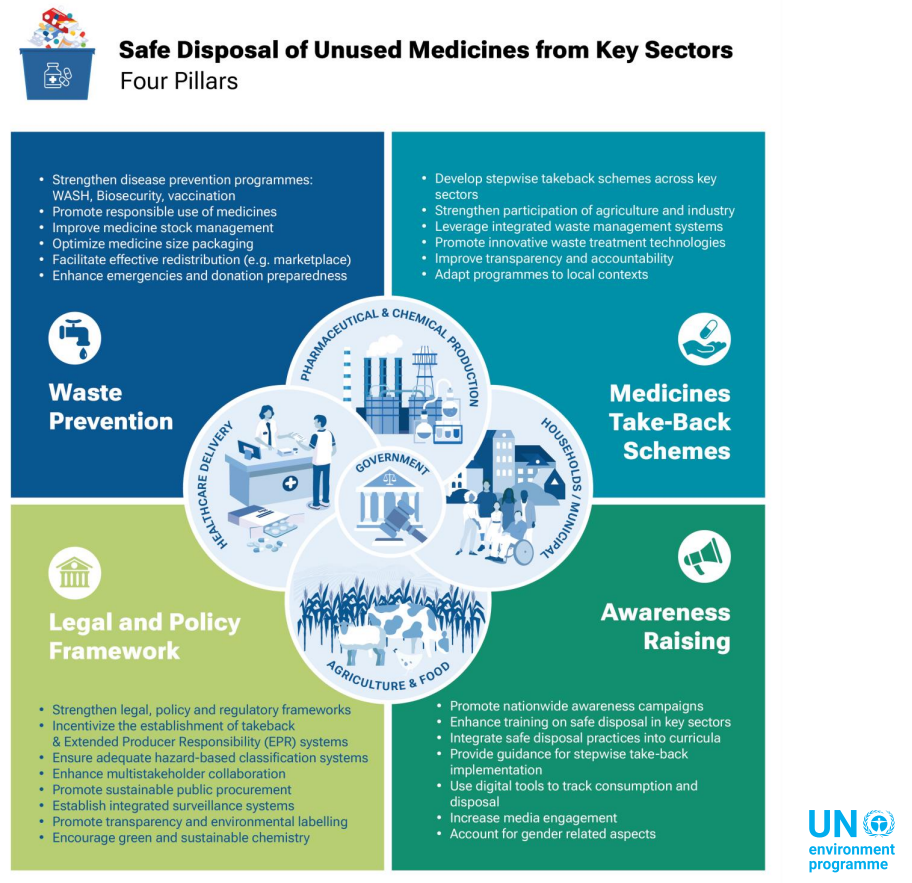
- Prevention
- Prevention is the most effective and cost-effective strategy. For example, it was estimated that around 40% of unused medicine in the Netherlands could be averted through improved waste prevention measures.
- This includes strengthening disease prevention programs, promoting appropriate use of medicine, improving stock and supply management, optimizing packaging, facilitating redistribution, and enhancing emergency and donation preparedness.
- The marketplace or redistribution system can also improve matching of supply and demand while generating economic savings, provided strict quality criteria and regulatory oversight are ensured.
- It’s estimated that 19% of unused medicine qualifies for redispense and redistribution.
- There is also evidence linking to redispense of unused oral anti-cancer medicine to waste reduction and cost savings and anti-cancer medicine is very expensive and not affordable in many countries.
- One example is PharmaSwap in the Netherlands in 2022, which enables pharmacists and the wholesaler to exchange medicine nearing expiry. Currently, it has successfully redistributed over 14’000 packages and saved more than 2 million euros in procurement costs.
2. Take-back systems
- Takeback schemes or programs designed for the return and use medicine from key sectors, both human and veterinary, to designated collection points and require a systematic, comprehensive approach.
- Countries are different in capacity, infrastructure, and regulation – implementation must consider the national context, the regulation, infrastructure, the technical and the financial capacity.
- Most existing schemes focus only on the collection. This guidance introduces a step-wise approach including seven-step planning, collection, segregation, registration and storage, transportation, final disposal and treatment, and monitoring and evaluation.
- Take-back schemes should be nationwide, well structured, user-friendly, standardized, and accessible.
- Importantly, the guidance integrates veterinary medicine, which is often excluded from the national system.
- For a take-back system to function sustainably, strong policy and finance frameworks are essential.
3. Legal and Policy Framework
- A strong legal and policy framework is essential to define responsibility and ensure safe management.
- Key actors – government, key sectors, the public, professional associations, among others, all have roles to play.
- We have various mechanisms – voluntary takeback schemes exist in some countries. For example, Sweden, where pharmacies act as collection points and municipalities manage disposal.
- Extended producer responsibility (EPR) is a key mechanism, shifting responsibility from government to producers under the polluter pays principle.
- An example is Colombia, which introduced Resolution 371 in 2009, where a takeback scheme supported by EPR has strengthened safe disposal mechanisms.
- Government-funded schemes also exist. For example, Australia National Return and Disposal of Unwanted Medicine (NatRUM) program launched in 1999 to ensure nationwide safe, environmentally sound disposal. Since 2001, this initiative has helped collect over 30’000 tons of unused medicine.
- Without regulation, enforcement, sustainable finance, systems cannot scale or endure. Implementation of sustainable procurement, environment risk assessment, transparency, surveillance, eco labeling would further strengthen the system.
4. Awareness raising
- Even the best systems fail without participation. Regular targeted awareness campaigns are essential for health care professionals, veterinarians, farmers, and the public.
- Examples exists with disposal campaigns in Europe, or AMR awareness week, or a behavior change initiative in the UK veterinary sector, for example, which contributed to a 59% reduction in antibiotic use and disposal.
- Awareness drives behavior change and improves participation in take-back systems.
- When these four pillars work together, the benefits are substantial. What do countries gain? An effective system which delivers triple wins – health protection, environmental protection, economic efficiency.
- Reduces long-term costs.
- Creates green jobs and stimulates innovation.
- Supports equitable access to medicine, particularly in low and middle-income countries.
- This is not a cost; it’s an investment in resilient national systems.
- We have the guidance; now we need implementation at the national level.
- Countries can:
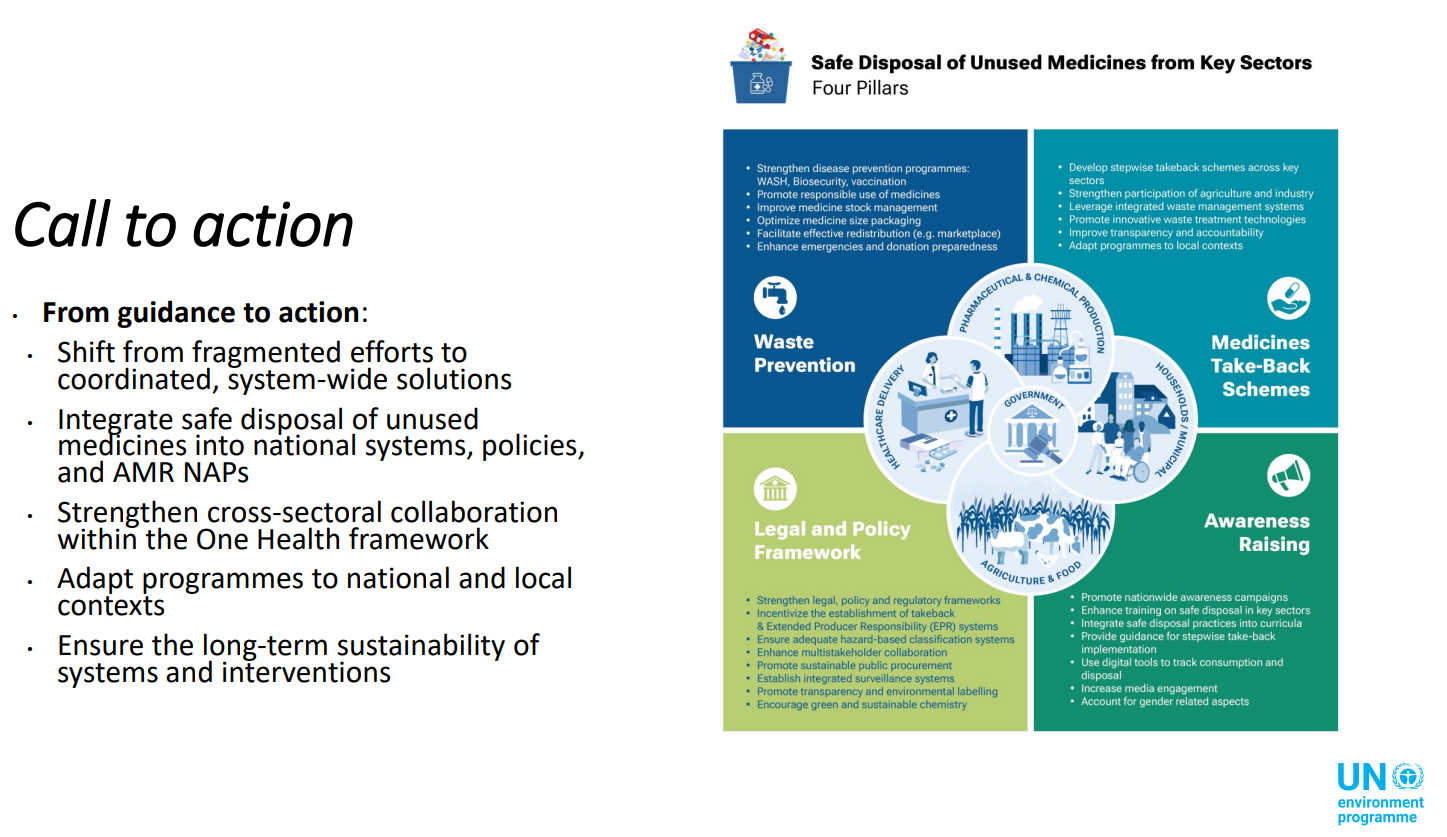
- Shift from fragmented efforts to a coordinated systemwide solution.
- Integrate safe disposal of unused medicines into national system policies and the AMR national action plan.
- Strengthen cross-sector collaboration within the One Health framework.
- Adapt the program to national and local context.
- Ensure the long-term sustainability of the system and interventions.
- Safe disposal and use of medicine is not a standalone issue. It is part of building resilient integrated national systems that protect health, ecosystems, and economies.
Global, Regional, and National Experiences | Safe and Sustainable Health Care Waste Management with a Focus on Waste Prevention
Maggie MONTGOMERY | Technical Officer, Water, Sanitation, Hygiene and Health, World Health Organization
- The issue of solid waste generally is a growing problem also within health care facilities themselves. For example, we know that just one hospital can generate over 1’632 tons of waste.
- We have also seen that since COVID-19, there has been about a 2-3% increase every year, with high-income countries generating the most.
- Unfortunately, a lot of this is linked to personal protective equipment (PPE), which in many cases is not needed.
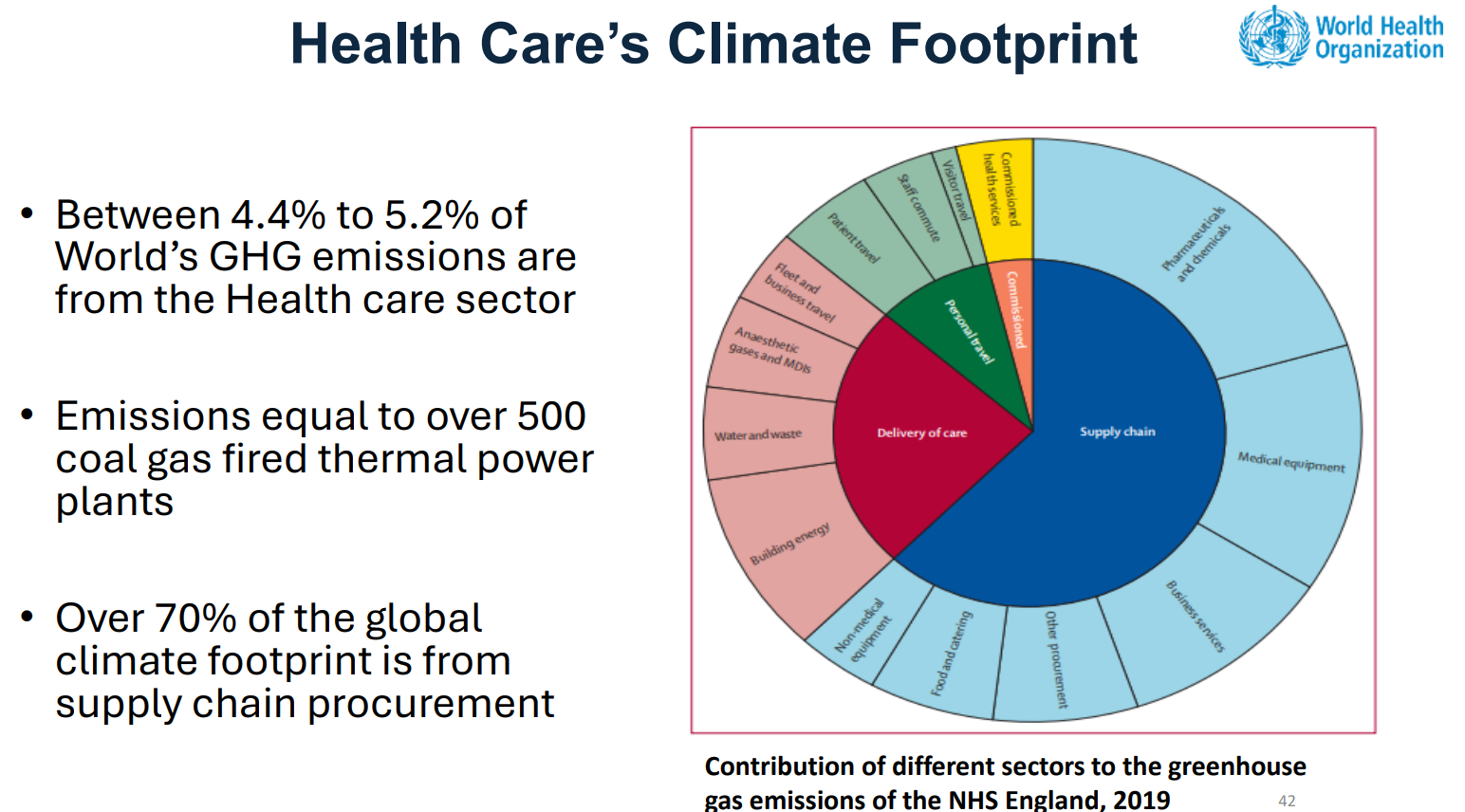
- We know that healthcare’s climate footprint is significant. Around 5% of the world’s greenhouse gas emissions are coming from the healthcare sector. Of these emissions, the majority is coming from supply chain procurement, which includes medicine. Reducing the amount of unneeded medicines can have a beneficial impact on lowering these emissions.
- During COVID, we had large increases in healthcare waste and 44% of which was not needed. It was very clear that there was a huge opportunity here to prevent waste generation by only procuring what’s actually needed.
- The three Rs – reduce, reuse, recycle – are really important. Procurement isn’t just about procuring what’s needed, but it’s about making sure that products are in eco-friendly packaging and making sure medicines are packaged in the amounts that are actually going to be used. It’s about not buying what you don’t need. It’s also very important that any of that packaging around medicines is being segregated and recycled.
- WHO has several tools, and last year, as part of this effort with GEF and UNEP, it published best practices on safe management of pharmaceutical waste from healthcare facilities.
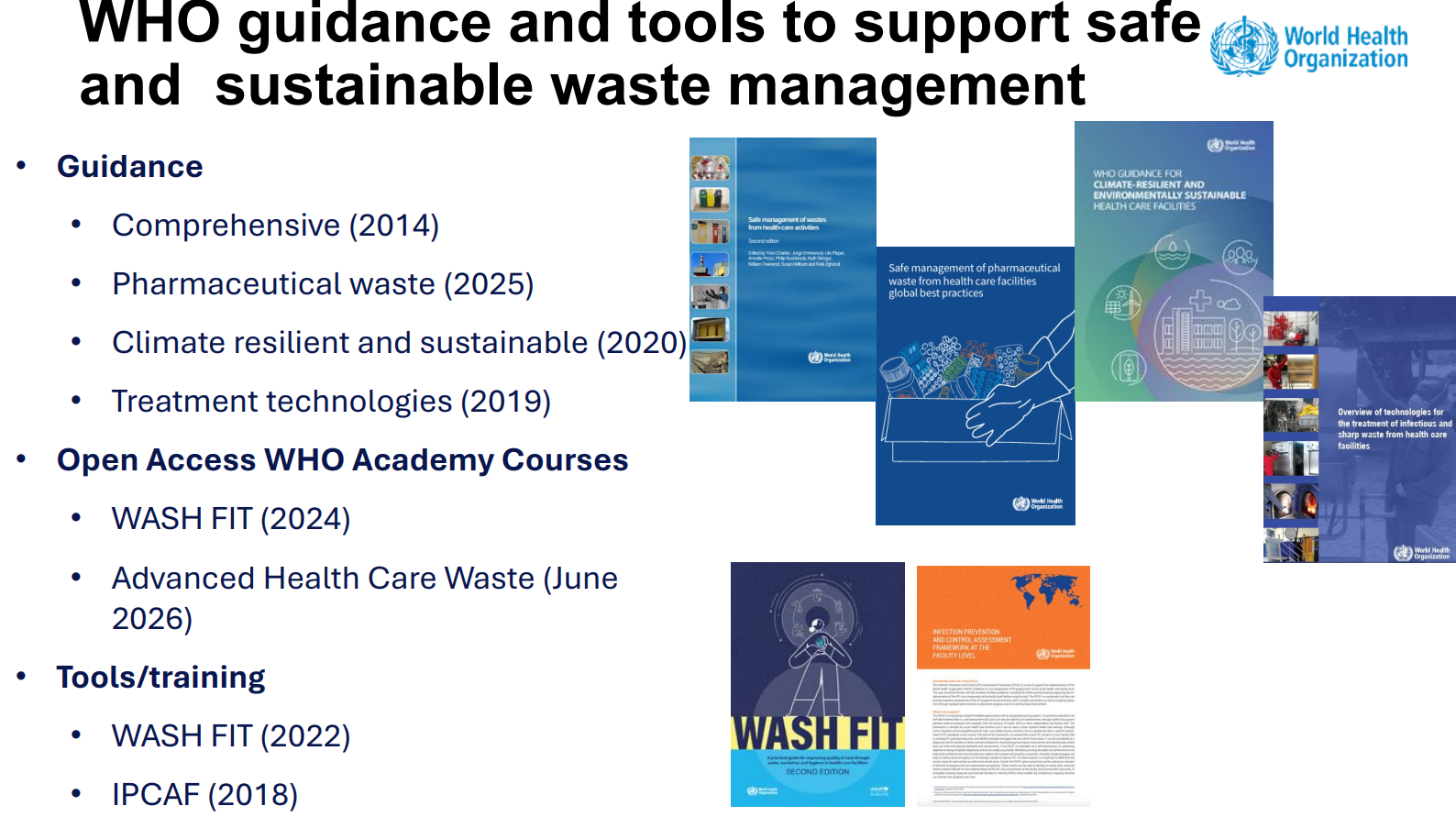
- A new course on open access on WHO Academy also offers a specific module on pharmaceutical waste. It aims to make sure we provide the healthcare facility managers and workers with tools to address this issue.
- Pharmaceutical redistribution programs:
- We’ve seen in the Netherlands, for example, that they’ve saved over 12’000 medicines by ensuring medicines that aren’t going to be used in certain pharmacies or hospitals are redistributed where they will be used.
- Bangladesh has a very interesting program where they’ve integrated logistics management, not only to redistribute medicines but also to have buffer stocks. Rather than shipping more than is needed or having a lot of uncertainty about those needs, it’s keeping stocks in a more central place where they can be quickly distributed just in time.
- It’s fundamental to ensure that unused medicines can be returned to pharmacies. Individuals are doing this and they benefit because they can resell their medicines, and pharmacies can then make sure they get to people who need them. Obviously, there has to be quality control here to make sure nothing’s been tampered with.
- The new global Pandemic Agreement, which was approved last year at the World Health Assembly, makes a really strong call for pharmaceutical donations to be based on population health needs. This may seem obvious, but we have still seen up until today that many donations are happening that are not necessarily correlated with requests or needs.
- In addition, the WHO supply chain and logistics network is also working to address these last-mile barriers with things around cold chain and getting medicines to rural villages. In doing so, we can prevent this wastage that’s happening when electricity supplies fail and when medicines don’t get to where they are needed.
- Regulations are key to enforcing some of these principles:
- Nepal approved new regulations on pharmaceuticals last year that have interesting grassroots engagement and support. This is somewhat unusual for regulations, which are usually much more based at the national level. But in engaging local organizations in supporting waste prevention and safe waste management, it helps those regulations be more effectively implemented.
- In Australia, nurses led a campaign to make sure that legal requirements were approved, but that, at the time, weren’t being implemented in hospitals, were actually being implemented. This had a positive impact on preventing pharmaceutical waste as well as segregation and proper treatment.
- There are many venues and platforms that this issue can be addressed and it is important to use all of them.
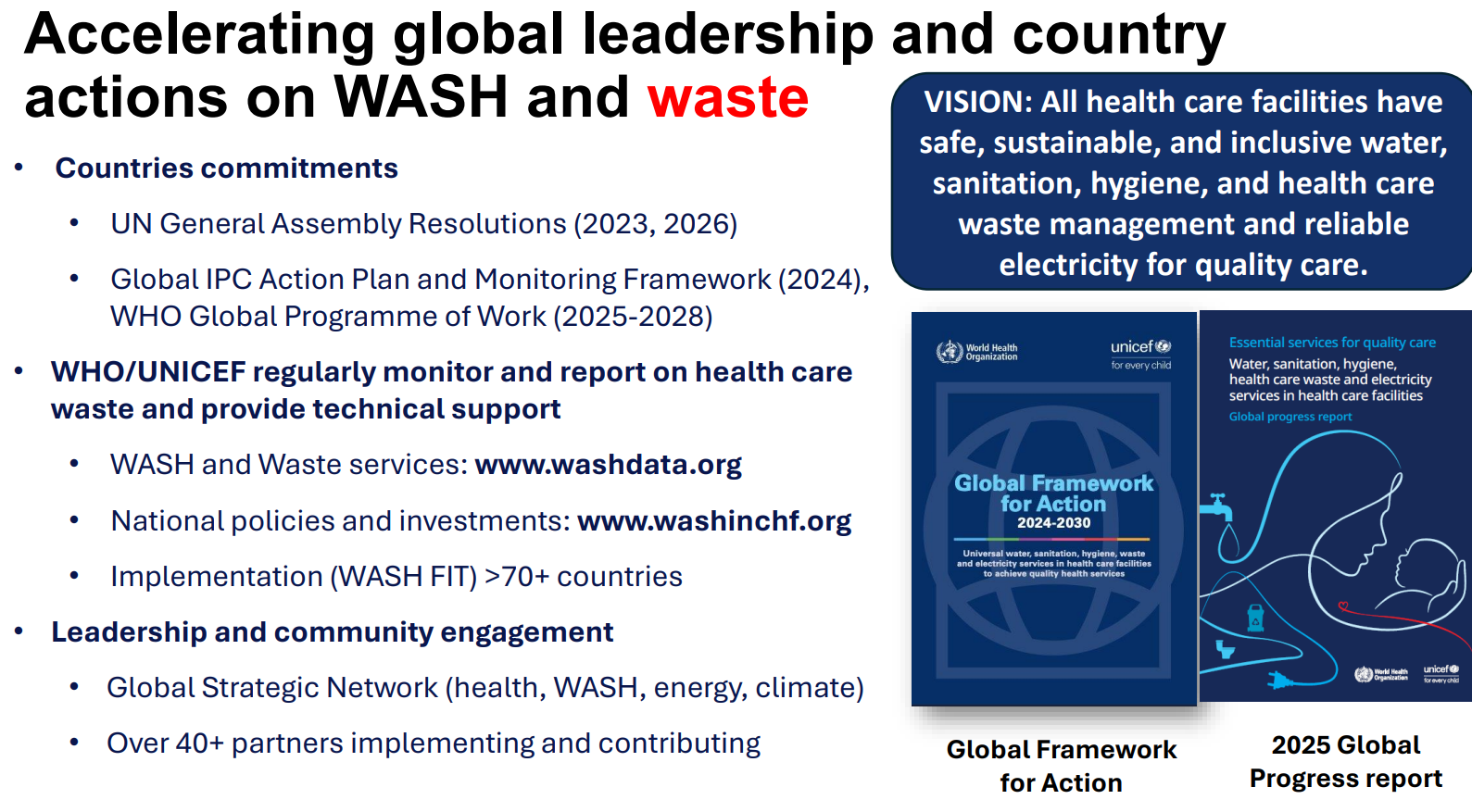
- WHO and UNICEF are leading the work with about 45 partners on addressing water, sanitation and waste in healthcare facilities.
- This issue has also been recognized at the highest level, with UN General Assembly resolution (A/RES/78/130) passed in 2023. A new one is currently being negotiated, and will focus on human rights, equity and the waste element.
- WHO and UNICEF regularly are reporting on waste practices both in healthcare facilities as well at the national level in terms of standards and regulations.
Role of Veterinarians in Safe Disposal of Unused Medicines – A One Health Approach for National Systems
Nancy DE BRIYNE | Executive Director, Federation of Veterinarians of Europe
- The Federation of Veterinarians of Europe is an umbrella organization for regional and national veterinary associations from 38 European countries, representing about 330’000 veterinarians.
- The health and welfare of people, animals and our environment – it’s so closely interlinked with each other. Many of the diseases we have, and even more of the emerging and reemerging diseases, are also zoonotic diseases. They affect animals but also people.
- If we look more specifically at medicines, we basically use the same medicines in the human field as in the veterinary field, and in some cases also in the agricultural field. It’s the same active ingredients and as such, responsible disposal of unused medicines is crucial in all these fields. We cannot look at one field alone.
- In the European Union there are some rules on the disposal of veterinary medicines and a general regulation on veterinary medicinal products.
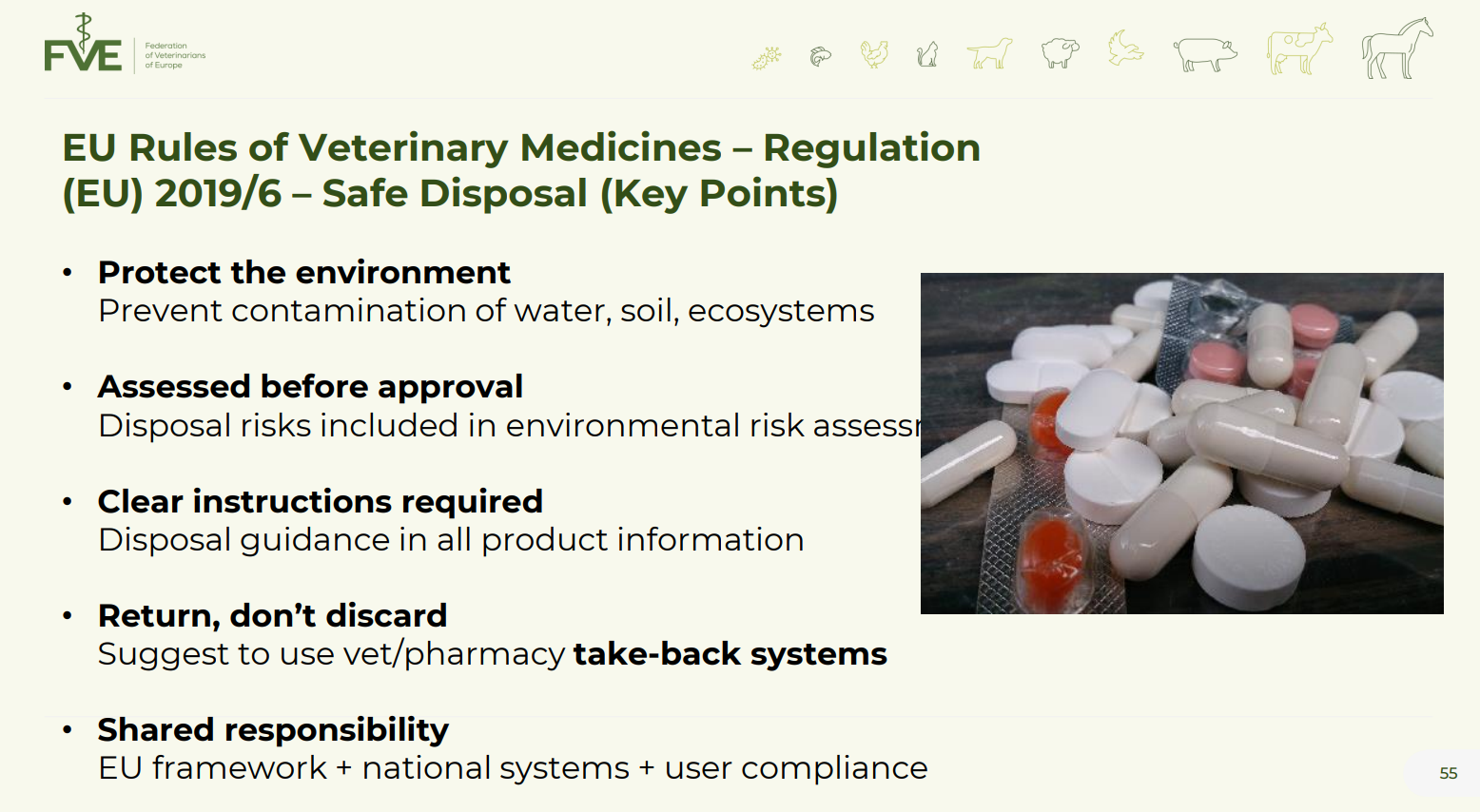
- Yet in practice, it is a bit more complex.
- The first pillar, avoiding having unused medicines, is a fundamental step to reduce the gravity of the issue. That can be done with smaller packages, for example.
- We have to try to prescribe smaller amounts that are only the amount needed by the patient, but also have smaller packages with not too many medicines, not more than is needed. W
- If we look at the unused medicines themselves, we have to differentiate between different types.
- If it’s an unused medicine by private animal owners, for example, dog or cat owners, in most countries, they can bring it back to the pharmacy.
- If it’s by operators, for example, farmers, this is different. They usually have to have a contract with the waste management firm and bring it back to the factory or the wholesaler. This is really different per country. It needs to be a practical way to do it and that is feasible for the operators.
- There are other rules for other medical waste. PPE equipment was already mentioned in the previous presentation.
- We also have special rules for these more toxic medicines like cytostatic or cytotoxic medicine.
- What we see is that the detailed rules are mostly set on a national level or even on a municipal level, not on the European level.
- What is really important is that rules should be clear. They should also be practical. For example, if operators have to pay for every transport of unused medicines, what they will do automatically is try to store and combine it to keep it longer to avoid the cost of too many transports.
- Lastly, rules should also be well communicated. Everybody should be aware of the rules, what they have to do, and we all have a role to play there. I still see many questions around that and that people are not aware. We have to keep on putting effort into this area.
- There is also a fact sheet that we made on the European level with all animal health stakeholders together on disposal of veterinary medicines, underlining what responsible disposal could look like and what the different systems are.
- The last one is the European Commission guidance document for hazardous medical products at work.
Disposal of Unused Veterinary Medicines: Insights from a Global Survey of Small Animal Practice
Paweł BĘCZKOWSKI | Associate Professor, Department of Veterinary Clinical Sciences, Jockey Club College of Veterinary Medicine and Life Sciences, City University of Hong Kong | Member of the World Small Animal Veterinary Association (WSAVA) Therapeutics Committee
- A recent global survey of small animal vets on how unused and expired vet medicines are handled in practice and what this really means for safe disposal from a One Health perspective. The study is the result of collaborative work within the WSAVA Therapeutics Committee.
- We all know that medicines do not simply disappear once the treatment ends. How unused or expired products are handled very much depends on how disposal responsibilities, guidance, and practical pathways operate in everyday clinical settings.
- Despite this, the internationally comparable data on this and in veterinary practice have been limited. We really didn’t know until now what is happening on a global stage in clinical practice. To explore this, we conducted a global survey of small animal vets and we got responses from over 70 countries worldwide.
- The survey revealed:
- Substantial variation between countries
- Frequent lack of clarity about disposal responsibilities and guidance
- Consistently low routine return of unused medicines.
- These patterns were observed across different regulatory and healthcare settings across different countries, suggesting that disposal challenges are not confined to any single region or any single income group.
- Legislation and professional guidance fail to align across different countries. What this figure highlights is not a lack of professional intent, but instead a weak integration of disposal responsibilities into routine clinical systems.
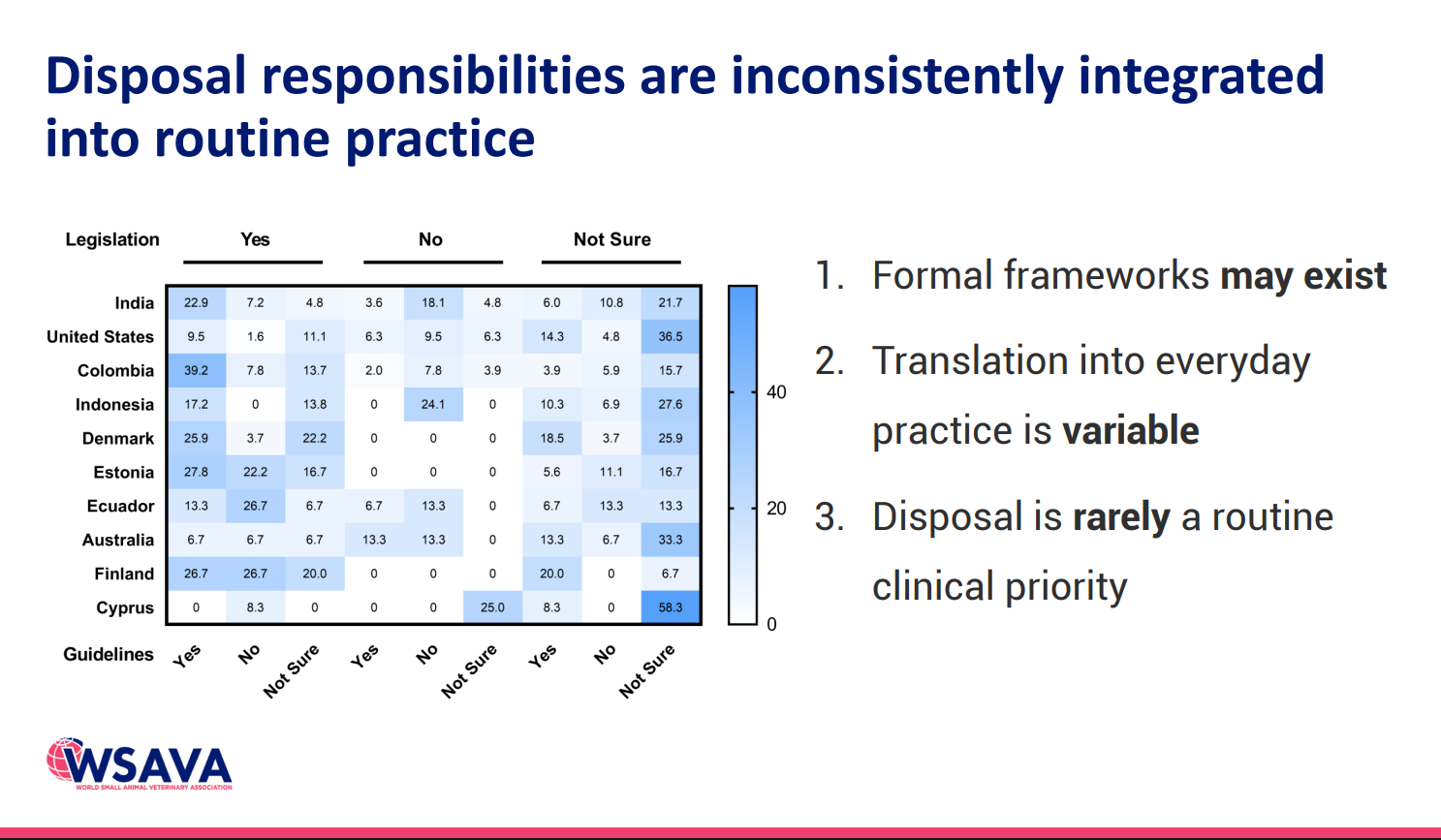
- What we have seen is that across countries, legislation and professional guidance may actually exist, but they are not always translated into clear practice-level expectations. The result of this is that disposal often competes with other priorities in busy clinical settings and rarely becomes routine in everyday care. It’s never a priority for us in clinical practice.
- What does that mean at the practical level?
- This translates into unused or expired medicines being returned only infrequently.
- Most vets reported that returns occur rarely or never, as highlighted in red here, and that few formal measures are actually in place to actively encourage return of unused products.
- This means that in a busy clinical setting disposal tends to compete with other priorities rather than being treated as a routine part of care.
- When we asked the vets what would help most to improve safe return and disposal, the strongest signals were education. When you look at this graph, education for pet owners and education for vet teams was prioritized most frequently. Thid was a practical support to offset disposal related costs. It cost money to dispose medication to the practice – this is being seen as a substantial barrier and identified by practitioners as a priority that would improve disposal rates.
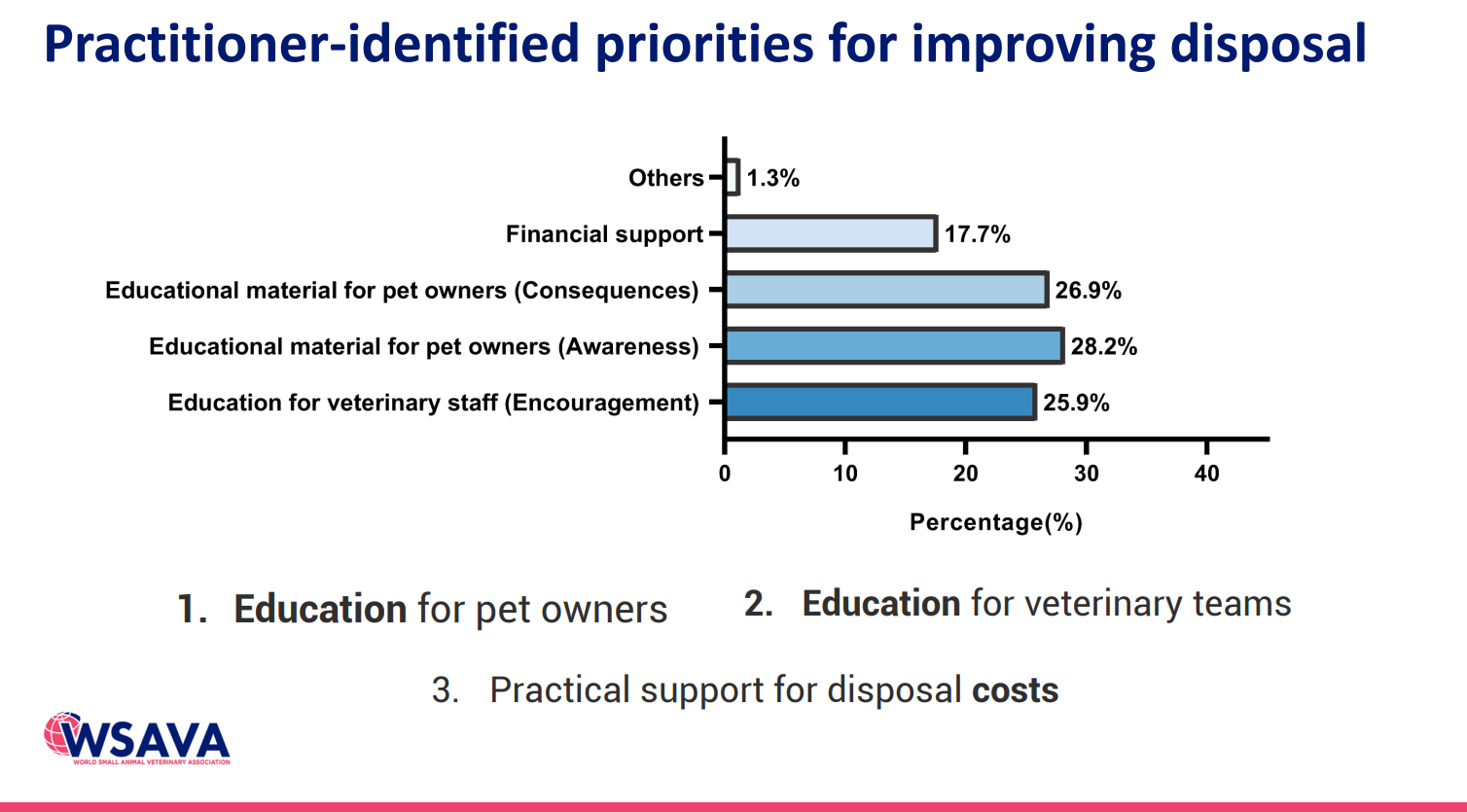
- Those responses suggest that many practitioners see improvement as achievable through clearer communication and better integration into existing systems rather than through additional regulation alone. Regulation is already there. It is the integration which needs to happen.
- In summary, the take-home messages from this study, which looked at the responses from over 70 countries, are:
- The disposal of unused vet medicines is not routinely incorporated into everyday clinical practice.
- It does not reflect the lack of professional motivation, but rather limitations in a system design.
- In many settings, routine care does not actively prompt or support disposal as part of everyday practice.
Preventable Pollution, Avoidable Costs: Managing Unused Pharmaceuticals
Frithjof LAUBINGER | Environmental Economist, Environment Directorate, OECD
- The economic aspects and case for preventing pollution from unused pharmaceutical goods.
- There are many different pathways of how pharmaceuticals end up in the environment, but it matters to also focus on the management of unused pharmaceuticals. This is one of the pathways that is relatively easy to prevent and manage.
- In policy language, it’s kind of a low-hanging fruit that we’re looking at, as compared to pharmaceuticals that, for instance, are consumed but then not fully absorbed by the body and excreted – those end up directly in wastewater.
- Unused pharmaceuticals, however, are a solid waste stream that can be managed and can avoid ending up in the environmental system, where it contributes to negative impacts.
- It’s really about focusing on prevention over remediation.
- From an economic perspective, the nonuse of pharmaceuticals represents quite a significant economic waste. Up to 50% of all the medicines that have been prescribed are actually not used and end up being waste.
- In the United States, you have six out of ten opioid patients who reported having leftover pills.
- In France in 2018, it was estimated to have up to 17’000 tons of unused pharmaceutical waste per year.
- If you combine these non-use rates, these rates of losses, with what countries are actually spending on pharmaceutical expenditure per year, at least for the OECD countries, you quickly end up in economic losses.
- Economic waste ends up in the billions for many countries – it’s not only an environmental issue, but it’s really also an economic loss that we are looking at.
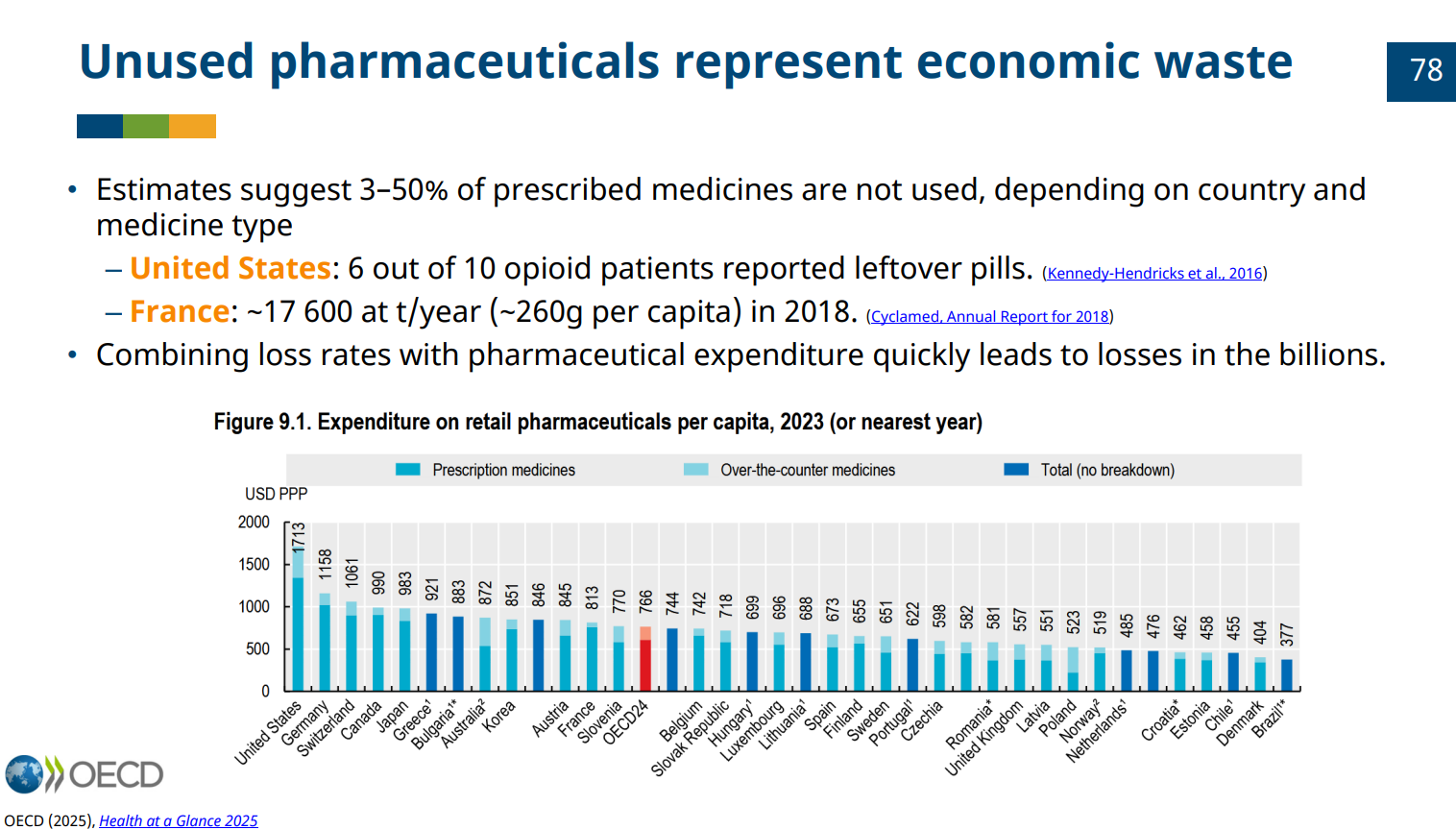
- Maybe more important than the measurable and direct economic impacts are also the impacts that we cannot directly measure. Those are the non-market impacts to the environment. These are impacts that are also happening but they’re not fully priced into the economic system.
- Pharmaceutical leakage can contribute to ecosystem and environmental impacts.
- They can bioaccumulate throughout the ecosystem hierarchy and then also end up in foods.
- They also can have endocrine-disrupting effects on species. It was shown in some studies that hormones from contraceptive pills have proven to impair the reproduction of exposed fish populations. This is quite an alarming sign of what could happen to the broader ecosystem.
- Beside ecosystem impacts, they can also result in public health risks – most notably through the accumulation of antimicrobial-resistant bacteria. When you have antibiotics leaking into the environment, you can have different bacteria that become resistant to those and that can have severe public health risks just simply through the means of antibiotics not being effective anymore.
- When you look at that again through an economic lens, there are also modeling studies that estimate that the healthcare costs that result out of antimicrobial resistance can be up to 325 billion in 2050. This is also clearly, from an economic angle, quite an important matter to look at.
- These are largely non-market impacts and they’re currently not being reflected in the medicine prices nor the waste costs of unused pharmaceutical management, but they should really be taken into account when you look at the management of unused pharmaceutical waste from a policy perspective.
- Disposal practices across countries really vary widely and in our work, we have scoped all the different studies that have reviewed disposal practices.
- Household disposal practices of unused pharmaceutical waste really depended on the availability of a separate collection system but also how aware households are about these takeback systems that are in place.
- Even in countries where a separate collection system is an option, other disposal measures are actually still quite widespread.
- Pharmaceuticals that are being flushed down the toilet or the sink are particularly problematic for the environment as these are directly ending up in the waterways. Therefore, they are also leaking into the environment, assuming that wastewater treatment systems don’t have the fourth treatment stage in place where they’re being filtered out.
- When you look at what kind of pharmaceuticals are being flushed down, it is particularly common for households to flush down liquids and creams. It therefore seems more intuitive for people to flush these down than to pour pills in the toilet. Awareness campaigns need to focus on guiding households to also dispose of liquids and creams in separate collection systems and not only the solid pharmaceuticals.
- Recommended measures along the waste hierarchy:
- In general, prevention first and then remediation after. Preventive measures can simply focus on preventing diseases in the first place; cutting the need for pharmaceuticals.
- In terms of packaging, redistribution platforms and marketplaces can better redistribute unused pharmaceuticals, avoiding waste generation. PharmaSwap was one of the examples that several of the panelists have already mentioned.
- It’s also important to recognize that not all pharmaceutical waste can be prevented so there are definitely also some pharmaceuticals that will remain unused and that are basically unavoidable waste. For those, it’s important to have proper management systems in place. Separate collection can help to prevent leakage and to allow households to have a convenient and safe disposal pathway.
- Countries that have high landfill rates of solid waste should especially consider implementing separate collection schemes because it’s in those countries where households dispose of the solid waste, but this solid waste is not incinerated but actually landfilled. It’s in those countries where there’s a risk of leakage of those pharmaceuticals into the soil and groundwater and into the broader ecosystem.
- We have reviewed different collection schemes that are in place, and identified schemes that are set up as part of an EPR, an extended producer responsibility scheme, that show pretty high collection rates, if not the highest. These are schemes that are very efficiently managed and at the same time implement the producer pays principle. It basically implements the scheme where the producers –the pharmaceutical companies – or the pharmacies are responsible for paying for the collection scheme. The burden is therefore on the producer rather than on the taxpayer.
- When you look at the cost of those schemes – because this is of course also often an argument for or against this – the operating costs are extremely low. The contributions per pack are less than 1 cent Euro for many of the EPR schemes that are in place.
- Another measure is end-of-life treatment. Upgrading wastewater treatment plans is of course an effective measure because it can filter out the pharmaceutical APIs, but it’s also a very expensive measure.
- Any of the measures above we consider the most cost-effective measures and should be explored first and once these are in place then countries can also explore upgrading wastewater treatment plants.
Further resources include:
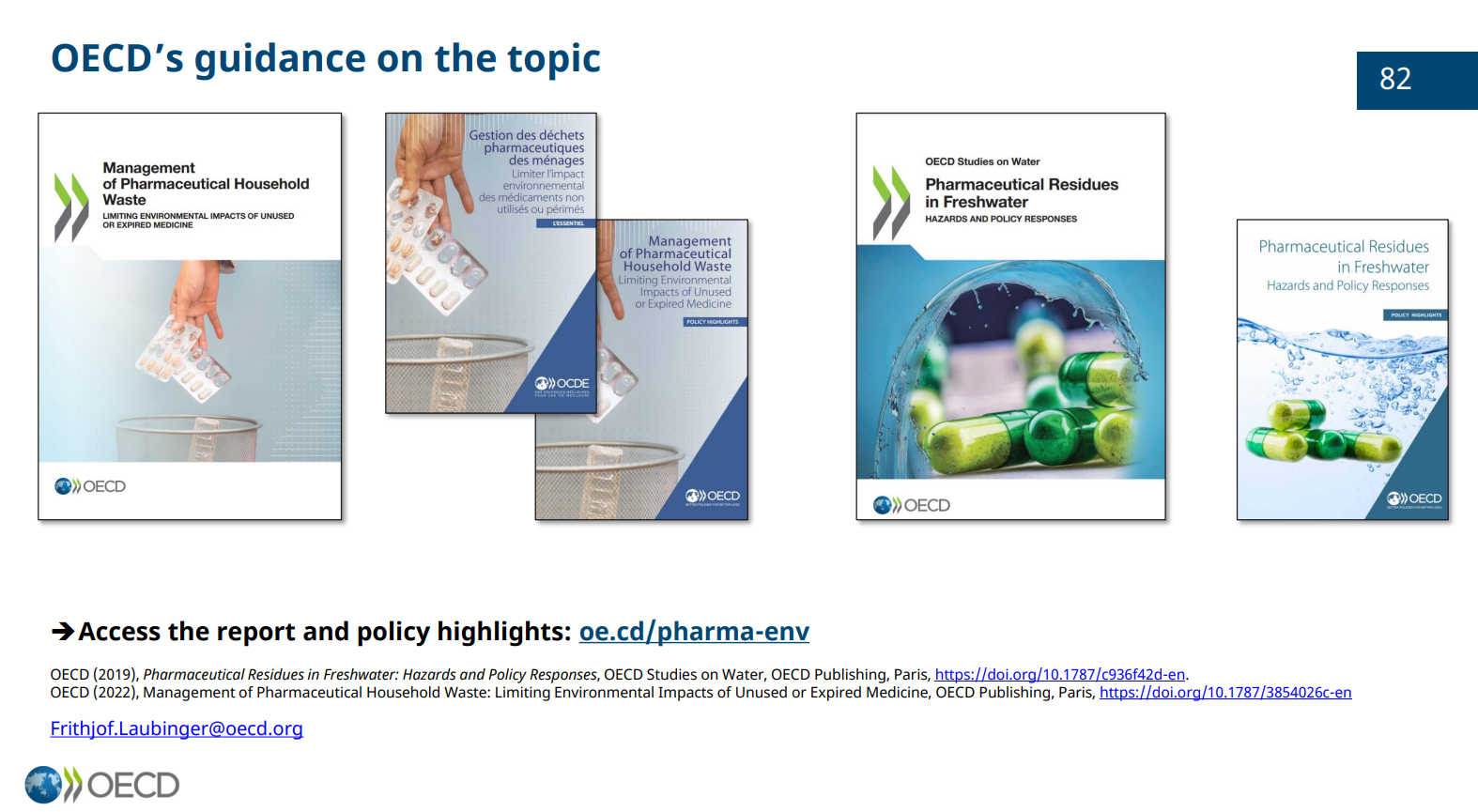
- Management of Pharmaceutical Household Waste: Limiting Environmental Impacts of Unused or Expired Medicine, OECD 2022
- Pharmaceutical Residues in Freshwater: Hazards and Policy Responses, OECD Studies on Water, OECD, 2019
From Words to Action
Viktor HRISTOV | Healthcare Waste Manager, ISWA
- Resources on how to safely manage healthcare waste, including pharmaceutical waste, are largely available.
- In our experience, it is really important to bring these resources to the national context because it needs to be observed in order to perceive the problem and to see what is accessible, what is available, and what is affordable for such waste management plans to be implemented.
- It is important to identify the problem because unused medicines are not all hazardous waste.
- There are hazardous materials within the pharmaceutical waste, but they are not all hazardous waste.
- They consist mainly of expired pharmaceuticals, unsealed or compromised pharmaceuticals, and bulk loose tablets and capsules whose use cannot be determined. They can be compromised by the cold storage or specific storage conditions.
- The pharmaceuticals that are no longer used are usually considered pharmaceutical waste.
- It is important to realize what pharmaceutical waste piles actually consist of. It is usually not just pharmaceutical waste and has many other materials, including many outdated single-use devices, compromised medical consumables, and diagnostic reagents that cannot be used or are beyond their shelf life.
- Every product has its own tertiary packaging, which consists of secondary or commercial packaging and the primary pharmaceutical or active pharmaceutical ingredient is packed into the primary packaging.
- What is also important is when you look at the other medical consumables and single-use devices or diagnostic reagents, they might also belong to this category; they also consist of all of these packages. Once you combine the packaging and the pharmaceutical product, we immediately have a much bigger volume and weight of waste that needs to be handled properly.
- Decontaminated compromised packaging is always part of the waste. This adds a lot of volume and weight, which is really important to the waste management industry. It is really unusual to expect that the pharmaceuticals are going to be divided by their form, by their dosage, or by their type. Usually, it is kept in the original transport pack, or it is scattered around.
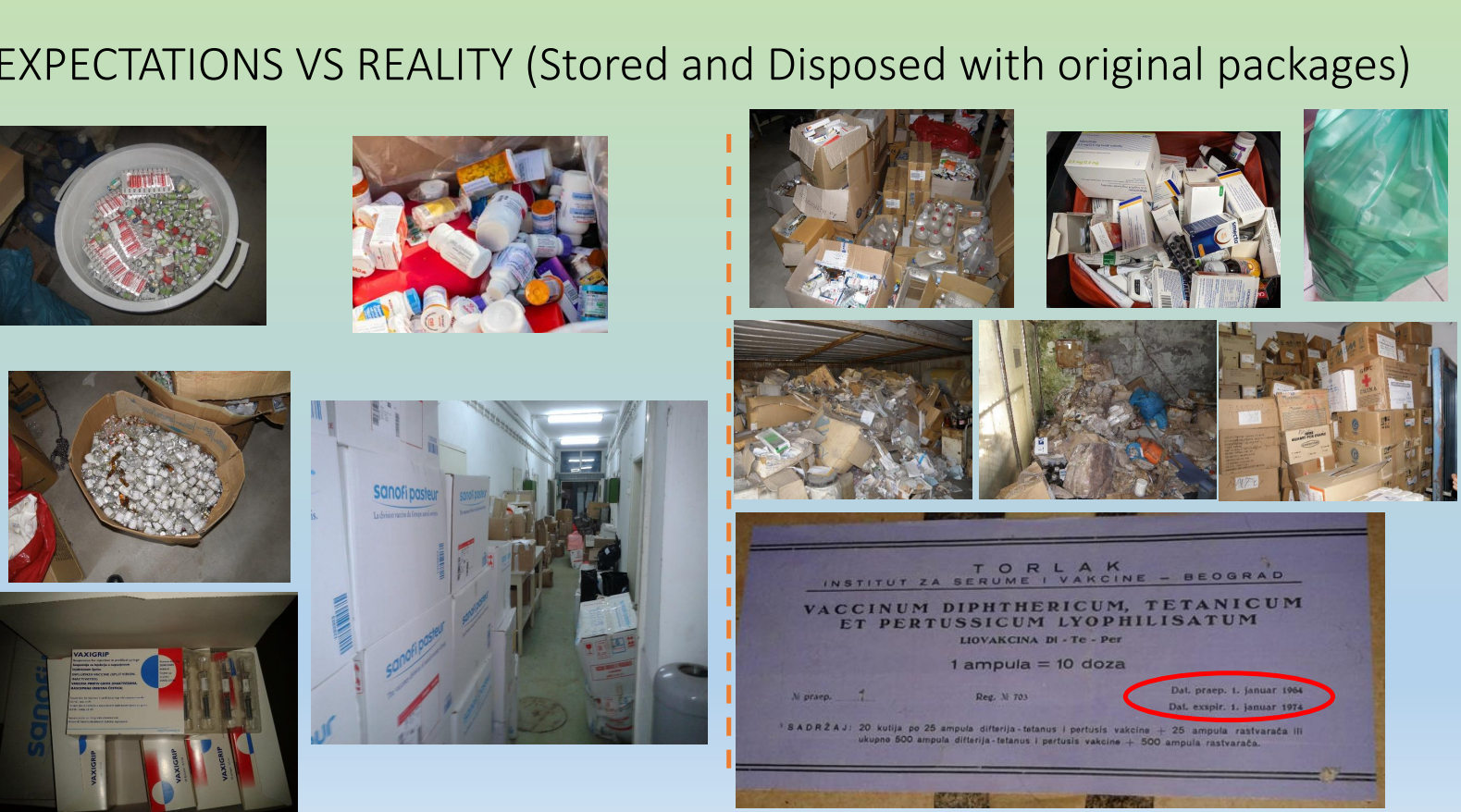
- We also need to consider that some of them might stay for a very long time. The circled number in the slide shows that this product expired in 1974. Luckily this has already incinerated years ago, but it has been stored for a period more than 45 years in storage.
Further Improvements of Product’s Lifecycle and Sustainability
- When we are talking about how to set up and how to think about the future, there are a lot of initiatives that are in place where all of the stakeholders that are part of the product’s life cycle and it sustainability are trying to include many of the important elements in order to achieve better waste management at the end of the life.
- Throughout the development phase, the researchers and the developers are considering recycling, reusing, or reducing elements in order to provide better end-of-life recommendations for the users.
- These are accepted by the manufacturer who, besides its own sustainable elements for sustainable production, is trying to implement sustainable materials within the product itself.
- This now needs to be transferred to the product suppliers who are putting these products on the market, where they need to ensure reliable and safe transport, storage conditions – everything which is mandatory for this product not to be compromised.
- Then the usage will have to ensure the correct dosage, proper usage, and prevent overstocking of pharmaceutical materials.
- Those are the elements which at the end, in the waste processor, will be in a better position to get those waste streams, to improve the existing treatment methods, and even to develop or to consider new methods for safe treatment disposing or recycling of these pharmaceutical products.
- Finally, how do we turn from words to action? Turning the project into reality is a complex activity. There are a lot of challenges, uncertainties, and restrictions – many of which are imposed by national regulation or lack of national regulation.
- It is important to identify what needs to be done, how it needs to be done, what are the capacities that are needed for these particular activities to happen, and who the responsible stakeholders are.
- Once the problems are identified, there has to be a sort of task force which will lead the project’s implementation. It needs to have some sort of steering committee formed by all of the relevant stakeholders. They need to ensure their full commitment, which means that they need to be constantly involved in all project activities.
- They need to use SBAR tools (Situation, Background, Assessment, and Recommendations) for all work phases.
- Once the needs, services, capacities, or plausible scenarios are identified, we will have to talk about budgets. This is really important because many of the projects are failing or are successful because the budgets are available.
- Once the decision is made, then all hands are on deck, and it has to get it done. It is a process. It takes a lot of time, but it always seems impossible until it’s done.
Disposal of Unused Medicines in India
Vidhi MATHUR | Senior Program Officer, Toxics Link, India
Policy Framework in India
- The Drugs and Cosmetics Act of 1940 and 1945 govern the requirements of manufacture, sale, and distribution of drugs in India.
- The regulation of unused or expired drugs was introduced through the Biomedical Waste Management Rules in 2016 and was established by the Minister of Environment, Forest, and Climate Change.
- These rules govern the handling, treatment, and disposal of biomedical waste and mandate segregation, storage, transport and incineration or immobilization of authorized facilities. These are healthcare facilities, for example, hospitals, veterinary hospitals, and public health hospitals.
- Biomedical waste here would imply not just pharmaceutical waste, but it also implies a lot of waste that is generated within the hospital. Radioactive waste is one, anatomical waste is another, glassware etc.
- Later on in 2025, a technical guideline was published by the Central Drug Committee in India, which is in line with biomedical waste and provides all the best management practices that are endorsed by WHO, UNEP and other international agencies.
Biomedical Waste Management Rules, 2016
- Waste management rules outline a sector-specific framework for managing hazardous healthcare waste. It allocates each stakeholder certain responsibilities on how they should be managing waste.
- For example, a healthcare facility must ensure proper segregation of waste and must hand over that waste to an authorized operator –it could be uh possibly a distributor or the common biomedical waste treatment facility.
- Manufacturers hold the ultimate onus – they are responsible for disposing of expired drugs which are returned by retailers and healthcare facilities.
- Biomedical waste treatment facilities are places that receive all the waste from healthcare facilities, and they have the function and responsibility of taking care of the final disposal step, such as incineration or whatever is prescribed under the biomedical waste management rule.
- The regulatory authorities, such as the pollution control board, monitor compliance and levy penalties if it does not adhere to the rules.
- This diagram shows the movement of unused medication within the biomedical waste management rules.
- All the green arrows are the supply chain drugs.
- All the red arrows are the disposal of unused medication.
- Starting from top to bottom, we first have the manufacturers who make these medications.
- The medications are then given to the distributors or the C&F agents.
- They then give these medications to healthcare facilities as well as pharmacies.
- The healthcare facilities produce their own pharmaceutical waste. They can have unused medication, expired medication.
- We also have pharmacies that have unused medication.
- Then from the pharmacy it goes to the consumers. Consumers in India depend a lot on pharmacies for medication, like in any other country, but the difference in India is that the unused medication that the consumers purchase or have then goes to the landfill because this aspect is not covered under the biomedical waste management rule.
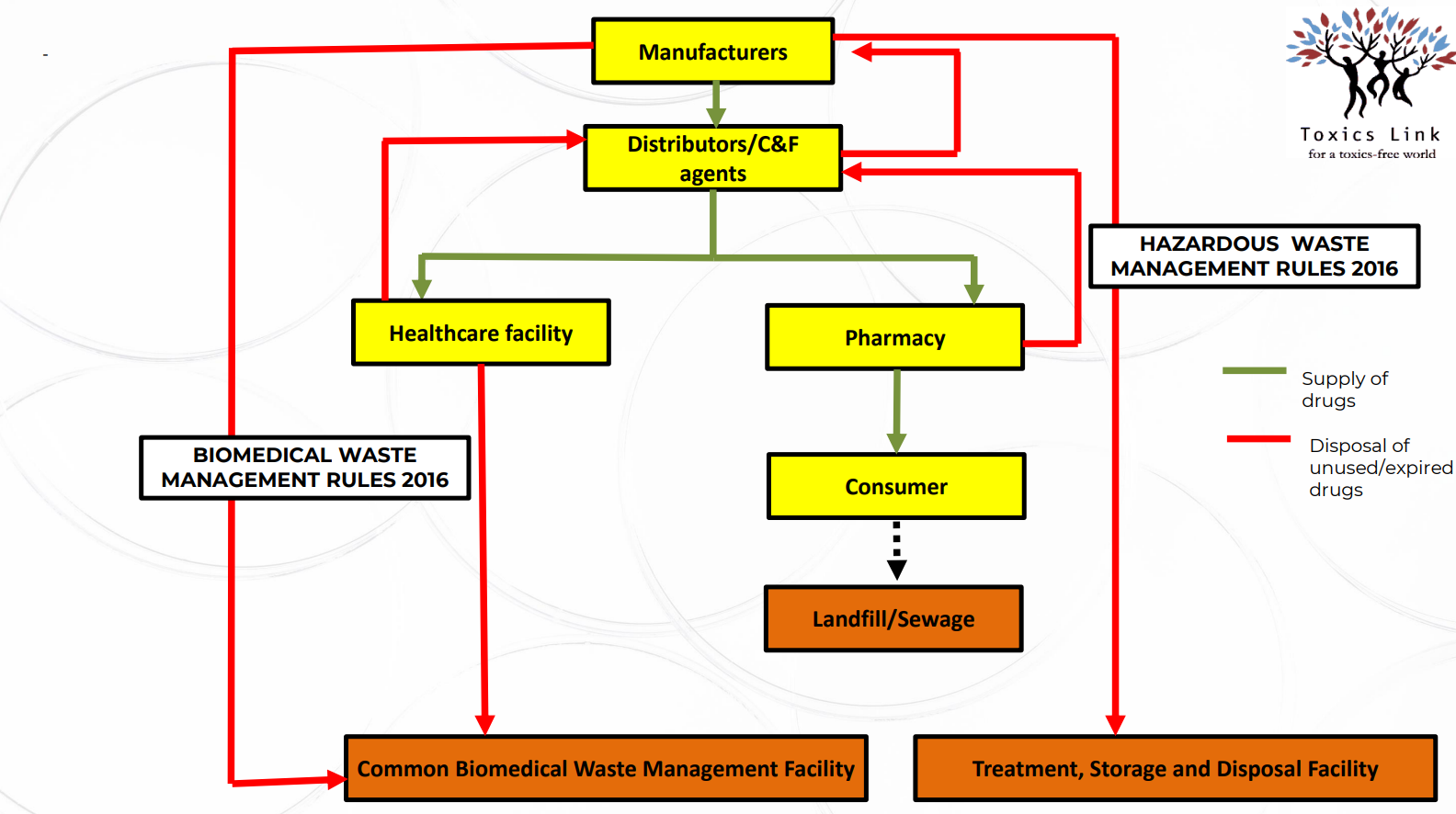
- This aspect of this step – that goes from the consumer to possibly the landfill or the sewage or however the consumer disposes of them – is missing and is not really addressed under the biomedical waste rules.
- Now coming to the healthcare facilities, once the waste is collected it goes to a common biomedical waste treatment facility.
- It either directly goes here or if there are unused medication, under the biomedical waste rule it can be directly given to the distributor and then the distributor can then give it back to the manufacturers.
- In this case, we see there’s an arrow on the extreme left side which says that even the manufacturers can directly give their waste to the common biomedical waste management facility if they have any biomedical waste with them. They otherwise can go through the other side where they can also give their waste to a TSDF facility – a treatment storage and disposal facility – which comes under the hazardous waste management rules.
Methods of Disposal in India
- According to the biomedical waste management rule, incineration is the method prescribed for unused medication that is given to the common biomedical waste treatment facilities. Incineration takes place at a temperature over 1200°C.
- There is also chemical decomposition, but it is a very rare kind of a method. They don’t really employ it much because it can only be used for medication in very small quantities and it has to be liquid in nature.
- We also have sewage because there is no feedback mechanism for unused medication from the consumer back to the manufacturer or back to the pharmacy.
- Landfill is also one of the methods that could go from the consumer.
Guidance document on Disposal of Expired/Unused Drugs (2025)
- This was a technical guidance document that was published by the Central Drugs Standard Control Organization (CDSCO), which is under the Ministry of Health and Family Welfare.
- It’s not a rule or an act – it is a technical guideline which provides guidance to different stakeholders on how they can manage unused medication.
- It was introduced in May 2025 and one of the changes here is the inclusion of a provision for households to help guide the public on what they should do with the unused medication.
- They have produced a “flush list” and have advised consumers to only flush those medications and the rest have been encouraged to have a take-back program. This effort aims to reduce sending the medication back to the landfill.
Toxics Study on Stakeholder Awareness
- This is a study that we did in 2025. We work a lot on AMR and antibiotic use because we want to understand what the baseline data is on how Indian people consume antibiotics, what they know about antibiotics, and what they don’t know about antibiotics.
- We’re not just looking at consumers but also pharmacists and clinicians and how they address AMR and what they understand about AMR.
- Specifically in relation to disposal, we saw that consumers did not know the safe way of disposing of unused or expired antibiotics.
- It was observed that they often threw the medication in the trash with normal household waste or they flushed it down the toilet. In the case of antibiotics, in some cases they also handed over their medication to their friends or family.
- Pharmacists also did not have much information about it, but they largely abided by the rules and they gave back the medication to the distributor
Existing Gaps
- There is no takeback mechanism for consumers.
- Compliance remains fragmented. Smaller healthcare facilities often are not connected to a common biomedical waste treatment facility and therefore people are then forced to either do some landfill or treat waste in a very environmentally unsafe manner.
- The primary stakeholders – the consumers and the pharmacists – are generally unaware of the different environmentally safe methods of disposal.
Interactive Panel Discussion
Q: Who should bear the cost of the safe disposal and of the leftover unused medication if they are returned to the vet practice or the pharmacies? Why should these vets care about antimicrobial antibiotic disposal?
Fergus ALLERTON | Willows Veterinary Centre and Referral Centre, Shirley, United Kingdom | Co-chair, World Small Animal Veterinary Association (WSAVA) Therapeutics Committee
- We have been encouraging a take-back scheme across the veterinary profession for the last few years, which mirrored a similar scheme in human pharmacies and those costs are borne by the veterinary practice themselves. They incur a relatively small charge to dispose of those leftover medicines. I think that’s something that we should assume as prescribers because we are making those decisions that the animals need those medicines. We need to reflect on them and see if our course durations are accurate or we can look to reduce them when they are.
- We are seeing lots of medicines returned and we also have an important role to play in ensuring environmental protection, as we’ve talked through all the risks of letting these pharmaceutical products get into the environment. We want to try and be part of the solution. I think in assuming that cost, we also reassure pet owners that they are returning them not for our financial gain, not so that we can resell them and make further profit, but so that we can demonstrate that we are sharing that responsibility to protect the environment.
Q: What would be the advantage of the EPR to fund this work?
Frithjof LAUBINGER | Environmental Economist, Environment Directorate, OECD
- There are different ways of funding take-back schemes. Either you have fully voluntary schemes, state-funded schemes, or extended producer responsibility (EPR) schemes. In EPR approaches, you make the producer that puts these products on the market responsible for paying for these schemes. This is an opportunity for the producer pays principle. It puts the costs on the actors that are responsible for the waste that is being generated. The other opportunity is that they tend to be operated more economically efficiently than state-run schemes, simply because private sector firms have the logistics, they have the supply chains in place, and there’s also a clear economic rationale for them to operate as economically efficiently as possible.
- At the same time through modulating the EPR fees, there could also be an opportunity in designing waste- maybe not the APIs themselves but at least the packaging- designing them in a way that they become more recyclable. This is more about the tertiary and the secondary packaging – so not directly the packaging that wraps the pills, but the other ones that are not really necessary to you to comply with certain standards.
Nada HANNA | Pharmaceutical and Antimicrobial Resistance (AMR) Expert, Chemicals and Health Branch, UN Environment Programme
- EPR systems are implemented in some low to middle-income countries, so this is feasible.
- Colombia is a strong example. In 2009, resolution 371 established a mandatory EPR system for unused medicine, assigning responsibility to the pharma manufacturing importer.
- Between 2010 and 2023, over 4’000 tons of unused medicines were safely collected and managed; there were nearly 3’000 collection points. 97% of the industry participated in that. It was supported by an awareness campaign and pharmacy training, which had a coverage reach of 75% of the national territory as of 2022. The resolution received a Future Policy Special Award in the “Environmentally Persistent Pharmaceutical Pollutants” (EPPP) category in 2021, awarded by the World Future Council.
Closing Remarks
Carla VALLE-KLANN | Programme Management Officer, Secretariat of the Basel, Rotterdam and Stockholm Conventions
- I thought it was very interesting to hear from the different and yet complementary speakers on these topics.
- The presentations clearly connected global policy priorities with concrete country and different sectoral experiences. We heard about the safe disposal of unused medicines as a widely recognized priority and that the challenge before us is mostly implementation.
- As highlighted by several speakers today, this gap persists despite all the growing policy attention that we have been working on.
- Today’s discussion highlighted the four pillars of UNEP’s guidance, which provide a clear framework for translating commitments into functional national systems.
- We heard about work on prevention as the first pillar and prevention being one of the most effective and cost-efficient approaches, requiring concrete action for example, in strengthening disease prevention programs or improving inventories and supply chain management.
- We also heard about country experiences which showed that these upstream measures can deliver measurable results and these measures can apply equally to human and veterinary-related medicines.
- We also heard about the second pillar – the comprehensive and step-wise takeback systems. The different experiences shared today showed that takeback schemes succeed when they are embedded into national systems and when they are accessible to users and supported for by sustainable financing. The guidance promotes a step-wise approach and fully integrates veterinary medicines, addressing a critical gap in many existing systems.
- Third, the pillar on legal and policy frameworks, which also relates to multisectoral collaboration. Here we see that implementation depends on clarity and a lot on enforcement. We see the difference between more developed and less developed countries.
- We also have aspects on legal mandates, hazard-based classification and sustainable financing, together with EPR for example, that are enablers for the conditions for actions that we need to take.
- The examples shared by our speakers illustrated that different policy models can work when responsibilities are clearly defined, although we need different aspects on the educational path etc.
- Another topic related to this pillar is that success requires a coordinated approach across health, environment, agriculture, industry and waste authorities within the One Health framework.
- Lastly, the fourth pillar – awareness raising and capacity building are two aspects highlighted by several of the speakers. Systems only function if the people who are part of it engage with them and if people who are affected by them also get information. Without awareness and behavior change, participation remains low. It’s important that we work on sustainable awareness campaigns and professional education and some specific training for gender-related issues and ro use digital tools to help us implement these instruments.
- Together these four pillars form a practical stepwise approach framework. They support a kind of prioritization and sequencing and adaptation we need to do while maintaining a system and life cycle perspective.
- The message seems to be very clear – there are tools out there, tools exist, the evidence is strong and the responsibilities are shared. What is now required is implementation – from the leadership point of view or from the capacity that we still need to work on – to embed these approaches into policies, AMR national action plans, budgets, and institutional mandates.
- I would like to thank on behalf of my colleagues, the Global Environment Facility for its financial support and all the partners for their contributions.
- Today’s launch marks the transition from fragmented efforts to implementation, from isolated actions to national systems, and from guidance to measurable impact for health, animals, and the environment.