
Événement Conférence
Road to the First International Conference of the Global Framework on Chemicals | Tracking Progress

19 Mai 2026
14:00 – 15:30
Lieu: International Environment House I, Room 3 & Online | Webex
Organisation: Global Framework on Chemicals, Geneva Environment Network
This event, organized in the run-up to the First International Conference of the Global Framework on Chemicals, will provide an update on progress in developing indicators under the measurability framework, including key streams of work. The event will also present multisectoral and multistakeholder perspectives on the importance of adopting these indicators, and share preliminary information on the conference agenda, partnership opportunities, and registration process.
About this Event
The Global Framework on Chemicals, adopted in September 2023 at the Fifth International Conference on Chemicals Management (ICCM5), is organizing its First International Conference from 16 to 20 November 2026 at the Geneva International Conference Center.
This information session will provide an update on progress in developing indicators under the measurability framework, highlighting key streams of work and recent advancements and facilitating an exchange on how measurability can support implementation. It will bring together multisectoral and multistakeholder perspectives on how these indicators can be used to track progress and drive impact. This includes consideration of how risks and outcomes are reflected across value chains, including in communities, workplaces, and public health systems.
In addition, the event will offer preliminary insights into the conference agenda, partnership opportunities, and the registration process, helping participants prepare for meaningful engagement in the upcoming International Conference.

Road to the First International Conference of the Global Framework on Chemicals Series
Member States have adopted agreements that set common goals and targets to tackle the triple planetary crisis, including the Global Framework on Chemicals – For a Planet Free of Harm from Chemicals and Waste (GFC), adopted in Bonn in September 2023 and supported by a Secretariat hosted in Geneva. This Framework provides the essential building blocks for a future in which humanity benefits from chemicals in a safe and sustainable manner, while avoiding their negative impacts.
In preparation to the First International Conference of the Global Framework on Chemicals, to be held in Geneva from 16 to 20 November 2026, the Global Framework on Chemicals secretariat and the Geneva Environment Network are hosting a series of events providing an outlook on key aspects of the Conference, offering member states and stakeholders opportunities to share perspectives and expectations.

Speakers
By order of intervention.

Magdalena FRYDRYCH
Vice President, Global Framework on Chemicals Bureau and Advisor, Department for Risk Assessment, Poland

Sheila AGGARWAL-KHAN
Director, Industry and Economy Division, UN Environment Programme

Kay WILLIAMS
Head, Global Framework on Chemicals Secretariat

Lindita Salia MOLLA
Head, Department of the Evaluation and Treatment of the Risks in Public Health, Albania

Maxwell MEMUSI
Assistant Director, Occupational Safety and Health Services at the Ministry of Labour, Kenya

Bettina SIGGELKOW
Global Head of Corporate Sustainability Affairs, Clariant

Ola ALHAJ
WANA Regional Focal Point, Coordination Team, Chemicals and Waste Youth Platform

Michel TSCHIRREN
Head, Global Affairs Section, Federal Office for the Environment, Switzerland

Dorothy NGAJILO
Health and Labour Officer, Global Framework on Chemicals Secretariat | Moderator
Highlights
Summary
Opening
Magdalena FRYDRYC | Vice President, Global Framework on Chemicals Bureau and Advisor, Department for Risk Assessment, Poland
- Chemicals are an integral part of modern life, our lives, and our economies, industries, agriculture, healthcare systems, and the products we use every day. We know that chemicals and waste, when not managed safely, may have serious and far-reaching consequences.
- We recognize that, but recognizing is not enough. We must act, and we must see the growing momentum for change as an opportunity to do so. Many of you are already part of that momentum, contributing to safer solutions, stronger policies, improved transparency, and greater investments in prevention.
- However, important challenges remain: increasing chemical production, gaps in data, weak management systems in some regions, and unequal capacity to react and respond.
- This is precisely why the Global Framework on Chemicals matters so much. At its core, it represents a shared global commitment toward a planet free of harm from chemicals and waste. It provides an ambitious framework for action across the full life cycle of chemicals, bringing together governments, the private sector, civil society, academia, and international organizations.
- This framework is not only about ambition, but also about implementation. This is why discussions on measurability, indicators, transparency, and all that are very important. They are fundamental – maybe a bit technical, but fundamental – to understanding where progress is being made, where gaps remain, and how we can accelerate action together.
- Because what gets measured gets attention, and what gets attention can drive policy, investment, innovation, and accountability. We need to make progress visible and action credible.
- This brings us to the first International Conference of the Global Framework on Chemicals. Tracking progress, accelerating action, investing for impact. This conference will be a key milestone for the global chemicals and waste agenda and an opportunity to review progress, exchange solutions, strengthen partnerships, and shape the next phase of implementation.
- We should remember that this conference is not only an event for chemicals and waste experts. This is an opportunity relevant to those working in health, labour, environment, agriculture, finance, industry, development, and sustainable consumption and production, because chemicals and waste affect all sectors and societies.
- To prevent harm and build safer, more sustainable systems, we need stronger collaboration across government, business, workers, scientists, communities, and young people. Their engagement is essential to drive long-term change and innovation.
- Let us help ensure that the Global Framework on Chemicals delivers real impact for people and for the planet.
Sheila AGGARWAL-KHAN | Director, Industry and Economy Division, UN Environment Programme
- The International Conference of the Global Framework on Chemicals in November comes at a very important time, when we need to take stock of progress following the adoption by Member States and other stakeholders two years ago.
- We will see a measurability structure and a chance to look at progress. Many targets are to be met by 2030, and a couple by 2035. Time is of the essence as we look at how we measure progress against targets.
- Progress is a bit uneven, but there is momentum that has built up over time. Despite sometimes having fragmented data, we are seeing a lot of stakeholders and Member States take action towards many of the targets.
- There is also progress across a number of sectors where chemicals are used, from textiles to agriculture, to buildings and construction, to the electronics sector. In Uruguay at the Open-ended Working Group meeting, a lot of actors across those value chains looked at what it means to address chemical pollution. So, there are no exposure issues and so we have safe and sustainable products coming out of these sectors.
- A lot of progress is also observed from governments that are looking at the laws and regulations they need to support safer innovation and investment. There is a growing interest in creating the enabling environment, so that industry can also flourish.
- This first International Conference of the Global Framework on Chemicals is therefore an important step. We are moving from a situation where, in the past, we were just managing pollution to looking further upstream and asking how we prevent harm by looking at the design of products in different sectors.
- We are moving from a linear production model to a growing interest in the circular economy. Many countries and businesses are interested in circular product design.
- There is also a lot of coordination across value-chain actors, from producers of products to the finance sector, governments across sectors, the scientific community, NGOs, and others. A growing space is present for the green and sustainable chemistry movement.
- Innovations are emerging in green chemical markets, and there is a lot of interest in research that is trying to move from pilots into truly scaled-up action.
- The first conference will look at how action can be accelerated. How do we scale some of the work that has already reached a certain stage but needs to move much faster?
- How this can be invested in, because there is interest in space opening up in the finance sector, both in public and private finance. The banking industry and investors are looking at what the circular economy means. More precisely, what green and sustainable chemistry means for them. How they can incentivize safer product design that does not result in harmful chemical exposure.
- Today’s discussion will help us see how different actors across the many sectors where chemicals are used can engage more actively in the road to the conference and bring forward their solutions.
- We can look at what is needed in terms of the enabling policy environment to scale these solutions and move towards sustainability by design, rather than looking at pollution as an afterthought.
Keynote presentation | Tracking Progress to Accelerate Action Under the Global Framework on Chemicals
Kay WILLIAMS | Head, Global Framework on Chemicals Secretariat
- The Global Framework on Chemicals was agreed in Bonn in 2023. It is an unusual framework that is multisectoral and multistakeholder, with people from different sectors and stakeholder groups joining.
- Unlike its predecessor SAICM, it has five strategic objectives and 28 targets. Some of those targets are due to be completed by 2030.
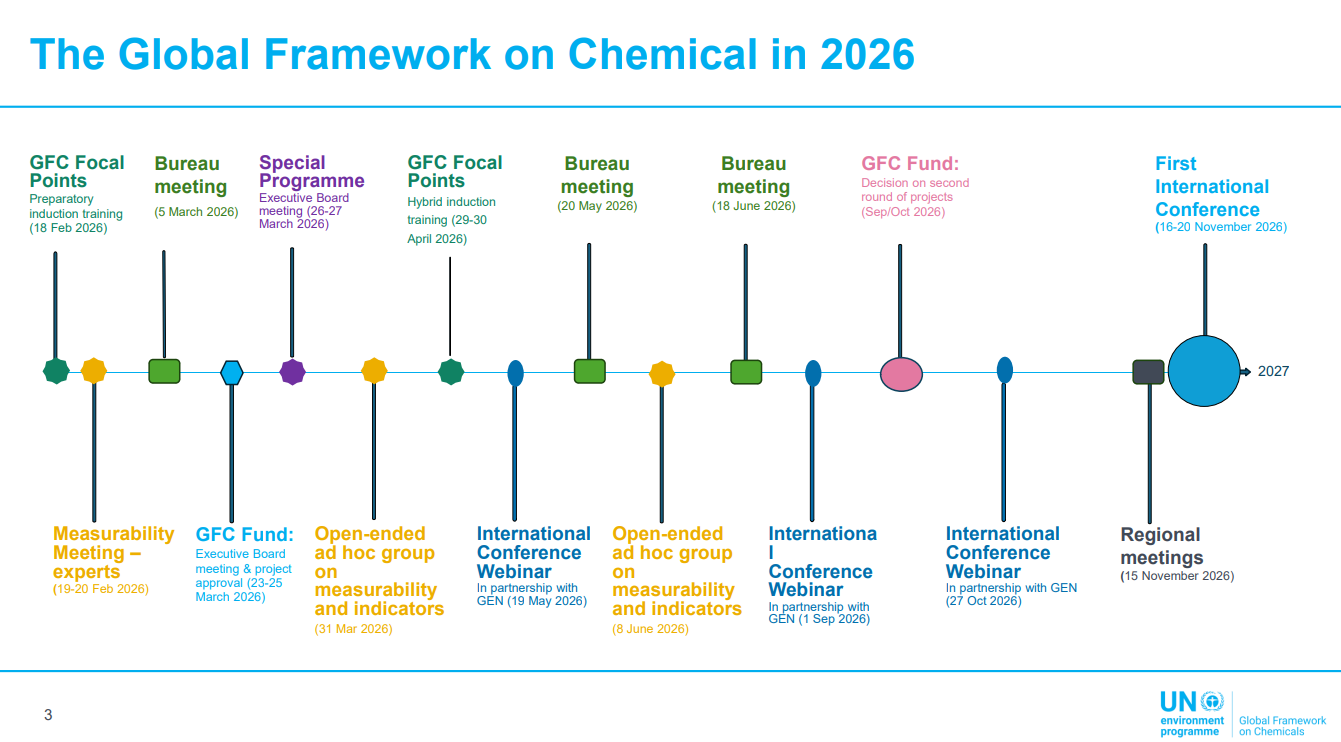
- The Secretariat and others have invested a lot of time in upskilling and refreshing their focal points under the framework in 2026. This is because at the national level, this is very important for implementation.
- There have also been several measurability meetings and bureau meetings that have given us guidance about how we should progress towards implementation. Finally, there were several Executive Board meetings for two funds that are providing finance for implementation on the ground in developing countries.
- This is the first of the International Conference webinars. Another one is in September and a further one in October, just ahead of the conference in November.
Measurability Framework and the Development of Indicators
- It has been advanced through a subsidiary body, an Open-ended Ad Hoc Working Group set up under ICCM5. The aim of this group was to provide recommendations to the first session of the International Conference to finalize the measurability structure that was adopted in Bonn in 2023.
- The group has therefore been working very hard to agree on a set of indicators to fill that measurability structure.
- It has convened eight times virtually, with a ninth meeting planned in June. It organized a hybrid expert group discussion in February and established small groups of experts to progress the work.
- There are now 72 draft indicators under discussion.
- There are two high-level indicators: one on the global environmental burden associated with chemicals and waste, and one on the global burden of disease associated with chemicals and waste.
- The next online meeting will be on 8 June 2026, and will be an important meeting where the draft indicators that will be put forward as recommendations for the first conference will be finalized.
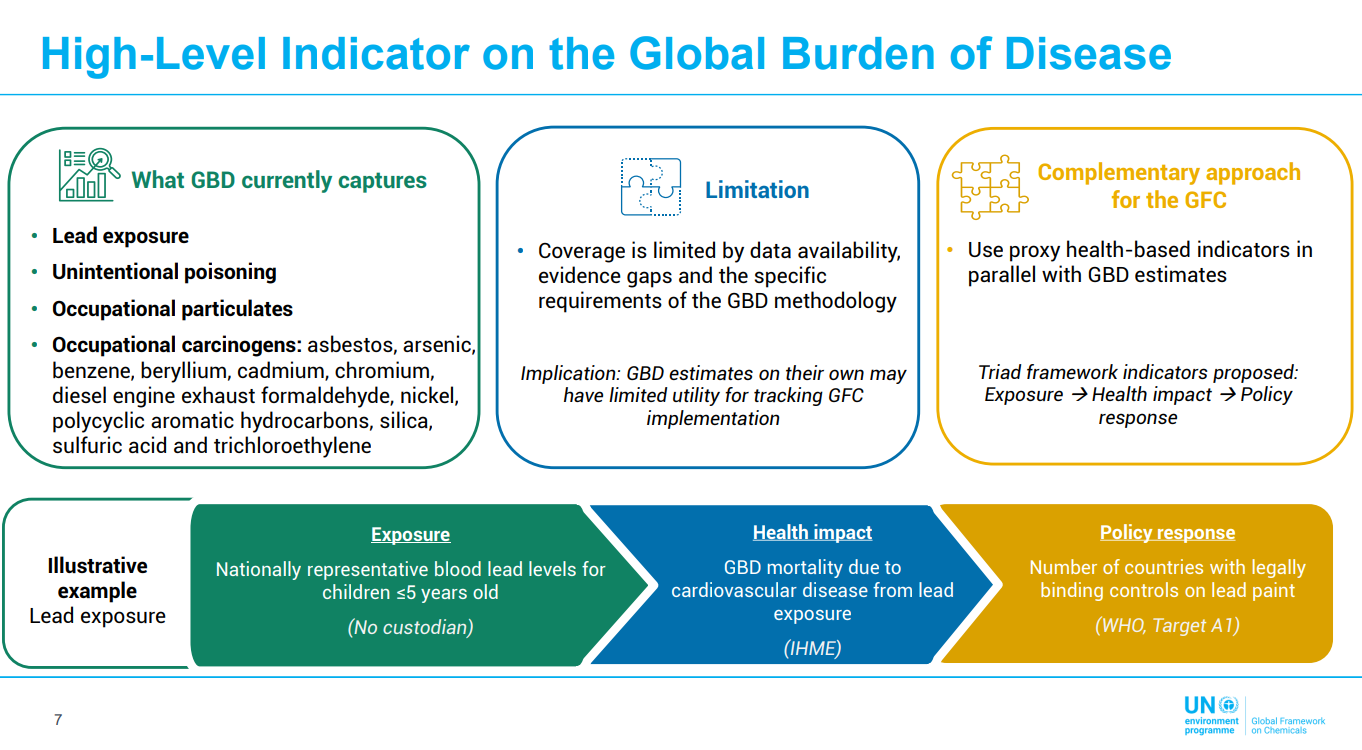
- There is a little information about the high-level indicator on the global burden of disease.
- This is an indicator being developed by WHO in collaboration with the Institute for Health Metrics and Evaluation (IHME).
- In terms of the chemicals covered by this indicator, there are four headings under which the data are collected. One is lead exposure. The second is unintentional poisoning. The third is occupational particulate matter. The fourth is occupational carcinogens.
- The data that WHO collects with IHME are very comprehensive, meet high standards, and cover a large number of substances. However, they do have limitations.
- Coverage is limited by global data availability. There are evidence gaps, and there are specific methodological requirements that have been put in place.
- WHO has also been working on a complementary approach specifically for the Global Framework on Chemicals, using some proxy health-based indicators in parallel. These were used to provide a more rounded indication of the global impact of chemicals on health.
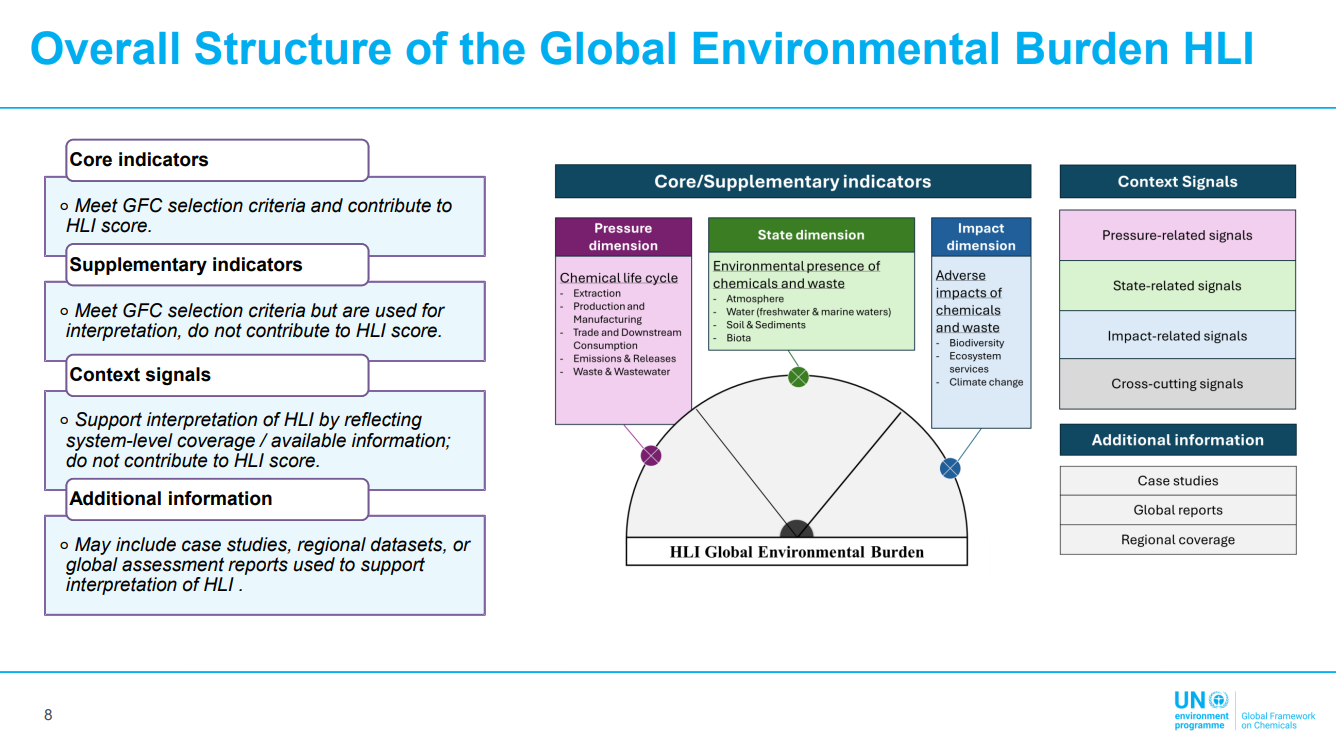
- The global environmental burden high-level impact indicator is led by UNEP and has had a different starting point, in that there has not yet been a methodology. The group has been working through a task force of experts to develop a methodology by following an approach that looks at pressure, state, and impact dimensions.
- In looking at those dimensions, it has been examining core indicators that meet selection criteria agreed by the Open-ended Ad Hoc Working Group on Measurability.
- It is also using supplementary indicators that do not contribute to the score but help with interpretation.
- There are also several other signals, called context signals. These provide information alongside regional datasets, global assessment reports, and other information to help interpret this high-level impact indicator.
- This is a complex indicator. There will be more information on it at the meeting on 8 June.
- The high-level overview of the status of the target-level indicators reflects the approach in terms of recommendations that will go forward to the first conference and the state of play after the eighth meeting of the Open-ended Working Group.
- This table indicates that 26 draft indicators have been agreed upon by the group to be put forward to the first International Conference.
- There are still several other indicators, shown in the light blue colours, that need to be discussed and agreed upon on 8 June.
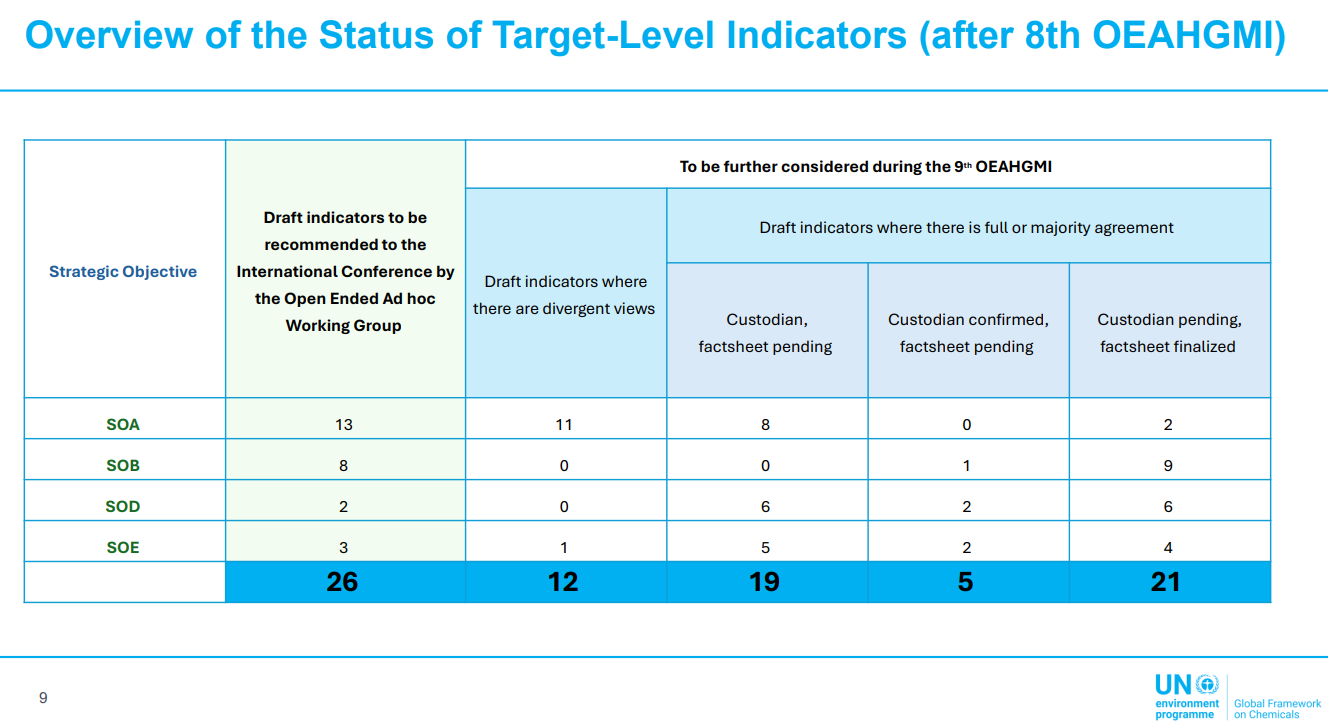
- For an indicator to go forward, there has to be general agreement by the group that it is worthwhile. They must also meet interim criteria the group has agreed upon and have a fact sheet confirming that these criteria are being met.
- This overview shows that some indicators have a custodian and some do not. There are still fact sheets pending, and that will influence the decision as to whether certain indicators will be put forward to the first conference.
- The approach the Secretariat is taking towards collecting data is threefold:
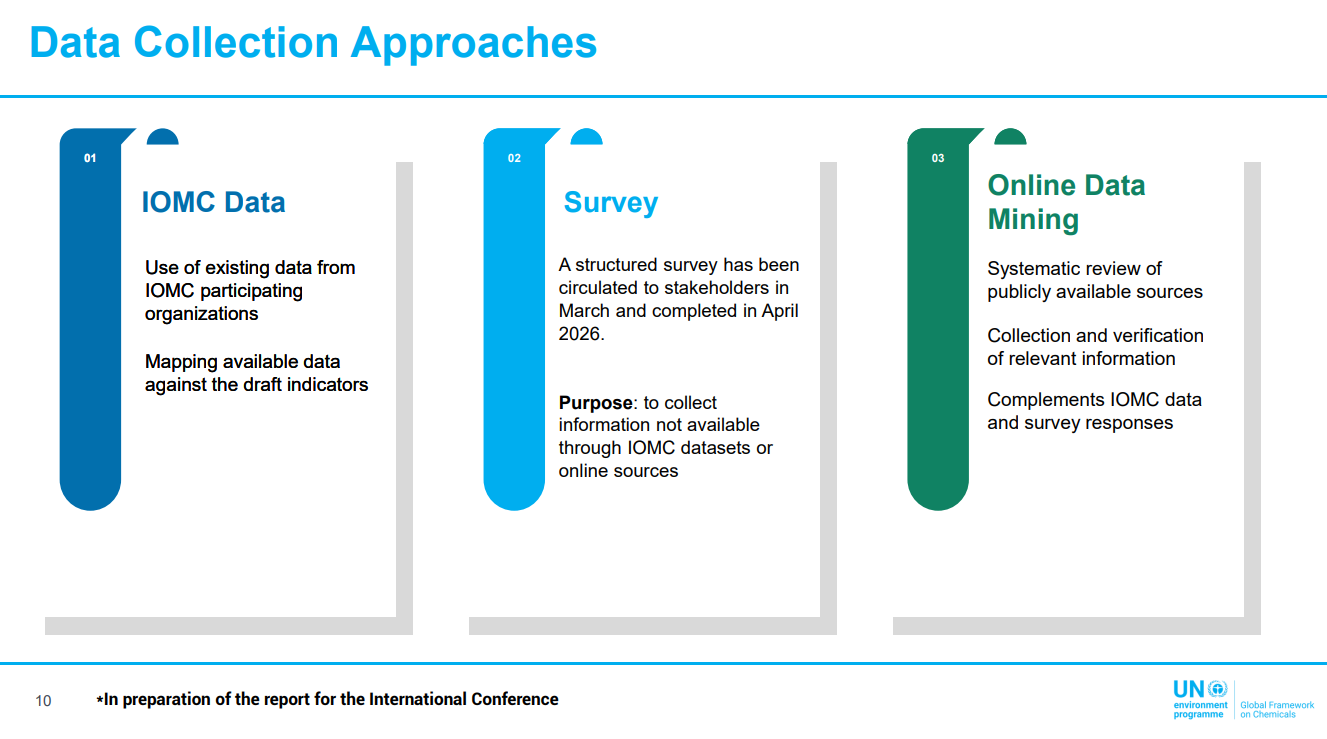
- The Secretariat launched a baseline survey, an indicative survey, to gain more information because there were a number of gaps in the existing IOMC indicators.
- This survey was based on draft indicators and does not prejudge any indicators that may potentially be adopted at the first conference. It used draft indicators that emerged from the expert group meeting in February.
- The survey window ran from 11 March to 24 April. We received 209 responses across 87 countries, eight organization types, and ten sectors.
- Looking at the data and responses, a number of countries were able to provide quite a lot of information. Multiple responses from some countries indicate that different parts of those countries were providing information.
- Japan has definitely been exemplary, with 41 responses to the survey, which reflects very good internal coordination within the country.
- 20 responses from the Russian Federation have been registered, which indicates engagement on a broader scale.
First International Conference of the Global Framework on Chemicals
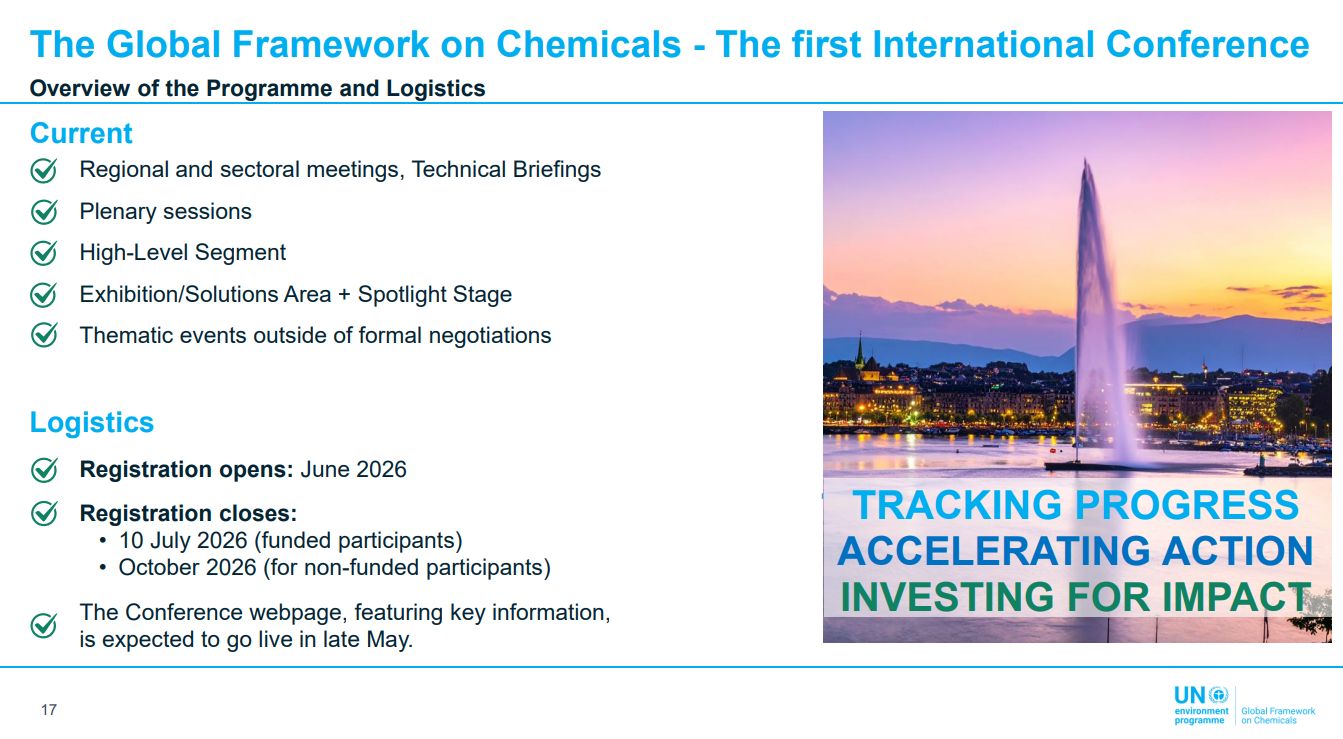
- The Conference will follow three themes: tracking progress, accelerating action, and investing for impact.
- In terms of our approach, we aim to bring together stakeholders who have not traditionally attended our conferences. We want greater engagement from individuals across value chains, as well as from the health and labour communities.
- We have been working hard to strengthen engagement with those communities, and the high-impact sectors that have been working closely with the IOMC participating organizations are construction, textiles, healthcare, and electronics.
- We have limited time available during the negotiations and are trying to organize the conference around the themes.
- We will not be issuing an open call for side events, but we are looking closely at the lunchtime and parallel programme to ensure that we strategically create opportunities for people to engage, learn, and network.
- The desired outcomes are adopting the measurability structure indicators, including the methodology for the high-level impact indicators, and tracking progress and gaining an indicative understanding of where we stand in meeting the targets. This is because we are close to 2030.
- There will be an opportunity to review the existing issues of concern and determine whether they will be carried over into the new framework. And, also an opportunity for new issues of concern to be adopted by the conference.
- We hope that frontrunner businesses will be able to showcase their efforts and share best practices.
- We also want to integrate occupational health and safety, as well as advance international standards that are being discussed in working groups under the various high-impact sectors.
- Implementation programmes, including their terms of reference and work plans, must be considered and adopted at the conference.
- We will share how we have been investing in focal points and alliances to ensure greater impact on the ground. As Sheila mentioned, engaging the finance sector and scaling up finance through different investment flows will be critical.
- For the programme, there will be regional and sectoral meetings and technical briefings on the day before the conference.
- There are plenary sessions, a high-level segment, exhibition areas, spotlight stages, and various thematic events outside the formal negotiations.
- Registration will open in early June and close on 10 July for funded participants and in October for non-funded participants.
- The conference webpage will go live later this month.
- The first International Conference is not available free of charge. It does cost money.
- It is very important to have inclusive stakeholder participation to allow knowledge exchange, innovation, and effective and transparent delivery.
- Contribution opportunities are open to governments, civil society, industry, business associations, and other not-for-profit representative bodies. They need to be in line with our partnership policies and due diligence standards.
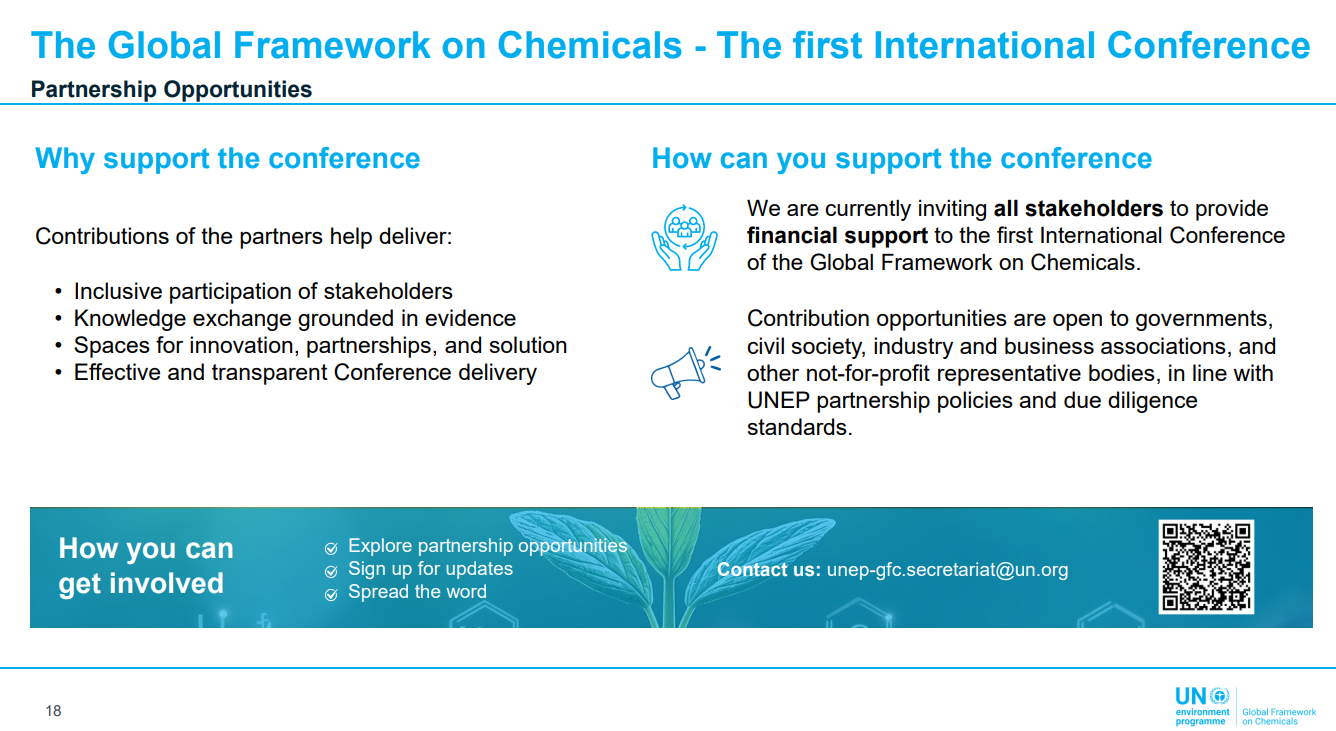
- Thanks to the donors who have already contributed to keeping the Global Framework on Chemicals moving forward. These donations are very important as the framework is a voluntary instrument.
- The next sessions on the Road to the First International Conference of the Global Framework on Chemicals event series will take place on 1 September 2026 and on 27 October 2026.
Panel Discussion
Dorothy NGAJILO | Health and Labour Officer, Global Framework on Chemicals Secretariat | Moderator
- This will be a panel discussion on how better data and transparency can accelerate action for a planet free of harm from chemicals and waste, giving the opportunity to bring that discussion closer to implementation by looking at what data and measurability mean in practice across sectors, while also considering different perspectives.
- The framework is very ambitious. It calls for action across the full life cycle of chemicals, from production to waste. To make progress, it’s necessary to measure it. Therefore, data that make risks visible, guide our decisions, and strengthen accountability is needed.
- Key questions to be addressing in this panel discussion include:
- What can measurability help us see?
- What is still missing in terms of data?
- How can data support us in making better decisions?
- How can different actors contribute to stronger and more transparent data systems?
From your perspective, why are data and the ability to measure progress essential for making the Global Framework on Chemicals effective?
Lindita Salia MOLLA | Head, Department of the Evaluation and Treatment of the Risks in Public Health, Albania
- Data and the ability to measure progress are essential to making the Global Framework on Chemicals effective because they transform political commitment into concrete, measurable, accountable action and create opportunities for continuous improvement over time.
- Chemical management is a highly complex field. Unlike other environmental risks that can be observed directly, exposure to chemicals often occurs in a hidden or invisible manner through air pollution, water contamination, the food chain, consumer products, and occupational environments.
- In many cases, exposure occurs at low doses but over long periods of time. The health effects, depending on the level of exposure, may only become apparent after many years or even decades. This delay in the manifestation of health outcomes creates a major challenge for decision-making and risk assessment.
- Due to this, general prescriptions alone are insufficient to guide action. Chemical risks may appear as a local concern or isolated case, but in reality they can represent broader systemic risks.
- This demonstrates that data play a critical role in assessing both health and environmental conditions. They enable us to identify hazardous chemicals in the environment, quantify exposure levels in different contexts, and detect trends over time.
- Data transform uncertainty into scientific evidence. The shift from assumptions to the actual measurement of exposure is essential for moving from a reactive approach to a preventive and proactive one.
- Without reliable data, it becomes very difficult to distinguish real progress from actions that are mainly procedural or symbolic. In other words, there may be actions that appear successful on paper – such as adopted strategies, conducted trainings, or developed regulations – but that do not necessarily lead to measurable reductions in exposure or in the disease burden caused by chemicals.
- Data bring transparency to the process and strengthen governance. It makes it possible to evaluate, compare, and adjust policies when necessary and enables more targeted and efficient public health interventions. Instead of applying broad, general measures, data help identify hotspots, geographic areas, population groups, or industrial sectors where exposure is significantly higher.
- By identifying where risks are most concentrated, interventions can be prioritized to where they will have the greatest impact on population health and the environment.
- Data is also essential for assessing the burden of disease attributable to chemical exposure. This includes not only direct health effects, but also broader socioeconomic consequences such as healthcare costs, loss of productivity, and long-term impacts on child development.
- Quantifying this burden is crucial to demonstrate that chemical pollution is not only an environmental issue but also a major public health and development challenge. It provides the necessary evidence base to justify investments and policy interventions.
- From my experience in Albania, the importance of data is clearly illustrated by the case of lead exposure:
- For many years, there have been serious concerns regarding soil contamination with lead due to informal battery recycling and processing activities. These activities have contributed to the creation of local exposure hotspots, particularly in communities surrounding these sites.
- However, one of the main challenges has been the lack of systematic biomonitoring data, especially measurements of blood lead levels in children.
- In the absence of such data, it has been difficult to fully quantify the magnitude of exposure and clearly define its spatial distribution. As a result, although the environmental risk was known and partially documented, the health dimension remained less visible in quantitative terms.
- This limited the full prioritization of risk management measures and health interventions, even in areas where environmental concerns had already been identified.
- Later, structured environmental data became available, but health data were still lacking. Through targeted studies, the situation changed significantly. The problem became more visible, more tangible, and consequently easier to address within the environmental health assessment framework.
- This strengthened political attention at the national level, improved interinstitutional coordination, and supported the integration of lead risk-reduction measures in identified hotspots.
- This experience showed that data are not merely a technical component of environmental health work. They are the strategic foundation for action.
- Without data, risks can remain underestimated or fragmented across different sectors. With the establishment of comprehensive data systems, particularly those incorporating biomonitoring data, the situation becomes more traceable and easier to monitor. Objectives become measurable and effectively actionable.
- In this regard, building a robust data system requires strengthened laboratories and human capacities, as well as adequate financial resources for implementation.
Maxwell MEMUSI | Assistant Director, Occupational Safety and Health Services at the Ministry of Labour, Kenya
- In terms of data and the ability to measure progress, we cannot manage what we cannot measure.
- The availability of data allows us, from the labour perspective, to identify what the priority chemicals are that we need to work on, and which sectors are high-risk sectors, particularly agriculture, manufacturing, and even the informal sector.
- Target B1 of the Global Framework on Chemicals requires that, by 2035, comprehensive data and information on the properties of chemicals are generated, made available, and accessible.
- From the labour perspective, this also informs regulation – evidence-based regulation. When we have data on particular chemicals, we can regulate based on the evidence available. We can implement restrictions, enforce issues related to GHS and labelling, and develop standards, for example for consumer products and related areas.
- Data and the ability to measure progress enhance coordination across the various agencies responsible for chemicals management. This is a multisectoral, multistakeholder issue.
- In terms of transparency, the availability of data on chemicals and their properties also enhances transparency in reporting, whether to conventions or through broader reporting mechanisms, and improves transparency regarding chemicals data.
- One of the key challenges is that where there is no data, it is often difficult to regulate.
- For example, there are situations where some policies or regulations that we would like to have in place, particularly for regulating the informal sector and areas such as beauty and personal care industries, have been difficult to develop because of a lack of data.
- In terms of the Global Framework on Chemicals, improving the availability of data will help enhance regulation in industries that are currently less regulated due to the lack of information and available data.
- Technology differs across countries, particularly in developing and least developed countries. Some of the technologies needed to measure these data, either in real time or rapidly, may not be available.
- Where data exist, it becomes much more possible to regulate, control exposures and identify priority actions across the entire life cycle of chemicals.
- The lack of data, particularly in our countries, has influenced issues of regulation and has affected our ability to address chemicals of great concern that are present in our countries.
From an industry perspective, what do you see as the role of data and measurability in advancing the Global Framework on Chemicals?
Bettina SIGGELKOW | Global Head of Corporate Sustainability Affairs, Clariant
- Clariant is a specialty chemical company. We are dealing with chemicals, and to transition to more sustainable product portfolios, the impacts of products and portfolios need to be understood, and this requires data.
- For Clariant, the basis for all our products is to ensure that they can be used safely. This requires that we create transparency on the human and ecological profiles of our products, as well as develop a good understanding of their applications in order to enable safe use.
- To drive impact along the value chain, it is crucial to develop a global and common approach and to understand the application of products so that we can successfully generate transparency, based on data, along the full value chain.
- Transparency on a chemical footprint requires data from upstream in the value chain. For all chemicals that we source, we require the same transparency regarding the chemical hazard profile. This is exactly the role of safety data sheets.
- We also maintain a centralized global database for all our chemical substances and products. This database serves as the foundation for the safety data sheets that we provide to our customers worldwide, thereby passing information along the value chain.
- Example of how chemical footprint data can influence decision-making in an innovation process.
- Within our innovation process, we have integrated our CompTox Suite by leveraging digital solutions. We model the chemical performance and safety profile of a potential innovative new chemical, and then we use data analytics to make early decisions that help prevent regrettable substitutions.
- This supports the development of safe and sustainable chemicals based on the available data.
- The key is to achieve global alignment on definitions and approaches to drive impact-based chemical footprint improvements, generating data and transforming data-driven commitments into measurable progress along the value chain.
Youth has been quite involved in the development of the measurability framework. How does this matter for youth and children?
Ola ALHAJ | WANA Regional Focal Point, Coordination Team, Chemicals and Waste Youth Platform
- Data are essential because what is not measured often becomes invisible in policy, investment, and implementation decisions.
- The Global Framework on Chemicals is ambitious, but ambition alone is not enough. If countries and stakeholders cannot track exposure risks, health impacts, or implementation gaps over time, then it becomes very difficult to know whether action is actually reducing harm and improving people’s lives.
- Measurement is ultimately what allows accountability.
- This is especially important for us as children and youth because we are among those most vulnerable to harm from chemicals and waste. Yet our experiences and age-specific risks have often been the least visible in monitoring and decision-making systems.
- Chemical exposures early in life and during key stages of development can have consequences that often happen silently and unfold over a lifetime.
- From a regional perspective, these challenges take on additional dimensions, especially in the WANA region. I have seen how many communities experience environmental risks without reliable monitoring systems, accessible public data and information in their own language, or sufficient research capacity to adequately document human health and environmental harm.
- This is particularly true in places affected by conflict or economic instability. Chemicals and waste issues can be severe, but the evidence base needed to quantify impacts and guide action is often fragmented or incomplete.
- As a final-year chemistry student in Syria, one of the major difficulties we see is that researchers and young professionals are often forced to start from scratch. Years of conflict and instability have heavily affected environmental monitoring systems, scientific infrastructure, and the continuity of data collection.
- Environmental records, chemical pollution data, and exposure datasets are outdated or simply unavailable. This creates a major barrier to mobilizing around these issues or taking decisive action.
- Before we can even begin analyzing solutions or measuring impacts, we first have to rebuild baseline information that should already exist.
- When I realized that there were very few young people in Syria working on environmental activism, and almost none engaging on chemicals and waste issues at either the national or global level, I felt a responsibility to step into that space and help build it.
- The Global Framework on Chemicals is, and needs to be, more than a technical and diplomatic exercise detached from the realities on the ground and the communities living with the impacts of chemical pollution.
- That is the beauty of the unique multistakeholder and multisectoral model born through SAICM and strengthened in the GFC. It brings governments, civil society, workers, Indigenous Peoples, academia, youth, the private sector, and other stakeholders into a shared space to shape solutions together – not after decisions are made, but at every stage, from sharing information and data to priority-setting, decision-making, implementation, and accountability.
What can Ministries of Health do to help strengthen our estimates for the global burden of disease?
Lindita Salia MOLLA | Head, Department of the Evaluation and Treatment of the Risks in Public Health, Albania
- It is very important how we collect indicators and then calculate the burden of disease that is coming from chemicals.
- The limitations of the high-level indicator on the global burden of disease under the GFC, which currently covers only a limited number of exposures due to data gaps, have significant implications for both national and global decision-making.
- In essence, this means that we do not have a complete picture of the population’s real exposure to chemicals.
- At present, global indicators are only able to measure a restricted set of exposures for which more developed data exist, while a wide range of other substances remain outside global assessment frameworks due to a lack of standardized and systematic data.
- The situation becomes even more complex when considering that exposure assessment in many key domains is still partial.
- For example, monitoring of chemicals in drinking water often covers only a limited number of substances, while a broad range of emerging or less routinely monitored contaminants are not included in routine analyses.
- A similar situation is observed in food, where food safety controls tend to focus on a limited number of known pesticides or contaminants, while many other chemical substances are not subject to continuous or harmonized monitoring.
- Likewise, cosmetic safety assessments are often based on regulatory compliance rather than continuous monitoring of the population’s long-term real exposure to chemical ingredients.
- This means that individuals’ total exposure to chemicals from multiple sources remains underestimated and fragmented.
- This fragmentation of data creates a significant gap in understanding the true risks.
- As a result, decision-making tends to be driven only by the areas where data are available, leaving out a substantial portion of everyday exposures that affect public health.
- In practice, this influences how priority risks are perceived. Well-documented risks receive more political and financial attention, while poorly measured risks remain less visible, even when they may have a significant relative impact on the population.
- Another important consequence is the limitation in our ability to assess real progress. Without comprehensive and harmonized indicators, it is difficult to determine whether interventions have reduced exposure across all major sources or only in some of them.
- The role of Ministries of Health therefore becomes essential in strengthening data generation.
- This includes not only health surveillance, but also the development of integrated systems for assessing the population’s total exposure.
- Strengthening human biomonitoring is crucial, as it can provide a more accurate picture of cumulative exposure from drinking water, food, air, consumer products, waste streams, and cosmetics.
- Biomonitoring also provides direct evidence of individuals’ real exposure to chemicals from multiple sources. This is particularly important for vulnerable groups and for the early identification of health risks.
- Another very important aspect is that the assessment of high-level indicators requires strengthening institutional capacities, both within the health sector and in other institutions responsible for environmental health.
- Without these capacities, it is difficult to generate reliable, consistent, and time-comparable data.
- Strengthening integrated environmental health surveillance systems is essential. It enables linkages between environmental exposures and health outcomes within the population.
- This integration is key to moving from a fragmented approach towards comprehensive chemical risk management.
- Strengthening laboratory capacities, including equipment, analytical methods, and the standardization of procedures is also essential.
- Without strong accredited laboratories, we cannot collect comparable data, which form the foundation of any effective monitoring system.
- The indicators are so important for calculating the burden of disease associated with chemicals
How can data improve worker protection? What are the challenges in collecting these data, and when the data are collected, how can they help with enforcement, prevention, and policy action?
Maxwell MEMUSI | Assistant Director, Occupational Safety and Health Services at the Ministry of Labour, Kenya
- We cannot manage what we cannot measure.
- The availability of data helps us identify what risks exist for particular workers. Therefore, we are able to identify where to prioritize our interventions in terms of risk control.
- From the government perspective, the availability of data also ensures that risk-based inspections can be carried out to better protect workers. Inspectors can focus on high-risk areas and industries and conduct risk-based inspections where they are most needed.
- The availability of data also helps industry identify safer alternatives and safer substitution of chemicals in order to control risk exposure for workers. Companies and occupiers can use available data to substitute more hazardous chemicals with safer alternatives.
- In terms of worker empowerment, workers’ unions can also use credible evidence from available data to negotiate for the protection measures that are needed.
- From the policy perspective, we always work through a tripartite approach involving government, employers, and employees. Exposure data feed into national standards, chemical restrictions, and specific guidelines.
- We face a number of barriers:
- The nature of employment. The majority of workers in our context work in the informal sector. Because of that, it is often difficult to measure exposures, as these workplaces are not regularly monitored, sometimes due to costs and other constraints.
- Weak data governance in many developing countries. In our context, we do not always have the systems necessary to effectively manage and utilize exposure data.
- Technical capacity. The ability to analyze exposure data and measure exposures effectively remains a limitation.
- Product information, such as Safety Data Sheets (SDSs), may not always be available.
What more industry can do to strengthen transparency and accountability, especially where data gaps exist?
Bettina SIGGELKOW | Global Head of Corporate Sustainability Affairs, Clariant
- It is important to have a holistic approach to the product portfolio.
- At Clariant, for example, we use what we call a Portfolio Value Program. We are looking not only at hazard, but also at other topics such as climate, biodiversity, and water.
- We use data wherever data are available, but we also use very high-quality assumptions where data are missing. It is important that, through this assessment, we understand the overall profile of our products.
- We do not only consider our own operations, but we really cover the full value chain. We look at raw materials as well as customers and end-of-life aspects, and how our products behave across that entire value chain.
- It is also important to integrate this into the innovation process so that we can identify risks very early on and react accordingly. In that way, we avoid innovating products that would not be safe in use.
- One thing industry can do – and Clariant has set this ambition for itself – is to look at replacing chemicals that are already identified as substances of very great concern.
- Our chemists have a system that flags whenever they are using a substance of very great concern, making them aware of the need to replace it with more sustainable alternatives.
- The work being done collectively is very important. Collective action is a key part of this effort.
- For example, through the International Council of Chemical Associations (ICCA), work is being done on new databases such as the plastics additives database. This is an example of proactively generating data at scale.
- Collective support can also help guide how industry drives portfolios toward more sustainable solutions, through sustainability toolkits and the sharing of best practices.
- These are all areas where progress can be achieved collectively by drawing on the knowledge and expertise of industry.
- While driving this work collectively, it is also important to lead by example at the level of individual companies.
How can stakeholders – and most importantly youth – help close the gap that we have between available data and reality?
Ola ALHAJ | WANA Regional Focal Point, Coordination Team, Chemicals and Waste Youth Platform
- As the Chemicals and Waste Youth Platform, one of our priority advocacy areas is that there is currently no globally coordinated approach to addressing children’s and adolescents’ specific vulnerabilities to chemical exposure, despite the disproportionate and unique harm they face.
- Young people experience more severe and, in many cases, irreversible risks to their health and development.
- Tens of thousands of chemicals are used, traded, and disposed of globally, and many have never been comprehensively assessed for their impacts on human health.
- At the same time, many countries in the Global South, which are facing the gravest challenges related to chemicals and waste management, also tend to have the largest proportions of youth within their populations.
- This is precisely why we advocated during the SAICM Beyond 2020 process and the ICCM negotiations for stronger attention to children’s environmental health in the GFC, including the adopted reference in Target B7 to age-disaggregated data on chemical exposure.
- Another issue is that data are often collected about young people, but not with young people.
- Youth are frequently treated as beneficiaries, as we said, rather than as knowledge holders and partners in monitoring, research, and implementation processes.
- This is something we are actively seeking to change towards IC1.
- Together with a diverse group of partners, we are planning a Youth Forum on Chemicals and Waste at IC1.
- Building on the success of the first Youth Forum at ICCM5, the theme will be « Unleashing Youth Imagination and Innovation for a Chemical-Safe, Zero-Waste Future: Intergenerational Partnerships Driving GFC Implementation to 2030 and Beyond. »
- In this space, we will feature young leaders and entrepreneurs who are already implementing solutions to some of the biggest chemicals and waste challenges of our time.
- The forum will also launch the Youth Solutions to Pollution Report, a first-of-its-kind analysis of trends and opportunities in how youth are advancing the sound management of chemicals and waste.
- We are also building a coalition of GFC stakeholders on children’s environmental health on the margins of IC1. We are planning to convene an Expert Dialogue on Children and Chemical Action on 20 November, which also coincides with World Children’s Day.
- We are further submitting several proposals and INF documents to the IC1 plenary focused on promoting children’s environmental health and meaningful youth engagement in the sound management of chemicals and waste.
- We warmly welcome and invite all GFC stakeholders to partner with us to strengthen action on children’s environmental health within the GFC.
- Measurability should track whether people – especially children and youth – are safer, healthier, and meaningfully included in decision-making.
Dorothy NGAJILO | Health and Labour Officer, Global Framework on Chemicals Secretariat | Moderator
- Data is not an end in itself. It is a tool for action.
- There is the importance of transparency, because information needs to move across sectors, including the private sector, governments, and other stakeholders.
- We need to include all stakeholders, including youth and children.
- We need ambition – not doing business as usual, but ambition from everybody.
Q&A
Kay WILLIAMS | Head, Global Framework on Chemicals Secretariat
- I do believe that the precautionary principle is well established.
- As you quite rightly stated, if you do not have the data, it is very difficult to undertake a risk assessment and risk management evaluation.
- When it comes to implementing the precautionary principle, it is really about proportionality, and that is often the area where people disagree.
- But overall, absolutely, the absence of a complete dataset should not prevent action from being taken.
Representative of the Russian Federation Permanent Mission in Geneva
- This briefing was very useful indeed, and we are looking forward to the other two sessions as we approach the conference.
- From a very practical standpoint, speaking here as Geneva diplomats, I do not know whether this has already been addressed or not, but when are you planning to publish the conference agenda and all the practical materials so that delegations can begin their preparations?
- Will this information only be posted online, or will you also circulate letters among the Permanent Missions here in Geneva, or in Nairobi and elsewhere, so that we know how to prepare ourselves better and in a timely manner?
Kay WILLIAMS | Head, Global Framework on Chemicals Secretariat
- We do have a Bureau meeting tomorrow, and we will be going through the draft agenda. We just need the Bureau’s sign-off and agreement that they are comfortable with the proposed agenda and tentative schedule.
- In terms of the draft agenda, it may be possible for us to provide an advance copy online. We will let you know as soon as possible regarding the documentation.
- We are currently working towards having at least the working documents drafted during June and July. The information documents, where they are related to particular themes, are also being prepared.
- We are hoping to keep the documentation quite streamlined because we know that everyone is short of time. We would like the documents to be concise and focused, including any decision language.
- We anticipate that information documents will be finalized by early September, and we will make sure that all documents are available at least six full weeks before the
Closing
Michel TSCHIRREN | Head, Global Affairs Section, Federal Office for the Environment, Switzerland
- The adoption of the Global Framework on Chemicals marked a significant milestone for global environmental governance. We have been building on previous instruments, and with the GFC we have now equipped ourselves with a structured, ambitious, and inclusive instrument.
- Achieving the 28 targets of the framework is only possible if we work together across sectors and institutions.
- The first International Conference, which we are preparing and discussing today, will be an important opportunity to take stock of overall and sectoral implementation and to advance several key instruments that we committed to developing when we adopted the framework.
- One such instrument is the measurability framework and its indicators.
- We can take action where we are able to measure. Therefore, in implementing the framework and achieving the targets we have set ourselves, we need to know where we stand, whether we are moving in the right direction, and where we need to strengthen our action.
- The work that has been done across sectors. We really appreciate that it is now for the conference to adopt the measurability framework. This will be an essential action for the conference to take.
- The conference will also consider and adopt the implementation programmes developed under the auspices of the Inter-Organization Programme for the Sound Management of Chemicals, the IOMC.
- I warmly thank the IOMC and all its member organizations for the work they have done so far, because these implementation programmes are the backbone of the framework’s implementation.
- They help us jointly implement actions across sectors and among stakeholders, including governments, industry, and civil society, to achieve the targets we have set.
- The collaboration among IOMC members in support of the GFC is a demonstration of what can be achieved when we cooperate and harness synergies.
- We must ensure that our actions continue to be based on such well-functioning structures and that we make full use of synergies so that we can continue to anchor this work within the broader chemicals and waste governance cluster.
- Switzerland remains strongly committed to strengthening environmental governance.
- As the host country of the GFC Secretariat, Geneva is also home to the Secretariats of the Basel, Rotterdam, Stockholm and Minamata Conventions, UNEP’s Chemicals and Health Branch, WHO, UNITAR, and many other organizations.
- This demonstrates how the presence of these organizations supports joint efforts and collaboration for the implementation of frameworks such as the GFC.
- I therefore invite all of you to carry forward this spirit of collaboration and synergy in preparing for the conference.
- The conference will take place here in Geneva, at the heart of the chemicals and waste governance cluster, and will represent an important milestone in the ongoing journey of developing and implementing this important framework.
- Until the day we can welcome you here in Geneva for the conference – including our colleagues joining online today – we look forward to continuing this dialogue through the Geneva Environment Network and other opportunities as we prepare for the first International Conference of the GFC.
Video
Photo Gallery


