Événement Virtuel
Road to Busan | Potential Approaches to Plastic Products and Chemicals of Concern in the Plastics Treaty

07 Août 2024
15:00 – 16:30
Lieu: Online | Webex
Organisation: International Pollutants Elimination Network
This event was co-organized with the International Pollutants Elimination Network (IPEN) within the framework of the Geneva Beat Plastic Pollution Dialogues, to discuss approaches regarding plastic products and chemicals of concern in plastic products, in the run-up to the Expert Group established by the Intergovernmental Negotiating Committee to develop an international legally binding instrument on plastic pollution, including in the marine environment in-person meetings, to be held in Bangkok, Thailand, from 24 – 28 August 2024.

About this Event
At its fourth session, the Intergovernmental Negotiating Committee to develop an international legally binding instrument on plastic pollution, including in the marine environment (INC), decided to establish two ad hoc intersessional open-ended expert groups to inform and help advance the work of the Committee, in the run-up to the next round of negotiation that will take place in the Republic of Korea, from 25 November to 1st December 2024.
The Expert Group 2 is mandated to identify and analyse criteria and non criteria based approaches regarding plastic products and chemicals of concern in plastic products, and product design focusing on recyclability and reusability of plastic products, considering their uses and applications, for the consideration by the Committee at INC-5. This Expert Group will meet three times using electronic means in advance of the in-person meeting scheduled to take place in Bangkok, Thailand, from 24 – 28 August 2024. The output of this working group to the process would include:
- Identification and analysis of criteria and non criteria based approaches regarding plastic products and chemicals of concern in plastic products, and product design focusing on recyclability and reusability of plastic products, considering their uses and applications;
- Issues identified by the expert group for consideration by the Committee at INC-5.
- Other concrete products that may be identified by the expert group for consideration at INC-5.
The webinar sought to contribute to the expert group discussion on health and environmental protective criteria and non-criteria-based approaches for products and chemicals. The webinar:
- Discussed how to ensure the safety of plastics, recognizing recent independent studies showing that 16,000 chemicals are associated with plastics in their lifecycle, thousands of which are known to be hazardous.
- Highlighted examples of approaches to regulating chemicals including: hazard and risk-based approaches, grouping of chemicals, transparency and traceability, among others
- Approaches that could be reflected in the International Legally Binding Instrument (ILBI) for the identification/classification of chemicals of concern in plastic;
- Approaches that could be reflected in the ILBI for the identification and classification of plastic products;
- Approaches with regard to product design to ensure a toxics-free circular economy.
Geneva Beat Plastic Pollution Dialogues

The world is facing a plastic crisis, the status quo is not an option. Plastic pollution is a serious issue of global concern which requires an urgent and international response involving all relevant actors at different levels. Many initiatives, projects and governance responses and options have been developed to tackle this major environmental problem, but we are still unable to cope with the amount of plastic we generate. In addition, there is a lack of coordination which can better lead to a more effective and efficient response.
Various actors in Geneva are engaged in rethinking the way we manufacture, use, trade and manage plastics. The Geneva Beat Plastic Pollution Dialogues aim at outreaching and creating synergies among these actors, highlighting efforts made by intergovernmental organizations, governments, businesses, the scientific community, civil society and individuals in the hope of informing and creating synergies and coordinated actions. The dialogues highlight what the different stakeholders in Geneva and beyond have achieved at all levels, and present the latest research and governance options.
Following the landmark resolution adopted at UNEA-5 to end plastic pollution and building on the outcomes of the first two series, the third series of dialogues will encourage increased engagement of the Geneva community with future negotiations on the matter.
Speakers
By order of intervention.

Valentina SIERRA
Second Secretary, Directorate of Environment, Ministry of Foreign Affairs, Uruguay

Tadesse AMERA
Co-Chair, IPEN

Yuyun ISMAWATI
Senior Advisor and Co-Founder, Nexus for Health, Environment and Development Foundation (Nexus3) | IPEN Steering Committee Member

Sylvain BINTEIN
REACH and CLP Team Leader, European Commission

Jinhui LI
Executive Director, Basel Convention Regional Center for Asia and the Pacific | Professor, School of Environment, Tsinghua University, China

Ana Paula SOUZA
Human Rights Officer, Office of the United Nations High Commissioner for Human Rights (OHCHR)

Vito BUONSANTE
Policy & Technical Advisor, IPEN

Hyacinth MBOH
Director of Standards and Controls, Ministry of Environment, Protection of Nature and Sustainable Development (MINEPDED), Cameroon

Lia ESQUILLO
Director of Programs, IPEN | Moderator
Highlights
Summary
Welcome
Valentina SIERRA | Second Secretary, Directorate of Environment, Ministry of Foreign Affairs, Uruguay
- Chemicals, plastic products, and their design, are closely linked issues. As plastics are made of chemicals, this provision can be the backbone of the treaty to ensure that plastics are made to be more durable, less polluting, reusable and to increase recycling.
- The fifth session of the Intergovernmental Negotiating Committee (INC-5) will take place in November in Busan, Republic of Korea, and it is scheduled to be the last INC where the negotiation process will be concluded.
- It is crucial that Member States have a clear and common understanding of what could be achieved and how it should be achieved.
- Agreeing on intersessional work at INC-4 and being able to establish this Open-ended Expert Group was a great step forward, and it shows its relevance to Member States and that we can make progress and agree on tackling these issues jointly.
- The intersessional work is not a negotiation, but its goal is to focus on the technical discussions as well as on advancing the negotiator’s understanding on how such complex issues can be addressed and solved.
- Scientists have been telling us that plastics are made of thousands of chemicals. Around 16.000 have been already identified and 4.000 of these are potentially toxic.
- Many more chemicals have unknown properties so we do not yet know their impact on human health and the environment. A scientific approach is crucial to ensure a safe circular economy.
- For developing countries like Uruguay, this is a major challenge. The only way that we can tackle this issue is through the framework of an international legally binding agreement as we do not have the necessary tools, for instance, to conduct these types of assessments.
- Already existing Conventions, like the Basel, Rotterdam and Stockholm Conventions (BRS), regulate some specific chemicals, but these approaches were not established to address the diverse layers of complexity that plastics pose to the world.
- It is crucial for Uruguay to advance on these technical discussions during the Expert Group meetings to fill in the information gaps and achieve a better understanding of these relevant topics. We will have better tools and will be able to get Member States positions closer to reaching an ambitious agreement at INC-5.
Introduction
Tadesse AMERA | Co-Chair, IPEN
- The Plastics INC Secretariat nominated me along with other twelve experts as technical resource person for Expert Group 2.
- Expert Group 2 met virtually on 18 and 30 July 2024 and will meet again on 13 August ahead of the in-person meeting in Bangkok.
- Expert Group 2 Outputs:
- Identification and analysis of criteria, followed by a criteria-based approach concerning plastics, plastic products, and chemicals of concern in these products and their design, with a focus on recyclability and reusability, considering their uses and applications.
- Addressing issues identified by the expert group for consideration by the committee at INC5 in Busan.
- Discussion of other concrete products identified by the expert group for consideration.
- During the past two virtual meetings, questions were distributed to experts via a questionnaire, and reflections were presented. → Consult the Compilation of questionnaire responses for Expert Group 2.
- While it was clarified that the intersessional work is not a negotiation process, some national experts presented their national positions on the issues.
Contributions and Inputs by Technical Resource Persons
- These were agreed upon by the INC Secretariat, in consultation with the Chair.
- They may be asked to provide information to the co-chairs upon request, provided it is relevant to the expert group’s mandate for the discussion during the intersessional period.
- During the intersessional period, technical resource persons will participate in ad-hoc meetings with co-chairs and attend both virtual and in-person expert group meetings.
- Nominations are made in a personal capacity, and professional conduct is required, with plans to contribute with integrity.
- The group will focus on observations from the last Science-Policy Panel Open-Ended Working Group meeting, the UNEA 5/14 resolution and from INC-4, with particular attention given to the health and toxic aspects of plastics, and how these will be integrated at INC-5.
Approaches to Regulating Chemicals in Plastics
A sectoral approach to chemicals in plastics in Indonesia: recent developments in chemicals in packaging
Yuyun ISMAWATI | Senior Advisor and Co-Founder, Nexus for Health, Environment and Development Foundation (Nexus3) | IPEN Steering Committee Member
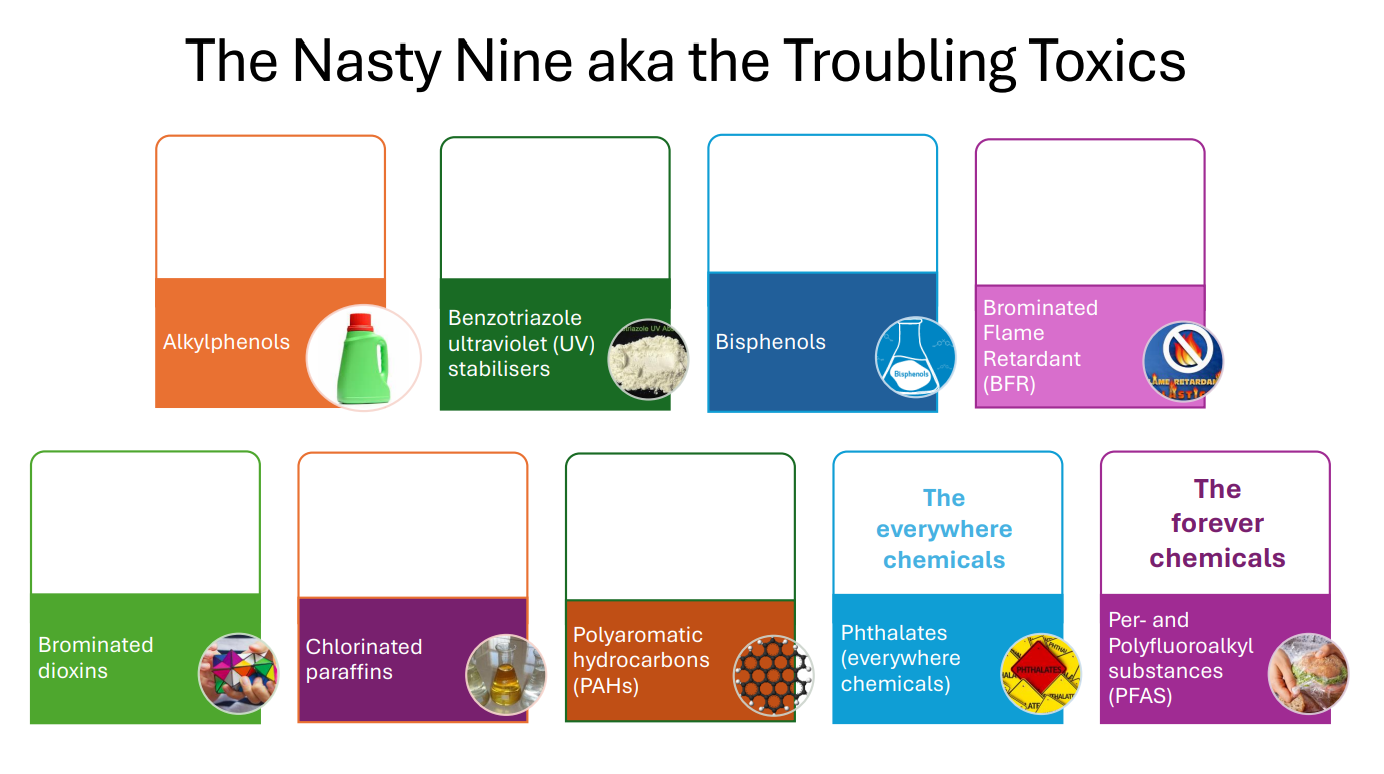
- The Nasty Nines are the troubling toxic chemicals mainly used in plastics products to perform different functions.
- These chemicals have been widely researched, and a huge body of knowledge has already demonstrated the migration and leaching of these chemicals from the products into the human body. A recent research study shows that Indonesians have the highest consumption of microplastic intake per month: while the industry argues that plastics consumption is still the lowest in the region, the effects of mismanagement can be seen in human bodies.
- Even low doses of plastics can affect the body for a long time. For example, the WHO predicted that by 2050, cancer cases will have increased to 77%. geographically, mainly because of environmental factors and endocrine disruptor chemicals used in plastics.
- Researchers have also predicted that by 2045, male reproductive health will be declining near zero because of these chemicals.
- Indonesia produces more than nine million tons of plastics a year. The majority of plastic products are used in the food and beverage sector, followed by the building and automotive sectors. The majority of plastics used in Indonesia are PE (Polyethylene) and PET (Polyethylene Terephthalate) and only around 10% of these plastics are recycled in Indonesia due to unsynchronized waste management collections and recycling systems.
- Last month, the Ministry of Development Planning issued a Roadmap and National Action Plan (NAP) on circular economy for the next 20 years, and one of the sectors of interest is the retail sector, focusing on plastic packaging. With priorities to be achieved on a five-years basis, the NAP aims to increase recycled content to 50% for all types of plastics.
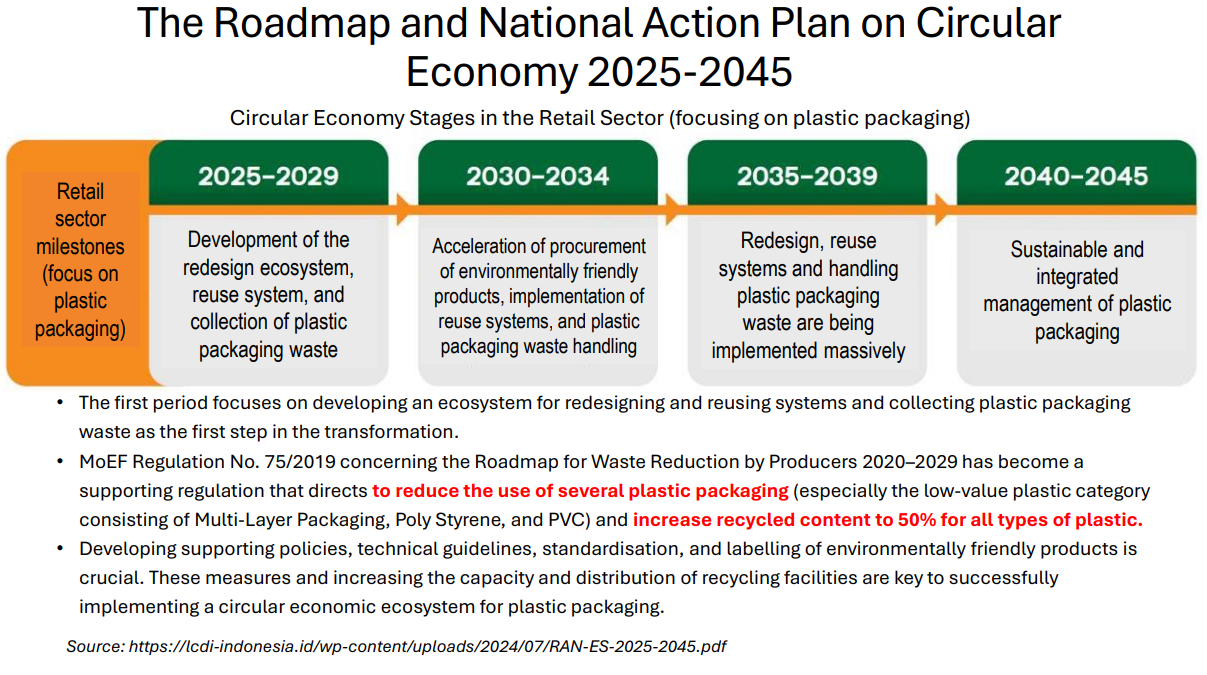
- The roadmap and NAP do not mention chemicals in plastics. This means the intention to increase the recyclability of plastics might go the wrong way and end up with the wrong results.
- The Ministry of Industry aims to support the position of the plastic industry in Indonesia for the upcoming negotiation. One of the proposals is an additional sector for plastic recycling to receive a so-called tax allowance or the exemption from paying revenue taxes. The tax could be waived if the industry also imports certain products on a list. On the other hand, the Ministry of Industry has already established and pushed for the national standard for certain products. There are 33 new standards, especially addressing plastics, but which fail to mention chemicals of concern.
- Recently, the Indonesian Food and Drug Authority prepared a new draft regulation for food packaging. One of the proposals is to include four new food contact substances, for instance, PFAS, BPA, and BPS. However, when the 243-page-long draft was reviewed, we found it was not easy to identify the chemicals of concern because they are all elaborated in the form of congeners. This is going to be a problem, because if it is not regulated under a group or a class, then it has to be researched further, as the substitutes for those chemicals could be regrettable substitutions.
Challenges at the country level related to chemicals of concern:
- Information and data, particularly concerning chemicals of concern, should be transparently shared by industries with authorities. The rationale of trade secret protection cannot justify withholding such information, given that exposure to endocrine-disrupting chemicals (EDCs) is widespread.
- It is crucial to raise awareness within the health sector about the impact of plastic chemicals on non-communicable diseases.
- The lack of adequate laboratory capacity in developing countries complicates the analysis of these chemicals and the establishment of appropriate standards.
- Risks associated with chemical mixtures need to be addressed, as it is not just individual chemicals but their interactions in a single product that pose a threat.
- Regulations must be aligned with trade-related standards to ensure proper import permits for products and chemicals. Some countries have developed action plans or roadmaps for their industrial sectors; however, these may become outdated if the new treaty is adopted.
- Financial incentives for the plastic industry should be reviewed.
- Monitoring and evaluation processes need to be boosted.
- Stakeholders involvement is key.
- For delegates attending the upcoming Bangkok meeting, it is essential to ensure consistent terminology in data and information sharing. Politicians need to adopt this terminology and information to translate them into effective policies and regulations.
- Strengthening transparency in pollution control, monitoring, and reporting within the plastic industry supported by robust laboratory capacities and verification centers for labeling is vital.
- Priority sectors, including food and beverage, healthcare, and children’s products such as toys, must be free from the « nasty nine » chemicals. The aim is to establish a toxic-free circular economy, a term that must be universally agreed upon to ensure the elimination of toxic chemicals rather than their circulation.
EU Approach to Chemicals Regulation in Products and Proposed Conceptual Approach to Regulating Chemicals in Plastics
Sylvain BINTEIN | REACH and CLP Team Leader, European Commission
- The REACH and CLP team of the European Commission propose the listing of chemicals in annex A of the future plastics treaty
- Plastics products containing substances pose huge risks at all stages.
- There is a need for action on chemicals under the plastics treaty; this will ensure a clean, nontoxic, safe and circular material cycle, and enable proper recycling of plastic.
- Considering the importance that the EU associates with the chemical aspect of plastics, the REACH and CLP team developed a conceptual approach that has already been presented in previous fora, as well as INC 4.
- This approach is a work in progress and is being adapted through virtual meetings and recommendations from various parties, such as NGOs and the industry. It takes inspiration from work done at the EU Commission and by the Stockholm Convention.

- Parties can nominate a substance that could be listed in Annex A.
- At this step, potentially listed substances are defined only as hazard-based through a variety of criteria. If a substance meets the criteria and is endorsed by the technical committee, then it could be proposed to the COP to be listed in Annex A. The technical committee would have to be set up in the treaty.
- Some provisions would have to be linked to this very first step, such as minimizing exposure and emission, as well as pushing for substitution and moving for more transparency and traceability of the substance. This is particularly important because very problematic chemicals – or substances of very high concern in the EU system – are at stake. When dealing with those, before going directly to restriction, there is a need to act to push for their substitution.
- As soon as a substance is listed in Annex A, direct consequences would be triggered for some provision of the treaty. This approach is already implemented in the EU and in other jurisdictions, and is quite successful, as it allows for quicker substitution of problematic chemicals. It is able to alert industries on which chemicals will probably be restricted next, giving more predictability for industries to act on substitution.
2. Based on the Stockholm Convention model, substances can be listed both through a risk-based approach.
- This risk-based approach would be complemented by another assessment of the socioeconomic consequences of acting on the substances, as well as a possible alternative.
- This could support the committee, and later the COP, in identifying the need for specific exemptions for specific parties, or more generic exemptions of restrictions. Generic exemptions could concern specific uses, such as “essential uses”.
- This step could entail a long process, but it gives parties and stakeholders the possibility to provide inputs in the assessment and inform on the consequences and benefits of a ban of a substance in a plastic product.
- It will allow the technical committee to advise the COP on whether to totally eliminate a specific substance or group of substances in all plastic and plastic products or to focus on specific plastic products.
- Based on the robust scientific assessment, the COP could decide on the restriction of a plastic chemical, as well as the exemptions associated, whether they are specific derogations or acceptable purposes.
3. Depending on countries’ specific situation or needs, derogations could be allowed. These could function on the model of the Stockholm Convention, which would make them more or less automatic for five years to then being reviewed.

Different provisions are associated with the listing of a substance through the hazard-based approach.
- Product design: If indeed a problematic substance, like a carcinogen, is present in a product, the emissions from the substance in that product must limited, or replaced.
- Obligation to minimize emission and exposure at least to chemicals of concern, and thus to minimize risks to human health and the environment both for consumers and workers.
- Limiting the possibility of exporting some of the chemicals if their uses are restricted.
- Ensure better transparency and labeling for listed substances. This will allow us to identify, for example, in which plastic product a substance is present, which is important when recycling that product.
- Monitoring.
- Industries will be warned about which chemicals are considered of concern at the international level to facilitate their quick substitution.
Possible Hazard-Based Criteria for Identification of Chemicals of Concern
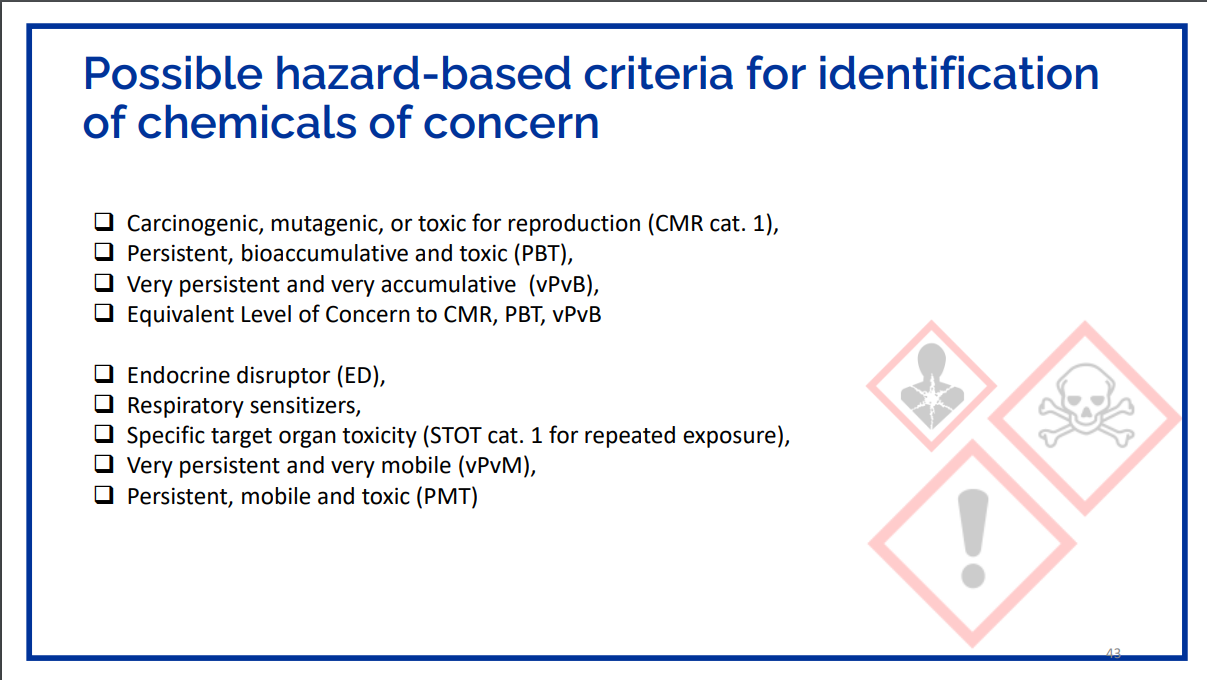
The EU Commission REACH and CLP team believes that the treaty should contain an initial list of substances from the start.

National Approaches to Chemicals in Plastics
Jinhui LI | Executive director, Basel Convention Regional Center for Asia and the Pacific | Professor, School of Environment, Tsinghua University, China
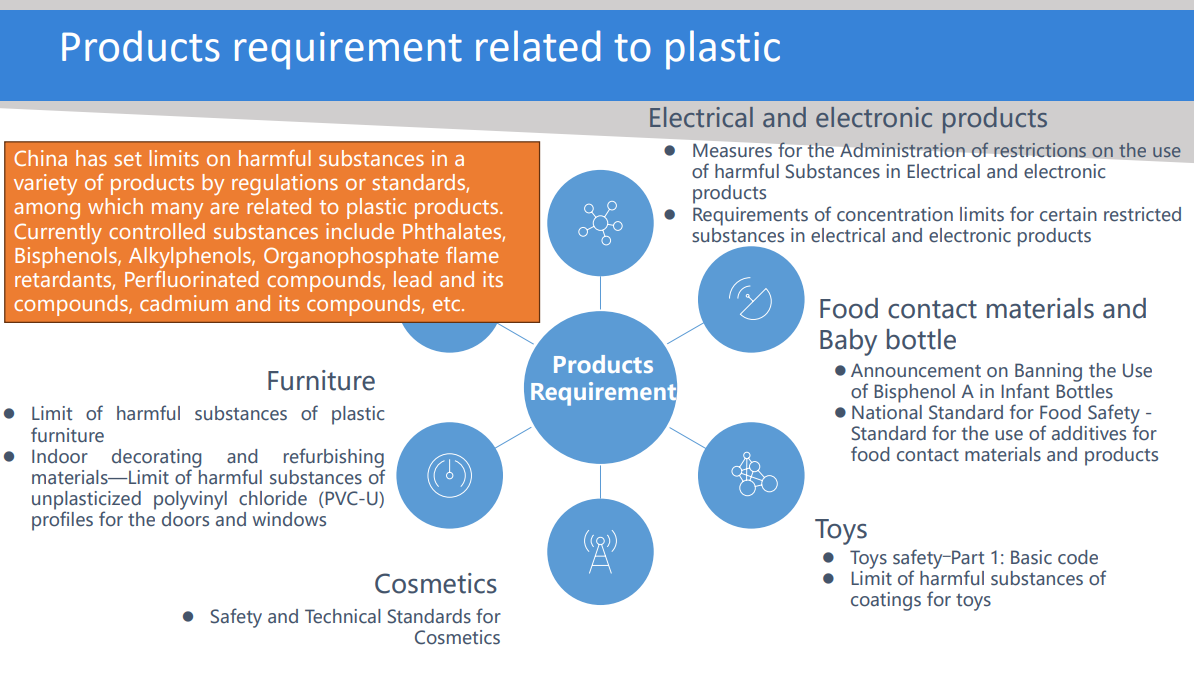
The environmental management system for chemicals in China covers:
- List of Priority controlled chemicals
- Emerging pollutants management.
- Specific regulations or standards in key products related to plastic.
- In 2017 and 2020, China issued two batches of the Priority Controlled Chemicals List focusing on the chemicals that pose significant hazards to environmental and human health, which may persist in the environment for a long period and pose an unreasonable risk to the environment and human health.
- The development of the list of priority-controlled chemicals is guided by Guidelines for Screening of Priority Assessment Chemicals Substances. The screening indicators include :
- Persistent, Bioaccumulative and Toxic (PBT) or Very persistent and very accumulative (vPvB)
- Carcinogenic, mutagenic or reproductive toxicity (CMRs category 1A or 1B)
- Persistent and Toxic (PT) or accumulative and Toxic (BT)
- Other hazards such as endocrine-disrupting chemicals (EDCs)
- Any evidence of environmental exposure
- Chemicals with potential environmental exposure, such as large annual production or use quantities, widely dispersed use, etc.
- Chemicals used in plastic that are now listed as priority-controlled chemicals including Persistent Organic Pollutants (POPs) such as :
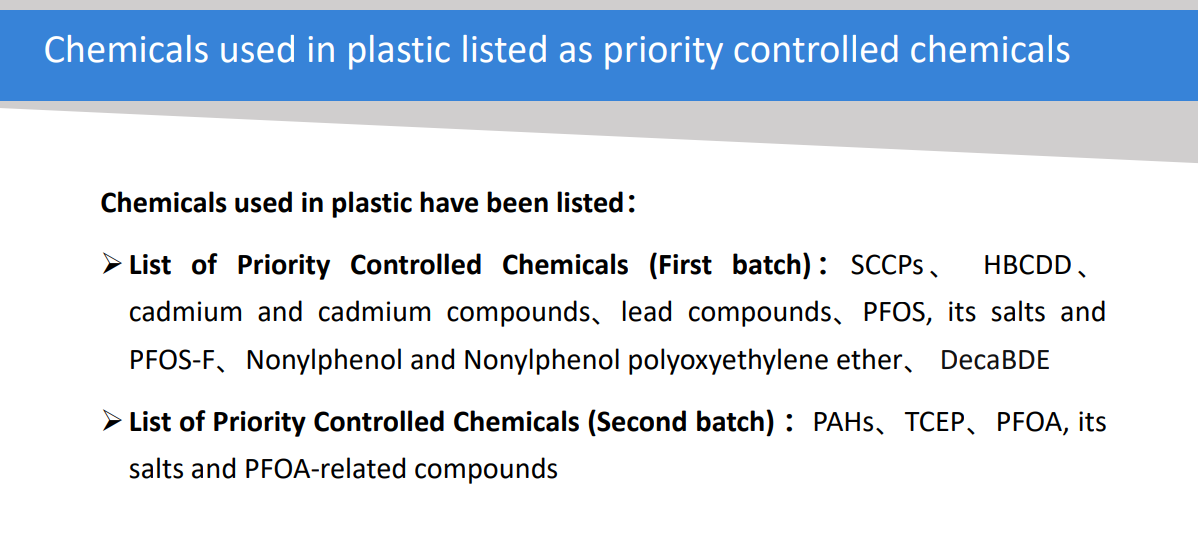
- In 2022, China has issued an Action Plan on Controlling New pPllutants, as well as a list of new pollutants under key control.
- The list focuses on emerging pollutants with significant environmental and health hazards, whose environmental risks have already been demonstrated, that have been widely concerning, or listed under the international environmental conventions.
- Chemicals used in plastics that have been listed include PFOS, PFOS-F, PFOA, PFOA-related compounds and its salts.
- Setting the environment for plastic products is also an important part of the management of chemicals in plastic in China. General principles and the requirement of eco-design for products pointed out that products eco-designed are encouraged to consider cost, environmental impact, product performance, regulatory requirement, best available technology, custom demand, etc. It should consider the multiple factors along the full life cycle, such as environmental impact and human health.
- The evaluation indicators of chemicals include carcinogenic, mutagenic, etc.
- For the eco-design standards on specific plastic products, such as polyvinyl chloride (PVC), polyethylene terephthalate (PET), polybutylene terephthalate (PBT), there are also different requirements for heavy metals such as cadmium, lead, mercury, chromium, etc.
Human Rights Approach to Regulating Chemicals in Plastics
Ana Paula SOUZA | Human Rights Officer, OHCHR
- Thousands of plastic chemicals have been identified as toxic due to their harmful effects on human health or the environment. Yet, there is currently information on adverse impacts of only about 4200 of the more than 16,000 chemicals identified in manufacturing and/or present in final packaging, with fewer than 1% regulated in existing global multilateral environmental agreements (MEAs).
- Science also tells us that environmental degradation and exposure to harmful chemicals present in plastic materials and products can cause chronic or acute illness, development problems, or premature death, interfering with individuals’ rights to health and to life.
- Those are undeniable facts. But one may ask, why regulating chemicals in plastics is a human rights issue?
- All States already have obligations to respect, protect and fulfill human rights. This extends to protecting people from foreseeable and preventable human rights harms caused by all forms of environmental degradation, including plastic pollution.
- The right to health has particular significance in this regard. All people, everywhere, have the right to the highest attainable standard of health, which implies that plastic materials and products that contain chemicals and additives that can harm human health should be removed from circulation everywhere, and not only in some States, including those that have infrastructure and technology available to protect their populations from these harms.
- If it harms human health, it harms all people, everywhere, meaning that chemicals in plastics need to be regulated through a MEA.
- At the same time, regulation of chemicals in plastics should be guided by the prevention and precautionary approaches, requiring controlling, and avoiding toxic additives and chemicals of concern in virgin and recycled plastic polymers, to be done in accordance with the hazard-based criteria, a criteria that prioritises human, ecological and environmental safety, under the presumption that toxic chemicals are too dangerous to be used safely.
- Another argument that justifies the need to regulate chemicals in plastics is the move to a non-toxic circular economy for plastics. Without an obligation requiring plastic products on the market to be non-toxic, circularity becomes a buzzword to promote recycling without the assurances that it does not further harm human health and the environment.
- The lack of transparency, inaccessibility and unavailability of information is also of concern. All people have a right to access information about the known and suspected health and environmental hazards, harms, and risks caused by chemicals used in and released throughout the plastics lifecycle, but there is little transparency about these hazards and risks, so individuals are unable to make informed decisions.
- That means that not only the treaty must regulate chemicals in plastics, it must also contain provisions only allowing chemicals in plastics that have publicly available toxicity data. This provision would align the treaty with the right to access to information.
- It is also important to note that access to information must ensure full transparency related to health and safety information, and not be subject or conditional to industry interests. States have already agreed to this under the Stockholm Convention, so this idea should not be considered controversial.
- We must also bear in mind that plastics can cross several national boundaries during their lifespan (i.e. through trade, litter), meaning that human health and the environment cannot be protected only with voluntary targets or what is being called non-criteria approaches.
- In closing, we need an ambitious treaty with obligations and strict controls throughout the life cycle of plastics to enable sustainable production and a chemically safe circular economy that is respectful of human rights, including the rights of populations most impacted by plastic pollution.
Lessons Learned from Regulating Chemicals in Plastics
Vito BUONSANTE | Policy & Technical Advisor, IPEN
- It is not given that chemicals will be included in the treaty therefore it is fundamental to underline the importance of regulating them because:
- New findings from 2024 show we have over 16.000 chemicals that are related to plastics in their making, but they represent a huge part of chemicals so they pose a challenge themselves.
- A study from the BRS Secretariat from 2023 shows that less than 1% of these chemicals (about 128) are regulated throughout their life cycle, making it fundamental for the future Plastics Treaty to complement what is already been done by other MEAs.
- At least 4 200 chemicals of these 16 000 are known to be hazardous and many more are not known. It should be obvious that there should be data around the chemicals that are used in products that people are exposed to.
- We need to regulate chemicals under the treaty because plastics are mostly composed by fossil fuel. [TECH ISSUES]
More reasons to regulate chemicals :
- All statistics and predictions say that in the future we will have exponentially more plastic pollution and more chemical pollution as plastic production is growing exponentially.
- We are hoping the treaty will be able to curb the production of plastic as if production continues to increase, exposure to harmful chemicals will increase as well.
- By 2050, we will have almost four times more plastics ever produced in history, which means four times more chemicals and four times more exposure. There is a simple equation which means that more plastic production means more plastic pollution which means more chemical pollution. This entails that more chemicals will enter the market.
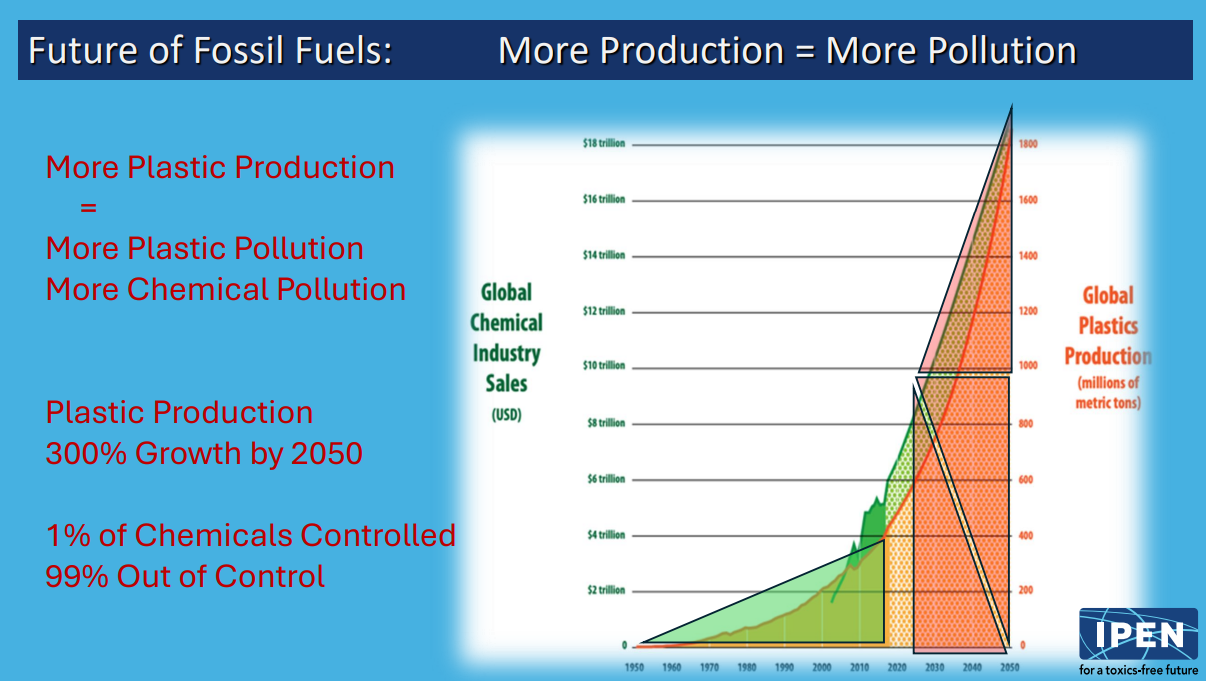
- Circular economy has failed us. It failed to tackle the issue of overproduction and it did not prevent from recycled plastics that contain toxic substances.
- Tracking toxic chemicals in waste has proved particularly difficult. Therefore, we suggest is that only plastics that are free of toxic chemicals should be reused, refilled, repurposed, and recycled.
- IPEN has found in several studies that banned chemicals are used as recycled plastics in toys that expose children. Therefore recycling is only a solution if the recycling is without toxic chemicals.
- IPEN Quick Views: Plastics Treaty Intersessional Process
Panel Discussion
Can you describe what are the barriers for Cameroon in regulating chemicals in plastics and what are your expectations for the plastics treaty?
Hyacinth MBOH | Director of Standards and Controls, Ministry of Environment, Protection of Nature and Sustainable Development (MINEPDED), Cameroon
- Plastic pollution is a global concern that requires an international response involving all relevant actors at different levels. Many initiatives, projects and government responses and options have been developed to tackle this major environmental problem. However, the world is still unable to cope with the increasing amount of plastic waste that it generates. In addition, there is a lack of coordination among various initiatives and institutions working on plastic and there is a need for an effective response.
- Cameroon is classified by the World bank among low income countries in terms of human development. It was ranked by the United Nation Development Program in 2004 as having position 141 among 177 countries.
- Also, according to a 2005 UNDP report, chemicals, petroleum, refineries, rubber and plastics industries are grouped as second in the country and represent 17% of manufacturing value advertised (MVA), 41% of manufacturing employment and 9% of manufactured export. According to the reports from the National Institute of Statistics, and the Minister of Environment, an average of 10222 million tons of plastic are imported to the country every year. On the other hand, 647,000 tons of plastics are exported to developing countries. Thus, we have an average of 120 million tons of plastic circulating within the country that is recycled or dumped in a landfill.
- There has been tremendous progress in regulating these plastic chemicals, through the MEAs Cameroon is a part of such as the Stockholm Convention, the Basel Convention, the Minimata Convention and this enables the country to establish policies.
- Cameroon laws on the matter include:
- Regulating toxic and hazardous waste.
- Establishing a framework for environmental management.
- Decrees prohibiting the importation or transit of waste into the country and aiming to decrease the use of single-use plastic.
- Cameroon’s National Waste Management Strategy aims to reduce plastic pollution. However, this legal instrument does not refer to the chemical additives contained in plastics, let alone the ingredients used in their production. This means that Cameroon has no regulation in place to address the issue of chemicals of concern in the millions of tons of plastic waste,
- Another barrier faced by Cameroon is limited capacity and weak enforcement. There are technical limitations regarding the selection of chemicals for manufacturing plastics.
Expectations for the Plastics Treaty
- Development of strong financial mechanisms to assist developing countries in the implementation of the future treaty;
- Establishment of stringent global control measures for the identification and classification of chemicals in plastic, at the global level, to eliminate all the harmful chemicals in plastics. Such controlled substances would include :
- Monomers like Styrene
- Polymers like Polystyrene
- PVCs of concern
- As well as single use plastic commodities
- Establishment and updating of a list as new knowledge is acquired
Considering the number of conventions dealing already with chemicals, is it necessary for the plastics treaty to cover chemicals?
Sylvain BINTEIN
- Yes. Under the Stockholm Convention, very few chemicals are listed. The main reason is that not all chemicals fulfill its criteria as they are very strict. The substances need to be persistent, bio-curable, toxic, and transported to very long distances. Different actions are needed for different types of chemicals. Substances that are “only” toxic for human health, such as carcinogens, or “only” toxic for production, such as Bisphenol or Phthalates, cannot be tackled under the Stockholm convention.
- The Global Framework on Chemicals could complement the work of existing MEA and also under the plastic treaty. But as chemicals are present in a vast array of products it would be good to have one dealing with plastic specifically.
- The EU believes there is a need for strong global and mandatory action on plastic products and their chemicals. What can be done voluntarily on other types of products can be done under the Global Framework on Chemicals. Moreover, the global treaty on plastic will focus on not all chemicals using plastic, but the ones that have the most problematic chemicals.
- Not all chemicals will be listed, meaning that voluntary action from the industry will be necessary. Thus, action under the GFC is also useful to tackle some aspects of the plastic issue. The future plastics treaty needs to act on the most problematic chemicals, to ensure that we have clean material cycles to ensure recyclability as well as the protection of human health and the environment.
- One of the other issues is the sheer amount of chemicals on the market and the clear data gap about the knowledge that we have on their properties. This is a gap that needs to be filled, even where there are strong regulations on chemicals. For example in the EU, information on polymers is scarce because they are outside the scope of registration.
Related to what has been discussed during this event, a recent study by the BRS secretariat found that only 1% of chemicals are regulated internationally, mainly by the Stockholm Convention. However, the identification of chemicals is slow and burdensome. From your perspective, what different approaches can we use?
Prof Li
- It is a good thing that the BRS already compared their global governance of plastic and associated chemicals in this report. The data mentioned in this report is based on a review of existing scientific articles. Although the quality of the data is not in question, it is still crucial to highlight that our chemical research is far from sufficient. Without data, it is difficult to support decision-making.
- It is extremely important to research if the forms and the contents of these chemicals in plastic products have been detected clearly, not only in one country but globally. There are a variety of viewpoints, data and different research reports. That is why more research and multiparty verification are needed when using this data for decision-making.
- Control of chemical substances should be based on science, taking into account the need for sustainable development. The Stockholm Convention has already established a mechanism for adding POPs, including clear qualitative screening criteria and the establishment of the POPs review committee. This practice proved that adding POPs through the screening criteria in Annex D, the risk assessment in Annex E, and the social and economic considerations in Annex 5 are scientifically reasonable. I believe the Stockholm Convention is sufficient for dealing with POPs.
- It is relevant to mention international convention initiatives, such as the GFC, the BRS convention, the Minamata convention, and such. There is also the soon-to-be-established Science-Policy Panel on Chemical Waste and Pollution (SPP), which will contribute to more support for decision-making in chemicals. The SPP and the different conventions could be synergized with more time and expectations for a greater role in the future. If we can bridge the gap with existing and future conventions, we could support the sustainable development of chemicals and waste.
Most countries agree that circular economy approaches for plastics are important to solve the plastic pollution crisis. In your perspective, how do you think circular economy approaches should be applied in the plastics treaty, especially with regard to chemicals in plastics?
Yuyun Ismawati
Circular economy has become a buzzword. On the contrary, “sustainable production and consumption” should be used more, as they are more meaningful and thoughtful than “circular economy”. Regarding the plastic circular economy, in many countries, including Indonesia, it is seen as the way to achieve sustainable development, without considering the chemical components of certain products. This is why a circular economy is not an ideal solution to problems related to waste and restricted materials. From observations and conversations with plastics producers, there seems to be no long-term or circular perspective for plastics. Plastic recycling has limitations. Some types of plastics can only be recycled twice. After being recycled twice, the plastic has to be downgraded adding virgin plastic, plastic additives or chemicals. Some producers propose to have grading systems or labeling for flakes or pellets when they are traded or used in new products.
IPEN findings show that brominated flame retardants, bisphenol and phthalates could accumulate in children’s toys. Children who play with their toys, especially hand-to-mouth, show traces of dioxins in their saliva. These findings show how much the substances in recycled products can migrate or affect us. Without that kind of information about the chemical content in the products, recyclers and consumers will be blind about the products used. So talking about the circular economy, if we do not talk about chemicals, there will be health costs that have to be covered. We should talk more about the word sustainable consumption and production to be used instead of circular economy.
Both the EU and the Norwegian proposals include specific rules on transparency. What good practices exist on transparency and traceability that can work without being too burdensome?
Ana Paula SOUZA
Burdensome is not the word that we should when we are talking about transparency. Good environmental governance is based on three pillars: access to information, participation and access to justice. If we do not have that, we will not be able to make progress. Transparency and traceability are not a burden, they are an obligation that already exists for states.
We need to be informed, to be able to make this decision. I heard that there are more than 200 definitions of what circular economy means. Perhaps centering on sustainable production and consumption, but also on waste hierarchy, will allow for increased transparency.
We all as consumers should be angry for the lack of information related to the plastics we consume. We are being prevented from understanding what is being fed to us and the harm that this is causing.
What is your understanding of this non-criteria based approach? And what do you see are the advantages of each?
Ana Paula SOUZA
As arisen in the response of States to the questionnaire for the expert group 2, many are unclear on what a non-criteria based approach is. This is also related to transparency.
Plastic pollution is a global crisis and that requires legally binding provisions through global targets and control measures and obligations instead of voluntary nationally determined approaches. Any other approach, including attempts to disregard the best available science to advance our interests or move away from global uniform criteria rules is, in my opinion, a distraction that will take us away from addressing the plastic crisis.
Our efforts to address the human health impacts of plastic have largely been ignored as well as the global dimensions of the plastic cycles.
If a chemical concern harms human health, it harms all people everywhere, meaning that chemical impact needs to be regulated through MEAs and that the treaty should focus on a criteria approach only. I think that there are valid lessons from the implementation of the Paris Agreement that can make a case for that.
What is your understanding of this non-criteria based approach? And what do you see are the advantages of each?
Vito BUONSANTE
Each member has a different understanding of what criteria and non-criteria approach means. It is going to be very difficult to have effective regulation of chemicals if we do not regulate them globally. If we give each country the freedom to regulate the chemicals in plastic as they wish, we will have a non-effective regulation for various reasons :
- Hazardous chemicals can often travel around the world through litter. So having a national approach does not make much sense.
- All supply chains are complex. If we want to keep on concentrating on these plastics and these products, we need to have a global regulation.
The question that should be asked is do we need a criteria? Should we have, as the EU is proposing, a very specific endpoint or should we regulate the chemical on the basis of expert groups that determine the harm ? That is something that could be determined in different ways, the most important thing being having a mechanism to address chemicals in the treaty and that regulates all the trade of chemicals rather than thinking about specifically what kind of criteria it is.
Open Discussion
Q: Could you elaborate on the trade obligations you envision for chemicals identified as being of concern, using a hazard-based approach? (Since no restrictions would apply in step 1, it is not clear how restrictions on trade could apply here.)
Sylvain BINTEIN: To obtain the prior informed consent of the importing State, together with its formal written assurances by the competent authority of the importing State, that the chemical imported will be used in a manner consistent with the conditions regarding prohibitions or restrictions and applicable control measures, harmonized information disclosure and marking and labeling requirements contained in part II of Annex A, and managed in a safe and environmentally sound manner throughout its life cycle.
Vito BUONSANTE: As you point out, this is a plastic pollution treaty. Therefore, all measures to control chemicals will be related to their use related to plastics. You are right that some chemicals both hazardous and non-hazardous occur in nature. Unfortunately, naturally occurring substances can also be hazardous (e.g. Lead, Cadmium, Polycyclic Aromatic Hydrocarbons).
Q: As a consumer, I would want the same level of safety and free from toxicity when I purchase clothing, or use products made from paper etc. How would you propose that industries in different sectors also manage the use of chemicals responsibly as it is being proposed for the plastics industry, as the current proposals are being tabled at the Plastic Pollution Treaty level, not at the level of the Global Framework of Chemicals Management ?
Sylvain BINTEIN: Other MEAs and the Global Framework on Chemicals as well as regional and national restrictions should cover other types of products.
Q: When hazard based criteria should be used for persistence – P and bioaccumulation – B, would you propose the criteria from the Stockholm convention (as agreed on global level) or the criteria from EU-REACH / EU-CLP? And for very persistent and very bioaccumulative from the EU there are no equivalent classes on a global level?
Sylvain BINTEIN: We would like to propose the criteria that we have proposed at the UN Globally Harmonized System of Classification and Labelling of Chemicals (UN-GHS). Some of them are similar to the annex D criteria of the Persistent Organic Pollutants (POP) convention and also used in other jurisdictions like in North America.
Closing
Valentina SIERRA
- Scientific approach is crucial. We need to ensure a safe circular economy.
- The negative impacts on the environment and on human health are concerning. Cancer cases and other chronic diseases are increasing and are linked to Endocrine Disruptive Chemicals found in plastics.
- Existing Conventions like the BRS are not enough to address the plastic crisis.
- It is fundamental that Chemicals of concern and problematic plastics are eliminated, restricted or reduced through these treaties, as the more plastic is produced, the more we are exposed to it.
- These chemicals and products should be controlled by its inclusion in lists in the annexes of the treaty; an ambitious treaty based on control measures and obligations with robust means of implementation for its successful fulfilment.
- A human rights based approach will ensure inclusive and informed decision making that would align robust, independent and scientific evidence and the need to prevent the negative impacts of plastics on human rights, including the right to health, to labour and to a healthy environment among many others.
- A pragmatic approach is clearly needed to ensure plastics are safe and chemicals do not harm people when used, reused and recycled, as we cannot wait for decades to implement the treaty and change the plastics economy.
Tadesse AMERA
- The reason why we were pushing the United Nations Environment Assembly to have this legally binding treaty is to protect human health and the environment. So it is not a waste management treaty, it is a chemical treaty and a health treaty.
- The treaty should prioitize having a global criteria for chemicals of concern and a global commitment. There are pushes to bring this criteria to be national, but for example no African country has a capacity to have its own criteria nationally. It is an international product which is transboundary so we need a global criteria which can restrict or ban the chemicals of concern that are harmful to human health and the environment.
- The human health issue should be central. We are now talking about microplastic in human blood, in placenta, in sperm, all over our body. Long term impacts are not yet verified and unknown, so when the production of plastic increases, we are suffering, the environment suffers. We need to have a balanced approach to restrict the hazardous contents but also to focus on human health and on the environment in the discussions to come.
- On reusability and recyclability matter, we have to focus on humanity’s toxic circular economy.
- On sustainable production and consumption aspect, we need a clear definition of sustainability without compromising the environment and human health and even the future generations.
- This treaty should have a global criteria so that we can have a global binding instrument to protect our health, to protect the environment and to meet the UNEA resolution.
Video
Documents
Presentations made during the event
Links
- Road to Busan | Plastics INC-5
- IPEN Quick Views: Plastics Treaty Intersessional Process
- Frequently Asked Questions on Plastics and Chemicals
- Troubling Toxics
- Are Your Children’s Toys Hazardous Waste?
- Transparency and traceability systems for plastics Design and practicability considerations | HEJSupport, SSNC, groundWork SA | March 2024