
Événement Conférence
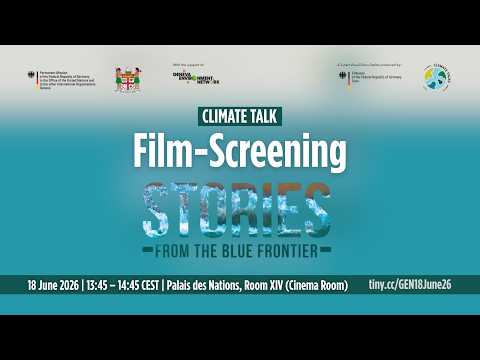
Climate Talk: Film-Screening « Stories from the Blue Frontier »

18 Juin 2026
13:45 – 14:45
Lieu: Palais des Nations, Room XIV (Cinema Room)
This event screened and discussed the documentary “Stories from the Blue Frontier”.

About the Event
This event screened and discussed the documentary “Stories from the Blue Frontier”.
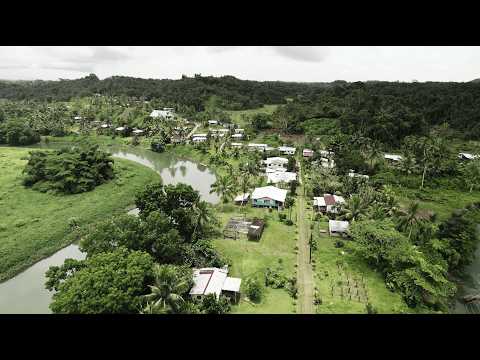
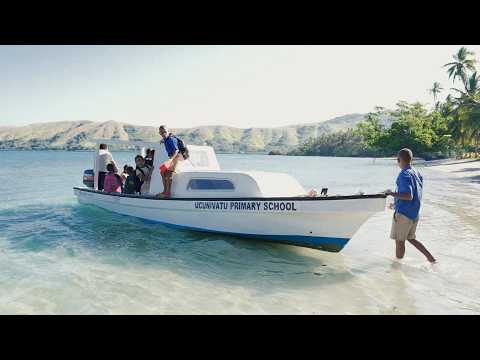
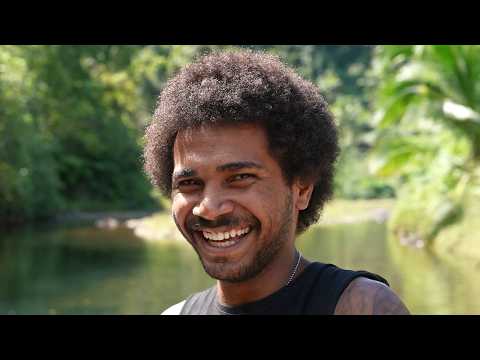
The documentary, which was produced by the German Embassy in Suva, provides a voice to rural communities in Fiji on the adverse impacts of climate change they are facing. It also gives accounts on local approaches to strengthening climate resilience and the support provided through the cooperation of the Governments of Germany and Fiji.
Climate change threatens the fulfilment of all human rights. At the same time, vulnerable groups, especially in rural settings, play a key role in enhancing climate resilience of societies and economies. The urgency for action becomes increasingly apparent. Just recently, the UN General Assembly backed the landmark advisory opinion of the International Court of Justice on countries’ obligations to curb climate change. The documentary “Stories from the Blue Frontier” is a compelling testimony for the interlinkages between local and global action.
Speakers
By order of intervention.

H.E. Amb. Antje LEENDERTSE
Permanent Representative of Germany to the United Nations Office and other international organizations in Geneva

Keleni SERUVATU
Deputy Permanent Representative of Fiji to the United Nations Office and other international organizations in Geneva

Heike ALEFSEN
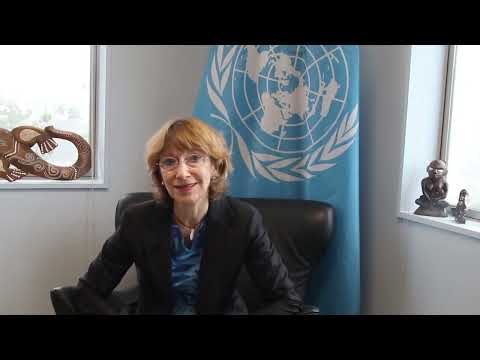
Regional Representative for the Pacific, Office of the High Commissioner for Human Rights (Video Message)

Elisa MORGERA
UN Special Rapporteur on climate change and human rights
Videos
Opening Segment & Closing
Opening
OHCHR Video Statement
Closing
Three-Part Documentary
The three-part documentary “Stories from the Blue Frontier” was produced by the German Embassy in Suva.
Highlights
Summary
Opening Remarks
H.E. Amb. Antje LEENDERTSE | Permanent Representative of Germany to the United Nations Office and other international organizations in Geneva
- The documentary intends to bring a field perspective from the Pacific into climate action, underpinning the adversity faced by rural communities, the support given by corporations, and their local approaches.
- The measures taken by rural communities in Fiji to address the issues they face due to climate change are supported by financial and technical cooperation between the governments of Germany and Fiji.
- Germany acknowledges its duty as a major carbon emitter in climate action, prompting it to reduce its own emissions and help other countries with climate change mitigation and adaptation. In 2024, it mobilized €11.8 billion for international climate finance.
- Germany stands as a committed partner to Pacific Island states, countries which are especially vulnerable to climate change, sea level rise, extreme weather events and growing water insecurity, which are all potentially existential challenges to them.
- Germany believes that resilience, stability, and sustainable development of all societies need to be ensured, regardless of a country’s size. In 2022, Germany appointed their special envoy for the Pacific Islands states, opened an embassy in Fiji in 2023, and provided comprehensive support for the objectives of the Pacific Island Forum’s 2050 strategy for the Blue Pacific Continent.
- Germany is keen to support amplifying the voices of SIDS at a multilateral level, through, for example, supporting the recent UNGA resolution backing the advisory opinion of the ICJ on countries’ obligation to curb climate change led by Vanuatu.
- Climate change threatens the enjoyment and fulfillment of all human rights, with rights holders in vulnerable communities playing an important role in strengthening the nation’s resilience to climate change.
Keleni SERUVATU | Deputy Permanent Representative of Fiji to the United Nations Office and other international organizations in Geneva
- The Pacific plays a leadership role in climate action, focusing on the importance of ambition, urgency, equity and international cooperation as guided by the 2050 strategy for the Blue Pacific Continent.
- The documentary emphasizes three key aspects: the linkage between the multifaceted work done against climate change in Geneva, to give insight into how rural communities in the Pacific are facing climate change while supporting SIDS’ initiatives, and to show resilience and acknowledge the cultural aspect of facing climate change.
- It is important to see climate change as a cultural factor. Climate change is real, it’s a lived reality for us in the Pacific, and it’s also an issue of resilience and adaptation.
Heike ALEFSEN | Regional Representative for the Pacific, Office of the High Commissioner for Human Rights (Video Message)
- Not long ago, climate change and related responses were essentially framed as environmental issues with targets, national plans, and voluntary pledges. That framing was not wrong, but it was incomplete because behind every degree of warming, there are people who lose their homes, their livelihoods, and their very capacity to remain on the land their families have inhabited for generations and to navigate the seas that have shaped their identity.
- The stories of these documentaries are not only stories of loss and vulnerability, they are stories of resilience, dignity, and traditional knowledge. Across Fiji and the wider Pacific, communities are already responding to the impacts of sea level rise, coastal erosion, extreme weather events, changing ecosystems, food and water insecurity, and other threats to livelihoods and to their human rights.
- The shift to a broader, more inclusive, and more human rights-focused understanding of the impact of climate change has gathered momentum as these communities and individuals on the front lines, including those from indigenous territories around the world, rejected the notion that their futures were negotiable and insisted instead on their right to thrive and not merely survive.
- Environmental human rights defenders, grassroots movements, a generation of youth and student advocates demanded that states and institutions respond and so they did.
- In 2021, the Human Rights Council recognized the right to a clean, healthy, and sustainable environment as a human right. In 2022, the General Assembly affirmed it universally.
- In 2025, the International Court of Justice Advisory Opinion recognized that states have human rights obligations to act in response to climate change.
- In May of this year, 2026, the General Assembly endorsed a resolution affirming its key findings.
- Climate action is not merely a matter of policy choice or perhaps moral aspiration. It’s a matter of human rights, of justice, and intergenerational responsibility.
- States must not view climate action as hindering economic progress, but rather, they must support a conscious decision to ensure a just transition. The standard of due diligence required is quite stringent and it extends to the regulation of private actor corporations including fossil fuel companies that are operating in their territory or jurisdiction.
- States that do not act, including by failing to regulate those whose activities drive climate harm, may be considered to have committed an internationally wrongful act.
- The countries most affected by the crisis are not waiting for others to save them. From the Pacific, Vanuatu’s leadership throughout the process of requesting and recognizing the ICJ advisor opinion signals political will and action, including at the human rights council.
- One of the most significant human rights dimensions of climate change in the Pacific is climate mobility and migration. Communities are increasingly making difficult choices whether to stay or move temporarily or permanently. For Pacific people’s mobility is deeply connected to culture, to identity, land, and to oceans. This understanding is reflected in the Pacific regional framework on climate mobility, which represents a landmark commitment endorsed by the leaders of the Pacific Islands Forum in 2023 with support from the United Nations and other partners. It addresses climate mobility in a way that places people’s agency and empowerment at the center.
- This framework and its implementation plan recognize the importance of staying in place where possible and planned relocation meets migration and responses to displacement, which are community-led, inclusive and informed by traditional knowledge, at the same time ensuring the protection of human rights of affected persons throughout every stage of mobility for the office of the United Nations High Commissioner for Human Rights in the Pacific.
- Climate change remains a key human rights priority. Our work supports Pacific countries and communities to strengthen human rights-based approaches to climate action through advocacy, technical cooperation, research, engagement with regional processes, and enabling the participation of those most affected.
- We believe it is important to protect civic space and directly support and fund civil society organizations so that they may continue their policy work with governments and their grassroots engagement with communities and litigation.
- Under the powerful slogan, we are not drowning, we are fighting, the Pacific has long been a voice for climate justice. The knowledge, the leadership and solutions emerging from Pacific people must continue to guide global responses to the climate crisis, including at the human rights council.
Closing
Elisa MORGERA | UN Special Rapporteur on climate change and human rights
- These documentaries frame a variety of forms of collaboration across different landscapes and the different voices that have been participating in the project.
- Key messages from the documentaries include:
- Fair partnerships and how we can develop cooperation that is really responsive to local needs and attentive to the diverse needs, even within a smaller community.
- The way we bring knowledge, either from researchers or practitioners, and how that relationship evolves.
- In the context of my first country visit to Vanuatu, I learned about the importance for those collaborations to remain in an open framework, where we all learn what works and what may be difficult or remain evolving as things progress.
- In that context, for donors as well and developed country partners, it was important to think about the project design and the kind of funding that can be opened to that iterative learning.
- This was showcased in those documentaries and sharing those ways of implementing and emerging needs that would not be predicted at the start of a certain collaboration and how the projects and funding can be responsive to that is quite crucial. Hopefully, it’s a model that many other donors can provide.
- There’s often a perception that a more open-ended project design may be riskier. But in fact, we know it’s when we close things a bit too much or when we anticipate a certain path and we close opportunities for that learning that we risk embedding assumptions. Therefore, it’s important to allow the project to become a source of knowledge co-production as well as climate action.
- Sharing those experiences with those working in the field and beyond international cooperation is necessary to really bear the most fruit and not only protect human rights, but support the full realization of human rights even in the context of increasing climate change.
Directions to Room XIV
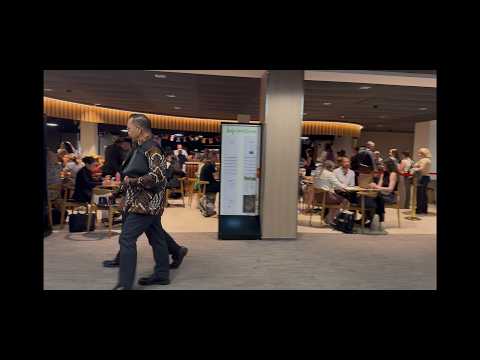
From Bar Concordia
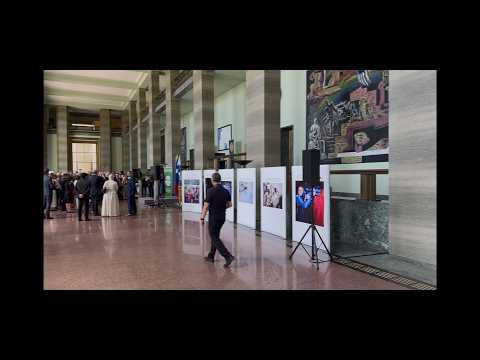
From Salle des Pas Perdus
Using Elevator A17