
Event Virtual
Launch and Panel Discussion | Chemicals and Waste Issues of Concern: Priorities for Further Work and Potential Further International Action – A Summary Analysis of Stakeholders’ Views

This event, organized in cooperation with the Geneva Environment Network introduced the UNEP Issues of Concern report – “Chemicals and Waste Issues of Concern: A Summary Analysis of Stakeholders’ Views on Priorities for Further Work and Potential Further International Action” and held an exchange of perspectives on its key findings and possible ways forward, including the role of new and existing instruments.

About this Event
At its resumed fifth session, the UN Environment Assembly (UNEA-5.2) requested the Executive Director of UNEP to seek views from Member States and other stakeholders on priorities for further work, building on existing measures and initiatives, and on potential further international action on the issues discussed in the Assessment Report on Issues of Concern (Resolution 5/7).
In response to this request, UNEP conducted in 2023 a consultation process on priorities for further work and potential further international action on these chemicals and waste issues of concern. A summary analysis, taking into account the views expressed, was prepared and made available in an advance version to UNEA-6 (Nairobi, 26 February to 1 March 2024).
The formatted version of the “Chemicals and Waste Issues of Concern: A Summary Analysis of Stakeholders’ Views on Priorities for Further Work and Potential Further International Action” was launched at this event, featuring an introduction by the authors of the report and offered a platform to discuss its main findings as well as the role of existing instruments and new mechanisms under negotiation in addressing these issues of concern.
Speakers
By order of intervention.

Ludovic BERNAUDAT
Head, Knowledge and Risk Unit, Chemicals and Health Branch, UNEP

Océane DAYER
Waste and Chemicals Focal Point, Federal Office for the Environment, Switzerland

Jessica TEMPLETON
Lead, IISD Earth Negotiations Bulletin

Bob DIDERICH
Head of Division, Environment Directorate, Organisation for Economic Cooperation and Development | Chair, IOMC

Melissa WANG
Honorary Research Fellow, University of Exeter | Senior Scientist, Greenpeace International

Frankie ORONA
Executive Director, Society of Native Nations

Kay WILLIAMS
Head, Global Framework on Chemicals

Marylene BEAU
Programme Officer, Basel, Rotterdam and Stockholm Conventions

Dalia MARQUEZ
Co-Chair, Women's Major Group at UNEP

Jacqueline ALVAREZ
Chief, Chemicals and Health Branch, UNEP

John ROBERTS
Independent Consultant | Moderator
Highlights
Summary
Introduction
Ludovic BERNAUDAT | Head, Knowledge and Risk Unit, Chemicals and Health Branch, UNEP
- This work responds to UNEA resolution 5/7, which requested UNEP’s Executive Director to gather input from Member States and stakeholders on priorities for further action.
- The goal is to build on existing initiatives and explore further international action on the 19 identified Issues of Concern from a previous assessment.
- The Knowledge and Risk Unit worked with support from individuals, Member States, and stakeholders. It received nearly 200 responses through a global consultation after a face-to-face consultation in July 2023 in Geneva.
- A report summarizing these views was presented to UNEA-6 in advance and welcomed through Resolution 9 (UNEP/EA.6/Res.9). It has now been officially launched, marking a key milestone in this process.
- The main report and annexes contain a detailed summary of the views on each Issue of Concern.
- The inputs and support provided by governments, international organizations, civil society, private sector representatives, and academia have been instrumental to this publication.
Opening Remarks
Océane DAYER | Waste and Chemicals Focal Point, Federal Office for the Environment, Switzerland
- In 2020 in response to UNEA resolution 4/8 , UNEP published an assessment report on 19 chemicals and waste Issues of Concern, highlighting the urgent need for international action to address the risks to human health and the environment.
- Building on this, UNEA Resolution 5/7, co-sponsored by Switzerland, Thailand, and Peru called for targeted efforts and global consultation on priorities for future work.
- Switzerland has supported this consultation and is pleased to present the outcomes today.
- Three key elements stand out from the summary analysis:
- Effective use of existing instruments: We need to leverage current international governance mechanisms while developing and complementing them where necessary. Collaboration with instruments like the Global Framework on Chemicals, the plastic pollution agreement under negotiation, and the Minamata Convention must be strengthened.
- Grouping Issues of Concern: Addressing chemicals in groups rather than individually will lead to faster and more comprehensive actions.
- Tailored approaches: Different issues require different responses. For metals like cadmium and lead, legally binding instruments may be effective. For others, more information, guidelines, and leadership are needed.
- The analysis offers an opportunity to strengthen existing measures and international coordination to reduce risks related to the Issues of Concern.
- Let’s seize this moment to ensure global chemicals and waste governance is strengthened and capable of facing current and future challenges.
Presentation of the Report
Jessica TEMPLETON | Lead, IISD Earth Negotiations Bulletin
- The consultation process aimed to gather global input on priorities for further international action on 19 issues of concern related to chemicals and waste. Stakeholders from governments, intergovernmental organizations, civil society, the private sector, and academia contributed their views. The consultation took place between April and August 2023, providing multiple opportunities for engagement.
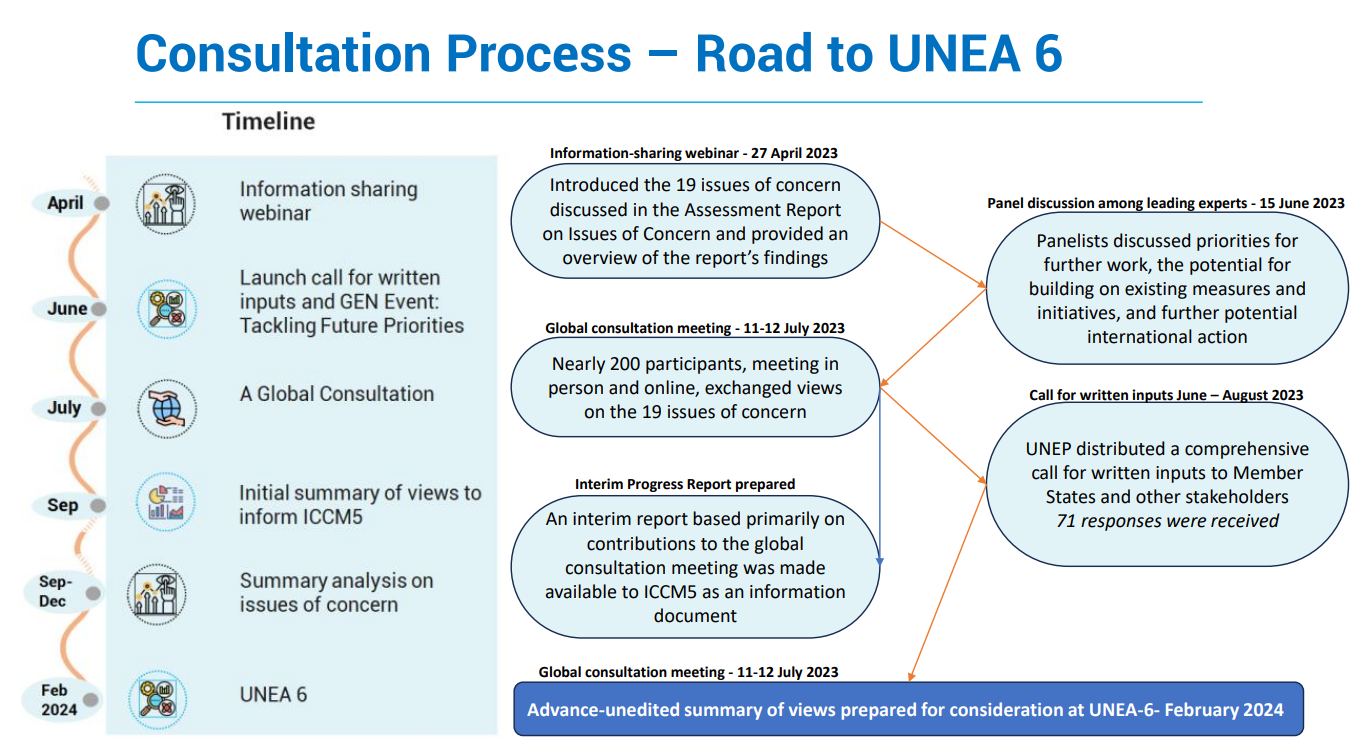
- The report addresses eight emerging policy issues and eleven issues identified in the second Global Chemicals Outlook, which highlights emerging evidence of risks. These issues were organized into groups, but they could have been grouped differently. Stakeholders provided varied and rich inputs that were carefully reflected in the main report and its annex.
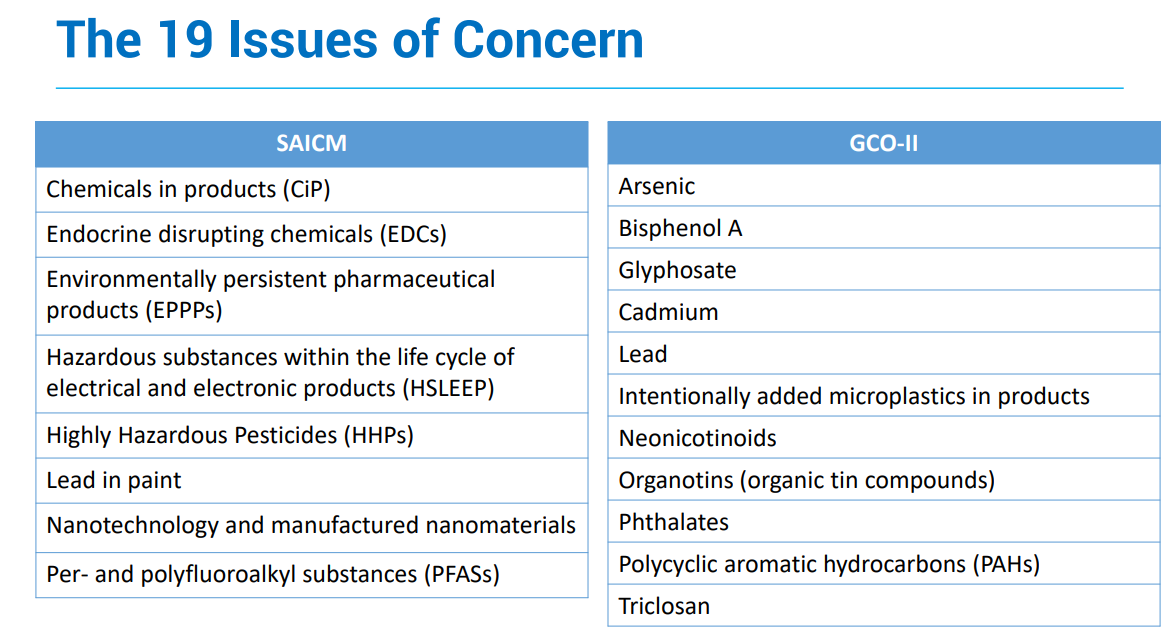
- On metals and metalloids, stakeholders highlighted the significant negative impacts of arsenic, cadmium, lead, and organotin on health and the environment. There was a strong call for transparency regarding their uses and releases.
- While there was broad support for urgent international action on these metals, some stakeholders prioritized lead and cadmium specifically. There was a suggestion for a legally binding instrument like the Minamata Convention on Mercury, though others proposed a flexible treaty starting with a few chemicals and expanding later.
- Some stakeholders also suggested addressing these chemicals as a group to engage more partners rather than creating separate instruments for each one. There was also support for global partnerships, similar to the Global Mercury Partnership, to facilitate action while working towards a binding instrument.
- On pesticides, a majority of stakeholders called for international action, citing negative impacts on health and the environment.
- However, some stakeholders questioned the evidence of harm from certain pesticides. Many supported improved labeling requirements for pesticides and bioactive substances, particularly to protect farm workers who often lack adequate protective equipment and information.
- There was a need for alternatives to be affordable and accessible to avoid economic disruption.
- Environmentally persistent pharmaceutical pollutants (EPPPs) were considered a high or very high priority for action by most stakeholders. The lack of visibility of the issue was identified as a significant obstacle.
- Many stakeholders supported voluntary initiatives such as information sharing and awareness-raising campaigns, while others called for legally binding instruments or soft law.
- A life-cycle approach was emphasized, with standards needed for the safe design, production, prescription, and disposal of these substances.
- On chemicals in products, stakeholders raised concerns about the lack of transparency regarding the chemicals in consumer products, citing substances like PFAS, BPAs, and phthalates.
- The key challenge was the lack of knowledge about which chemicals are in products, which made it difficult for consumers to make informed decisions. Stakeholders called for better labeling, information sharing, and awareness-raising. Many felt that these issues could be addressed through existing legally binding instruments, and others pointed to the potential role of the Global Framework on Chemicals and future initiatives such as the Plastics Treaty.
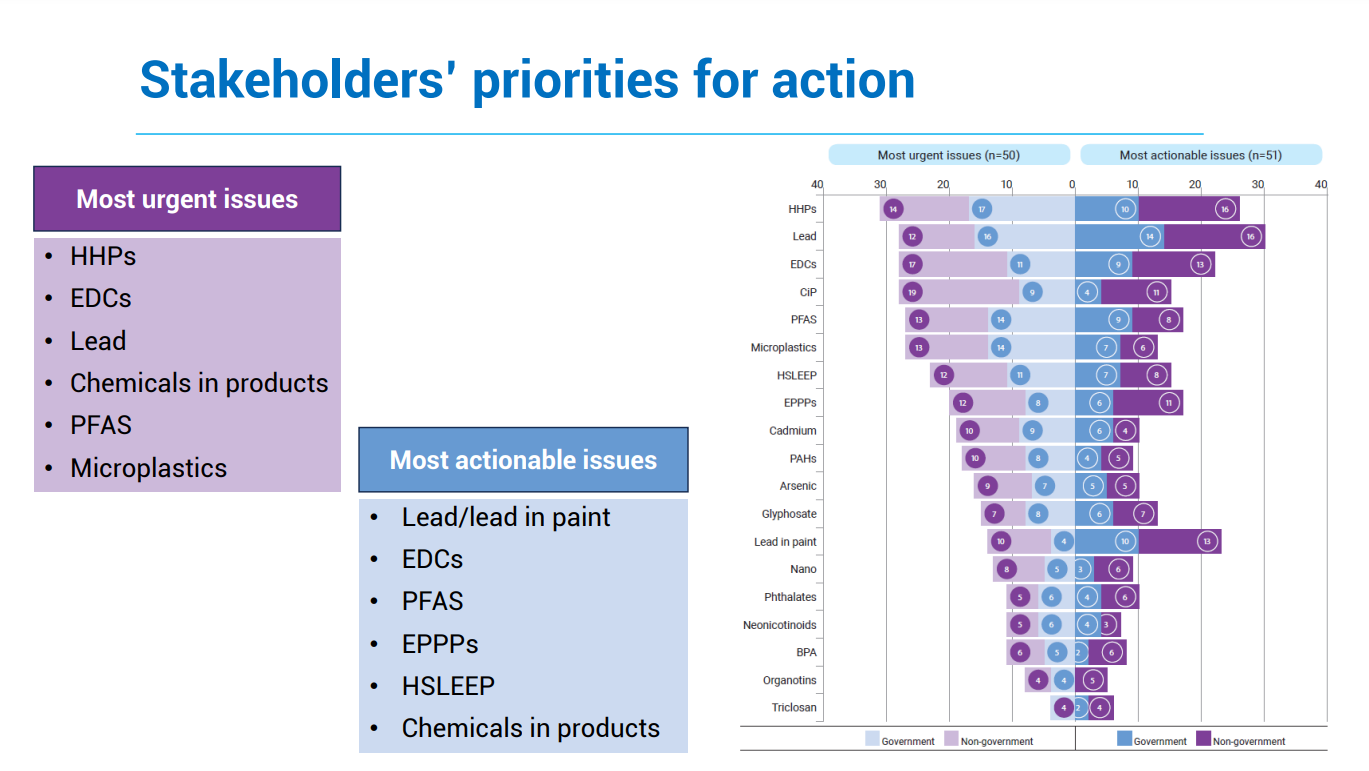
- Stakeholders identified their priorities for action, with certain issues seen as more urgent or actionable.
- High-priority issues included highly hazardous pesticides (HHPs), endocrine-disrupting chemicals (EDCs), lead, and chemicals in products.
- Actionable issues included lead, EDCs, PFAS, EPPPs, and chemicals in products. Non-governmental stakeholders, in particular, considered chemicals in products the most urgent issue, as well as lead in paint.
- More than twice the number of non-governmental stakeholders compared to member states prioritized chemicals in products as urgent.
- When asked about the international forums and instruments best suited to lead action, stakeholders pointed to a range of platforms, including the Basel, Rotterdam, Stockholm, and Minamata Conventions, as well as the potential for new bodies like the Global Framework on Chemicals.
- Stakeholders emphasized the need for a holistic approach to address all 19 issues of concern, calling for breaking down silos in international agendas and fostering greater cooperation across sectors and stakeholders.
- Cross-cutting insights included a strong emphasis on the need for international action to address the harmful impacts of hazardous chemicals and waste on health and the environment.
- Stakeholders highlighted the critical link between healthy ecosystems and human well-being.
- They also noted that countries with limited technical or financial capacity face challenges in tracking chemicals and enforcing regulations.
- Resource mobilization was seen as an obstacle for national action on many of the issues.
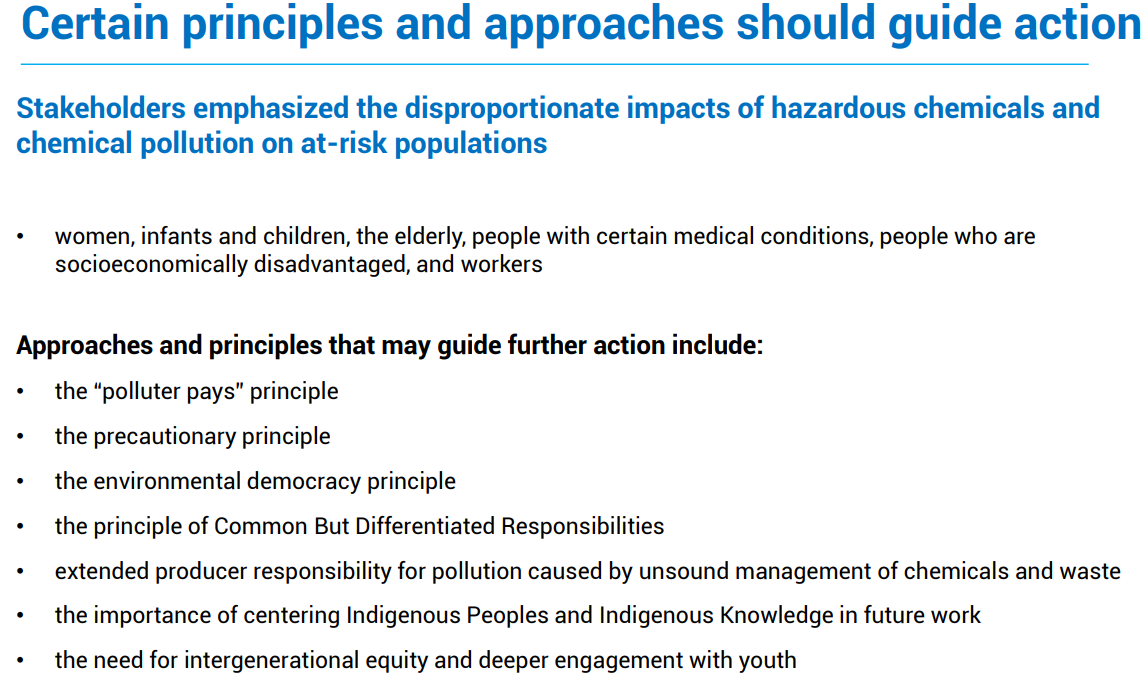
- Stakeholders pointed out the disproportionate impacts of hazardous chemicals on at-risk populations, such as women, children, and Indigenous communities.
- Several guiding principles were identified, including the polluter-pays principle, the precautionary approach, and the principle of common but differentiated responsibilities.
- Transparency throughout the life cycle of chemicals was seen as essential for informed decision-making by policymakers, businesses, and consumers.
- Stakeholders stressed the importance of better access to information, including gender-disaggregated data, to empower communities and foster accountability. Education, awareness-raising, and knowledge-sharing were identified as crucial to addressing many of the risks posed by chemicals.
- Holistic solutions were also emphasized, with stakeholders calling for group approaches to chemicals, rather than addressing each substance individually. Breaking down silos across international agendas and encouraging broader cooperation among sectors was seen as critical for effective action. Many stakeholders identified gaps where no international body currently has a mandate for action and called for collaborative efforts to fill these gaps.
Panel Discussion: Prospectives & Views from Stakeholders
Bob DIDERICH | Head of Division, Environment Directorate, OECD & Chair, IOMC
- A key lesson learned from the work of the Inter-Organization Program for the Sound Management of Chemicals (IOMC) on emerging policy issues is that many of the issues identified depend on the ability of countries to act. Many countries lack the legal frameworks needed to propose risk management measures for chemicals that are considered to pose risks.
- For example, countries recently engaged in UNITAR and OECD discussions about nanomaterials and expressed concerns about the potential risks to human health and the environment. However, even when these risks were identified, many countries were not in a position to act because their legal systems did not allow regulators to take the necessary action. This issue also applies to other chemicals of concern, such as PFAS or endocrine disruptors.
- A key recommendation is for countries to establish basic legal frameworks to enable effective regulatory action on chemicals. Without these frameworks in place, progress will be limited, and international conventions may not always be sufficient or realistic to address all chemical concerns.
- The idea of grouping chemicals for risk assessment is a useful approach, particularly in OECD countries. Grouping chemicals helps in hazard assessment and allows regulators to assess more chemicals in a shorter time. However, there is limited experience in managing groups of chemicals, such as the entire class of PFAS, and only a few countries like the European Union and Canada have attempted to move in this direction.
- Grouping chemicals based on their risk profile, such as ensuring that carcinogens, mutagens, or reprotoxic substances are not included in consumer products, is a common approach in the European Union. However, this group-based, risk-based consumer protection approach is not yet systematically done in other countries, presenting both an opportunity and a challenge.
- There is also the challenge of preventing new issues from emerging, as our knowledge of chemicals continues to evolve, and innovation keeps introducing new substances.
- The OECD argues that current legal frameworks for regulating chemicals are not designed to foster dialogue between regulators and innovators. This gap needs to be addressed to identify potential risks early on.
- At OECD, there is a focus on improving communication between innovators and regulators to catch potential risks associated with new chemical solutions. This collaboration is seen as crucial in preventing future chemical issues.
- Moving forward, the Global Framework on Chemicals aims to mainstream emerging issues into general chemical management. However, this requires countries to have basic chemical management systems in place that allow them to take action.
- In conclusion, it is clear that there is a need for improved legal frameworks, better grouping approaches, enhanced dialogue between regulators and innovators, and stronger global cooperation to address both existing and emerging chemical risks effectively.
Melissa WANG | Honorary Research Fellow, University of Exeter & Senior Scientist, Greenpeace International
- The term “holistic” appears frequently in the report, with multiple interpretations. A key focus is the importance of a synergistic approach, particularly understanding the interlinkages between chemicals and other global issues like biodiversity and climate change. The impacts of these challenges are compounded when interconnected, and so must be the solutions. A holistic approach is necessary to break down silos between issues, sectors, and disciplines.
- As affirmed by Sir Jim Skea, chair of the IPCC, a synergistic and holistic approach is important and this has been put into action through collaborations between IPCC and IPBES at the scientific level. This model can guide the new Science Policy Panel on chemicals, waste and pollution prevention once established, fostering similar holistic collaborations on emerging issues of concern.
- The grouping approach for chemicals, initially viewed as aspirational and idealistic, has become more practical in the last decade. Many solid examples and lessons learned demonstrate the feasibility of grouping chemicals for research and regulation. Efforts to translate this vision into practice continue to evolve.
- The need for a holistic approach and chemical grouping has also been raised in the INC negotiations for the Global Plastics Treaty and should be incorporated into the new Global Framework on Chemicals.
- A shift from a reactive to a proactive approach is needed. The focus should be on “getting ahead of the game” to prevent future environmental disasters. Two levels of action should be prioritized: preventing the emergence of concerns by designing them out from the beginning, and using horizon scanning and early warning systems to identify risks early and prevent their expansion.
- Preventing the emergence of concerns by designing them out from the beginning
Internationally established criteria for hazardous chemicals, such as PBT, PMT, CMR, and EDC, already exist, but current regulations tend to be reactive. The integration of these criteria into regulations is necessary to proactively design out harmful substances. This should send a strong signal to the private sector and innovators to avoid chemicals with toxic properties from the outset.
- Using horizon scanning and early warning systems to identify risks early and prevent their expansion.
- UNEP’s Global Foresight Report on planetary health stresses a forward-looking and precautionary approach to identifying emerging risks and making better preventative decisions. Harmful chemicals are highlighted as a significant risk with high impacts and high likelihood. The horizon scanning function of the SPP will play a crucial role in identifying emerging issues and suggesting necessary preventative actions.
- A shift towards a proactive and preventative approach requires holistic policy design, early identification, and prevention of harmful chemicals, all of which depend on transparency. The goal is to design out harmful substances through a collaborative, forward-thinking approach.
Frankie ORONA | Executive Director, Society of Native Nations
- The report highlights the urgent need for international action to address the risks of hazardous chemicals and waste.
- The emphasis on holistic approaches, transparency, and inclusivity is important, yet it is crucial to recognize the disproportionate impacts of chemical pollution on vulnerable populations, especially Indigenous communities.
- Indigenous communities must be centered due to their close relationship with the environment, often labeled as “natural resources”.
- The document mentions the importance of centering Indigenous peoples and Indigenous knowledge in future work, which can lead to more effective and culturally appropriate solutions.
- The Indigenous Peoples’ Major Group requested an Indigenous Advisory Committee (IAC) within the SPP on chemicals, waste and pollution prevention to ensure Indigenous participation.
- Vulnerable populations, especially Indigenous communities, are disproportionately affected by environmental contamination due to proximity to industrial sites, reliance on traditional food sources, and limited healthcare access.
- The holistic approach aligns with Indigenous worldviews, which emphasize the interconnectedness of all living things and advocate for sustainable, non-toxic practices that protect human health and the environment.
- Raising awareness and improving education about hazardous chemicals is essential for Indigenous communities, who are exposed through traditional practices or contaminated food and water sources.
- The report lacks specific strategies for ensuring meaningful participation of Indigenous communities in decision-making processes related to chemical and waste management.
- The Indigenous Advisory Committee could play a key role in ensuring Indigenous involvement.
- Despite recommendations, Indigenous voices remain marginalized in policymaking, limiting their influence on decisions that directly affect their communities.
- The document does not address the impacts of chemical pollution on traditional practices like hunting, fishing, gathering, or the use of medicinal plants. More research and guidance from Indigenous knowledge holders is needed to address these risks.
- Indigenous knowledge is equally valid as other scientific knowledge and should be seen as a scientific source in policy-making.
- Many Indigenous communities, especially those in lower-income regions, lack the financial and technical resources to implement safety measures, which increases their vulnerability to chemical pollution.
- Commercial and industrial interests often overshadow the rights of Indigenous peoples and environmental protections, prioritizing profit over ecological and human health.
- The document provides a valuable framework, but more work is needed to fully consider the needs and concerns of Indigenous peoples and environmental justice communities in decision-making.
- Disproportionately impacted communities must be seen as experts, given their generational knowledge of what has worked and what has not in the past.
- Indigenous knowledge is a founded science and should be seen as expert advice in these discussions.
Q&A
Q: Keeping knowledge and innovation in sync is important to implement the right controls. The Registration, Evaluation, Authorisation and Restriction of Chemicals (REACH) approach in Europe gathers data as products are placed on the market. What can be done to improve this? Will the Science Policy Panel incorporate Indigenous knowledge?
Q: How will the Science Policy Panel will incorporate Indigenous knowledge into decision-making?
Frankie Orona | Executive Director, Society of Native Nations
The issue is complex. Indigenous communities continue to fight for inclusion in decision-making. During a chemical conference in Geneva, the focus was on data collection. There’s enough data. In Indigenous communities, there are high rates of cancer, chronic disease, and organ failure caused by pollution. More data is not the solution; action is needed. People in these communities do not have time to research toxins in products, and the complex terminology makes it difficult to understand. What’s needed is a system that’s inclusive and accessible. Elders often say humans overcomplicate things. It’s as simple as that: “If the water is poisoned, you die. If the food is poisoned, you get sick or die.” Urgent action is needed, as people are dying from pollution. Inclusivity at every level is critical.
Q: Many countries still lack the capacity to implement regulations. Despite efforts like the Quick Start Program, why isn’t better progress being made?
Bob DIDERICH | Head of Division, Environment Directorate, OECD & Chair, IOMC
One area of progress is the Globally Harmonized System for Classification and Labeling, which is now implemented by about 100 countries. It provides a foundation for more complex chemical management systems and reduces costs. However, running an efficient chemical management system is expensive, and convincing governments to invest in it is a challenge. The Science Policy Panel could help by highlighting the costs of inaction.
Panel Discussion: Tackling Issues of Concern and the Way Forward
Kay WILLIAMS | Head, Global Framework on Chemicals
- The Global Framework on Chemicals is essential for advancing many issues, and the new agreement made a year ago in Bonn is a critical multi-stakeholder and multisectoral framework. It is through this framework that we must deliver change.
- The framework focuses on implementation, utilizing mechanisms such as alliances and implementation programs. The Secretariat is working closely with IOMC organizations to develop these programs, ensuring coherence and a holistic approach to our collective efforts.
- There is a focus on issues like metals and metalloids. Existing work in this area must be acknowledged, promoted, and integrated. The Global Alliance on Lead Paint, for instance, has raised awareness, with countries like the USA and Germany collaborating to expand this discussion.
- The Global Alliance on Health and Pollution has identified lead’s significant economic impact, highlighting that lead poisoning hinders economic growth. The Global Framework on Chemicals offers a platform to unite existing initiatives and actors to tackle these issues collectively.
- One of the GFC’s top priorities is the legislative approach. Despite challenges, we must prioritize implementation, understand barriers, and prepare for future regulatory changes, especially with evolving technologies and initiatives in managing chemicals and waste.
- Looking ahead, building capacity in areas like informatics and data science is crucial. Artificial intelligence could be leveraged to assess risks, manage them, and ensure chemical safety.
- Implementation efforts must extend to economic and industry sectors since 95% of products contain chemicals. These sectors must be part of the strategy to address chemical risks, especially in high-impact sectors, which will be a focus in the open-ended working group next June.
- Decision-making needs to be integrated across conventions, including climate change, biodiversity, and finance. This will help realize co-benefits when different sectors align, especially through sustainable finance and investments in solutions.
- The proposed Science Policy Panel, if agreed upon, will offer evidence-based recommendations to address both emerging and existing issues, promoting a more holistic approach to the Global Framework on Chemicals.
- Industry transformation is critical. Industry must act, and investors must be engaged, focusing on sustainability disclosures and ensuring that chemical issues are part of reporting standards.
- Youth is a vital player. Recently, youth entrepreneurs in Africa have been excelling in areas like carbon, and this is encouraging for further collaboration with Youth, as well as with development banks and investors, to support the solutions they offer.
- Indigenous communities, often overlooked, must be included in these initiatives. Their perspectives are crucial, and they should be integrated into implementation programs and alliances.
- Multiple routes for interaction exist within the Global Framework on Chemicals, such as the Global Alliance of Highly Hazardous Pesticides led by the FAO and WHO’s work on pharmaceuticals’ environmental impact. These alliances will shape robust implementation programs.
Marylene BEAU | Programme Officer, Basel, Rotterdam and Stockholm Conventions
- The BRS Conventions recognize the importance of considering whether to build on existing mechanisms or establish new ones for addressing these issues and highlight the need for coordination with international forums.
- The scope of the BRS Conventions overlaps with several issues of concern, such as electronic waste, PFAS, highly hazardous pesticides (HHPs), endocrine-disrupting chemicals (EDCs), pharmaceuticals, and nanomaterials. Quick wins can be achieved through these conventions in future international actions.
- The Basel Convention has strengthened efforts on electronic waste over the last two decades, developing technical guidelines and tools, and establishing partnerships for reducing e-waste generation and improving environmental management. In 2023, the Basel Convention extended its scope to include all e-waste, effective from January 1, 2025, marking a significant step in global e-waste management.
- The Stockholm Convention has been pivotal in the phase-out of long-chain perfluorinated substances (PFAS), including PFOA and PFHxS, with further PFAS groups to be considered for elimination at the next Conference of the Parties.
- The Stockholm Convention’s POPs Review Committee is working on innovative ways to assist parties in identifying persistent organic pollutants (POPs) in stockpiles, products, and waste, with potential for collaboration across forums to strengthen the implementation of existing instruments.
- Opportunities for collaboration also exist on issues like HHPs, EDCs, nanomaterials, waste pharmaceuticals, and metals-containing waste.
- The next BRS Conventions COPs in Geneva (28 April to 9 May 2025) will focus on strengthening international actions on these issues and exploring linkages with other relevant forums, such as the International Conference on the Global Framework on Chemicals.
- Addressing the issues of concern will require collective commitment and coordinated actions across forums to identify the necessary solutions.
Dalia MARQUEZ | Co-Chair, Women’s Major Group at UNEP
- The challenges of chemicals and waste are linked to broader environmental, social, intergenerational, and gender justice issues, and future actions must prioritize inclusive and holistic solutions recognizing these intersections.
- The Women’s Major Group advocates for a grouping approach in regulation, focusing on families of chemicals instead of the traditional substance-by-substance method, to protect vulnerable communities, especially women, children, youth, and Indigenous communities, from environmental harm.
- A shift to a proactive approach is crucial, moving from reactive to preventive policies. Gender-responsive intergenerational capacity building and collaboration between science, policy, governments, and civil society are essential in chemical management and pollution prevention.
- Transparency and access to information are vital, as women are disproportionately affected by the lack of transparency in the chemical life cycle. Right-to-know policies, digital platforms to track chemicals, gender-disaggregated data collection, and gender-sensitive research are key for empowering communities and fostering accountability.
- Current regulations must be enforced, new international binding instruments developed, and cross-sectoral collaboration should include marginalized voices, particularly youth, women, and Indigenous communities. Monitoring mechanisms should track the integration of gender perspectives in science and policy panels’ work.
- International collaboration is essential. The BRS and Minamata Conventions, along with the new science and policy panel, must focus on incorporating the voices of the most vulnerable groups, including children, youth, women, and Indigenous communities, in decision-making and ensuring equitable participation.
- The science and policy panel must promote gender-disaggregated data and gender-sensitive research to ensure inclusive policies that reflect the different impacts of chemicals on women and other marginalized communities.
Q&A
Q: Is the global framework able to provide leadership across the whole field, or will this function fall to the International Organizations for Chemical Safety (IOMC) to deliver?
Kay WILLIAMS | Head, Global Framework on Chemicals
TheGFC is voluntary, which is part of its strength because it’s multi-stakeholder and multi-sectoral. The GFC needs all actors involved. While many activities are happening, the framework provides a platform to bring these actors together, share knowledge, and include new, relevant players, especially down the value chain. Negotiating new conventions is costly and time-consuming. The framework allows us to act now, focusing on implementation, which is what we need most urgently.
Q: What is the balance between legally binding conventions and voluntary initiatives?
Dalia MARQUEZ | Co-Chair, Women’s Major Group at UNEP
It’s challenging for major groups. While there are structures for our voices to be heard, it’s difficult to get the floor during negotiations. The future SPP on chemicals, waste and pollution prevention should ensure participation from those facing the direct impacts of pollution, including Indigenous communities and women, who are often researchers and experts. We must be recognized not just as environmental activists but as experts, integrating gender and Indigenous knowledge into these discussions.
Q: Can the BRS engage with broader knowledge sources and bring civil society into the process?
Marylene BEAU | Programme Officer, Basel, Rotterdam, and Stockholm Conventions (BRS)
Conventions are dynamic; they evolve over time with amendments and expanded scopes. The BRS works within the mandate, but there’s flexibility, especially through international cooperation. The BRS Conventions collaborate closely with the global framework on chemicals. Stakeholder voices, particularly from women and Indigenous groups, are critical, as they bring solutions and deep understanding. We encourage these groups to participate in COPs and meetings to shape future discussions.
Closing
Ludovic BERNAUDAT | Head, Knowledge and Risk Unit, Chemicals and Health Branch, UNEP
- Several key points emerged that will guide the path forward. The need to break down silos and take a holistic approach has been emphasized repeatedly. Grouping and addressing issues collectively is crucial. While some progress has been made, more work is needed in this area.
- Working with both existing and forthcoming instruments is essential to ensure comprehensive coverage of these issues. This includes not only chemical instruments but also those related to climate change and biodiversity. No one should be left behind, especially Indigenous peoples, women, and others at risk of chemical exposure. They must have the knowledge, capacity, and platform to participate meaningfully in discussions.
- Innovative policy and legal tools are necessary for effective chemical management. This may require moving away from a chemical-by-chemical approach, instead focusing on groupings or sectors, as seen in UNEP’s work with value chains. Strong science, international collaboration, and private sector support are critical to avoid new problems and efficiently address existing ones.
- Reflecting on the global framework on chemicals, its voluntary nature remains a strength. The multi-stakeholder approach, which unites civil society, the private sector, and governments, is vital for managing these issues holistically and advancing forward.
Video
Documents
Presentations made during the event