
Event Conference
Health, Human Rights and Mercury Impacts of ASGM: Prioritising Health Interventions | Minamata COP-6 Knowledge Lab

04 Nov 2025
18:00 – 18:45
Venue: CICG, Room 3 & Online
Organization: Office of the High Commissioner for Human Rights, International Pollutants Elimination Network, Special Procedures of the UN Human Rights Council, Mexico
This Knowledge Lab to the Minamata Convention COP-6 will highlight urgent health impacts of mercury, explore strategies for prevention, diagnosis, and treatment, and share guidance to strengthen health systems and professional capacity.
About this Event
With a focus on the human rights of groups in vulnerable situations, especially women, children, and Indigenous Peoples, this event highlighted urgent health impacts of mercury, explored strategies for prevention, diagnosis, and treatment, and share guidance to strengthen health systems and professional capacity.
Speakers

Marcos ORELLANA
UN Special Rapporteur on toxics and human rights

Miriam G. MEDEL GARCIA
Head, Environment and Global Health Team, Permanent Mission of Mexico to the United Nations Office and other international organizations in Geneva

Lucas INFANTOZZI ALBERTONI
Secretariat of Indigenous Health (SESAI), Ministry of Health, Brazil

Rüdiger KRECH
Director, Environment, Climate Change and Migration, World Health Organization

Morning Star GALI
IITC CA Tribal Liaison

Yuyun ISMAWATI
Co-chair and ASGM expert, International Pollutants Elimination Network (IPEN)

Ana Paula DE SOUZA
Human Rights Officer, Office of the High Commissioner for Human Rights | Moderator
Highlights
Video
Summary
Ana Paula DE SOUZA | Human Rights Officer, Office of the High Commissioner for Human Rights | Moderator
- The event’s focus is on implementing Article 16 of the Minamata Convention on Mercury, particularly on sustainable health care services for prevention, treatment, and care of exposed populations, and strengthening capacity for diagnosing and treating medical exposure.
- The discussion will be centered on the intersection of health, human rights, and environmental protection, with attention to affected communities, notably those involved in artisanal and small-scale gold mining (ASGM).
Marcos ORELLANA | UN Special Rapporteur on Toxics and Human Rights
- There is an intrinsic link between the right to health, right to life, and the right to a clean, healthy, and sustainable environment.
- In 2022, after decades of trying to get global recognition of this right, the UN General Assembly recognized the right to a healthy environment. This led to some debates among member states who argued that the UN General Assembly resolutions do not establish international law but rather are statements. However, this debate was put to rest as the right to a healthy environment was later reinforced by the International Court of Justice (ICJ), the principal judicial organ of the UN, which affirmed this right as essential, inherent, and indispensable to the right to life and the right to health.
- States that are party to an international human rights treaty that protects the right to health must also respect and protect the right to a healthy environment.
- As environmental law has unfolded since the 1972 Stockholm Conference on the Human Environment, sovereign states determine binding standards within their territory as pertaining to the environment. he interface with health brings in the role of the World Health Organization (WHO) and other international organizations in providing guidance and setting standards.
- Given the advances in science and technology in the ability to detect the presence of mercury, the standards that currently exist around the world may be inadequate to provide protection and thus need to be revised.
- In this context, acess to justice and effective remedies are key:
- Access to information must go beyond providing medical test results, including guidance on what affected individuals can do.
- Medical monitoring should not be a one-off action, but a continuous process integrated into healthcare systems.
Miriam G. MEDEL GARCIA | Head, Environment and Global Health Team, Permanent Mission of Mexico to the United Nations Office and other international organizations in Geneva
- From Mexico’s perspective, the implementation of the Minamata Convention and other Multilateral Environmental Agreements (MEAs) must be integrated and synergistic rather than in a siloed way.
- We must address all the articles of the Minamata Convention (supply, trade, products, emissions, waste, contaminated sites) so that the health actions reinforce environmental and socioeconomic measures.
- Creating synergies across the Convention’s pillars and with other conventions to ensure that mercury control translates into tangible benefits is essential. Such collaboration and synergistic work must start on the ground at the implementation level in these countries because this is why we go and subscribe to all these instruments
- Mexico embraces a One Health Approach across health agenda items. We must recognize that human, animal, and environmental health are interconnected, and mercury pollution is a clear example. When water is contaminated, d fish are poisoned, threatening an ecosystem, food security, and community well-being.
- Mexico is working on dental amalgams and cosmetics; however, some challenges Mexico faces are with production and trade. Mexico, Indonesia and China are the only mercury producers in the world; thus, it is not only the small-scale gold mining, but also the mercury mining that affects Mexico’s populations.
- Another major challenge facing Mexico is organized crime. There is at least an acknowledgement from the government about this issue, and awareness that the only way to solve it is through collaborative work across ministries and other levels of government, legislators, leaders of the communities and indigenous peoples’ leadership.
- For Mexico, the health pillar is the cornerstone for the effectiveness of the Minamata Convention.
Yuyun ISMAWATI | Co-chair International Pollutants Elimination Network (IPEN) and ASGM expert
- This gold rush map from the 1800s shows only a few spots compared to the map of the modern gold rush, which now spans 77 countries. The orange circles highlight territories of indigenous peoples, and extractive frontiers in yellow and ASGM countries in brown.
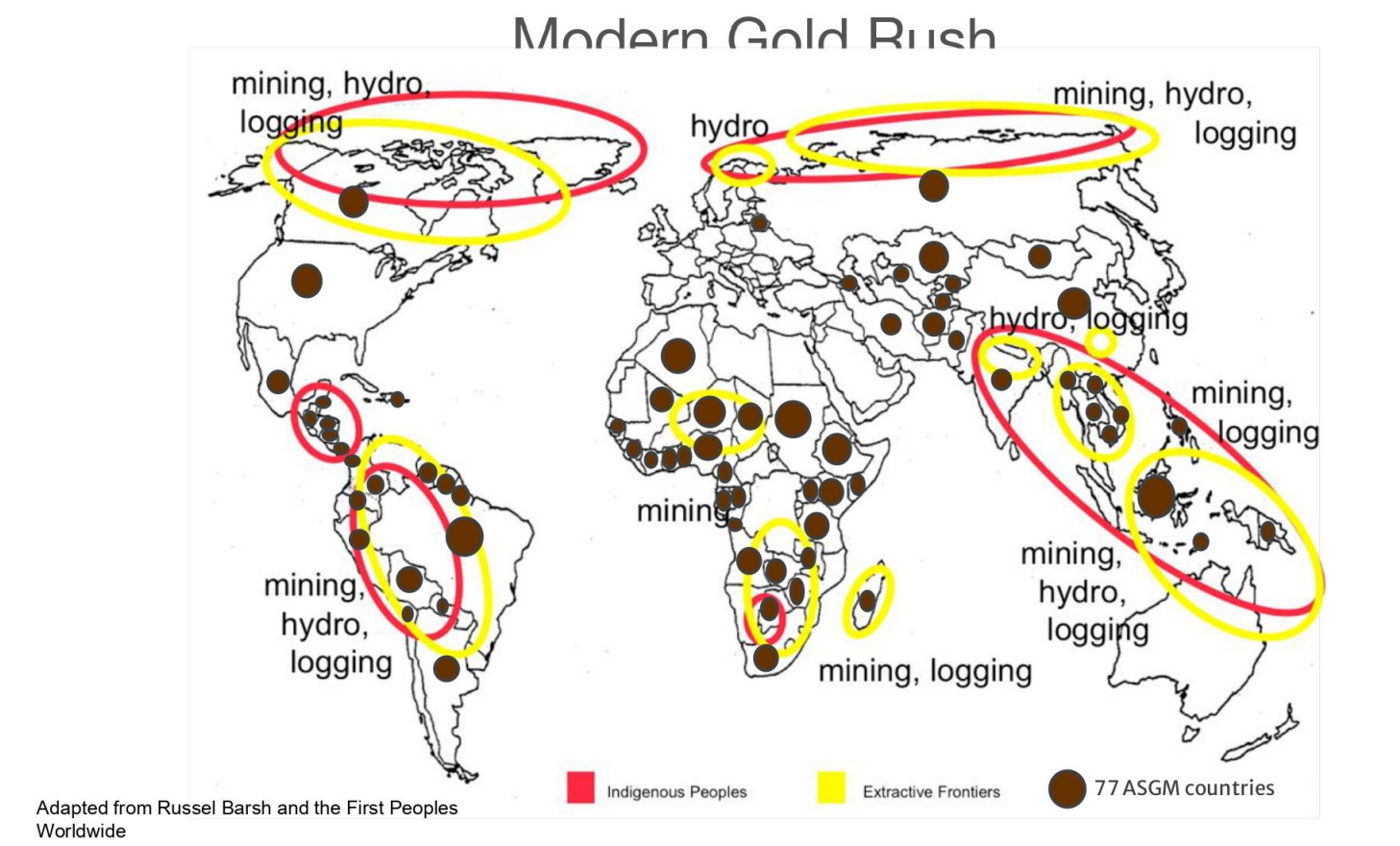
- In Indonesia, there are more than 180 hotspots that use high quantities of mercury. Miners have admitted that they use approximately 3500 tons a year.
- Impacts are felt across the populations as mothers and children are also staying in these processing areas where fathers mix the mercury to make it purer and better to be used, then they process it, produce the amalgam and then burn it.
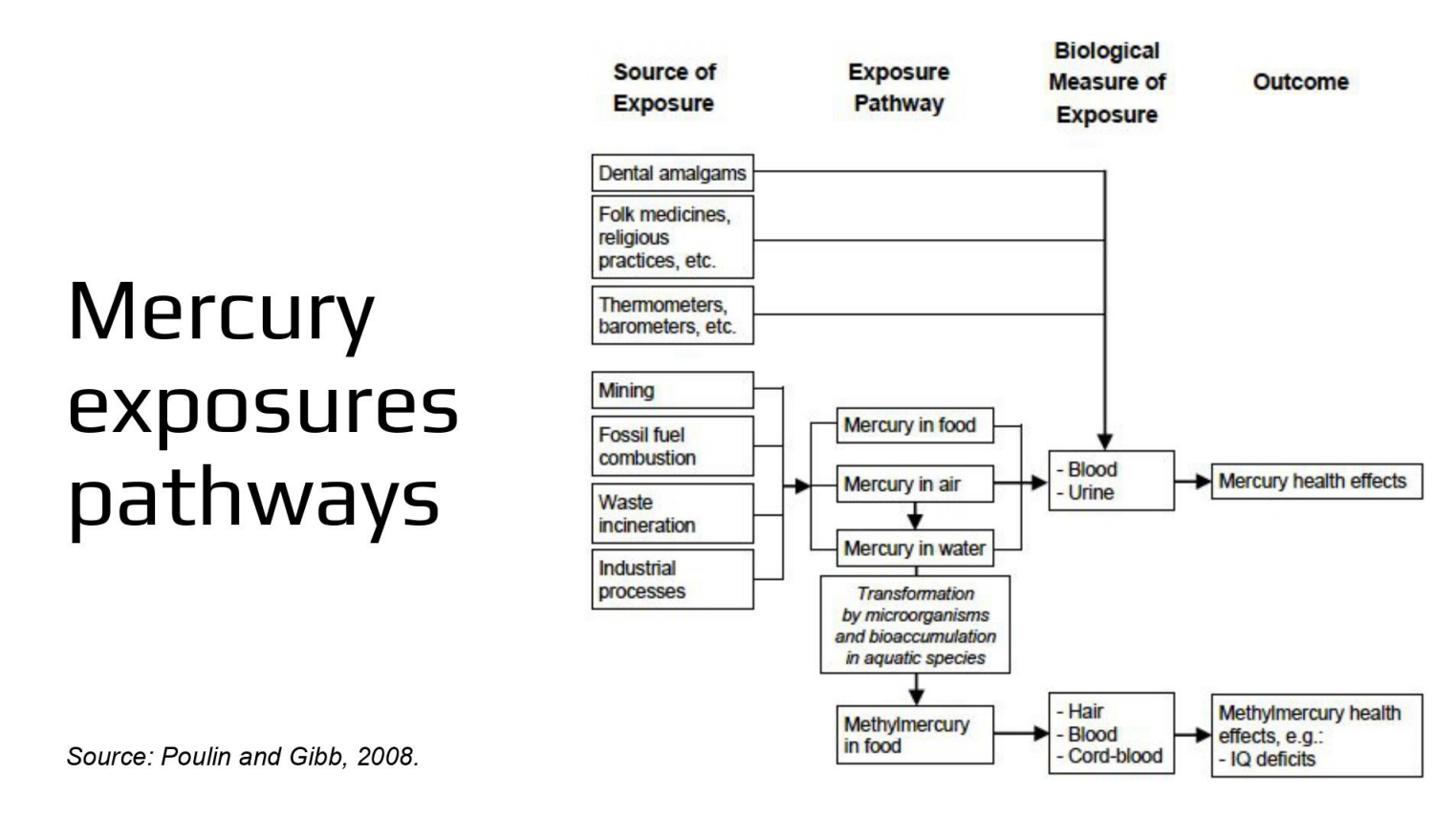
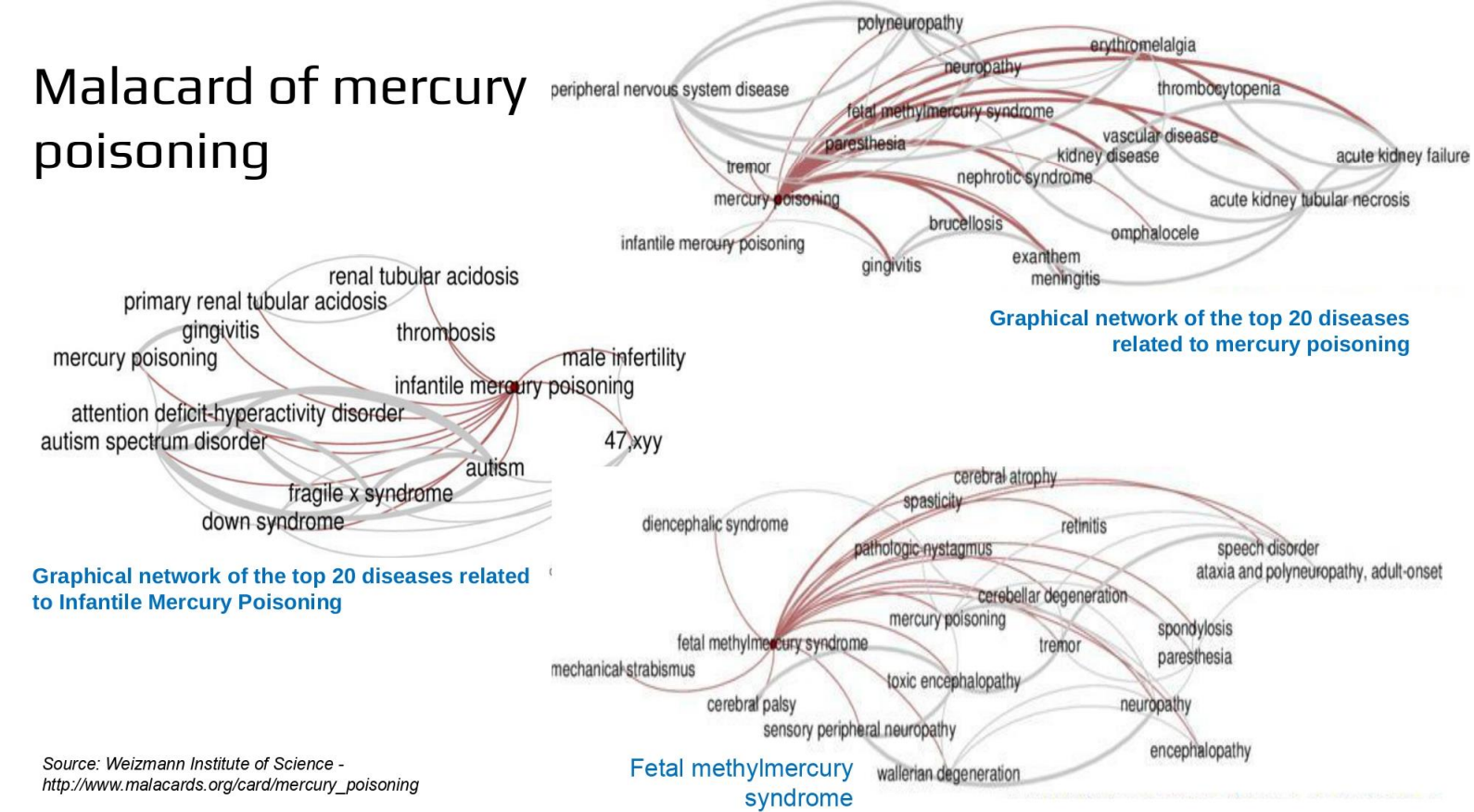
- There are multiple exposure pathways of mercury, including food, air, and water. In addition, mercury poisoning can lead to different branches of diseases.
- WHO safety reference is less than 1,000 ng/m³. The US Human Health Services has a more elaborate warning and standard for this. If the reading of mercury vapour is between 1000-10,000 ng/m³, people must be warned and prepared to be evacuated. If it is more than 10’000, people have to be evacuated. In the case of Indonesia, many villages record mercury levels above 10’000 ng/m³, with no warning or evacuation system in place.
- Experts in 2016 calculated the economic losses from mercury pollution are estimated to be USD 77.4 million, based on 1ppm exposure reference. However, if there were no reference, the costs would be much higher.
- IPEN Recommendations:
- Develop health care services for prevention, treatment, and care for mercury-exposed populations, especially in and around ASGM sites. Special attention should be given to remote, culturally appropriate health care delivery for Indigenous peoples’ populations.
- Strengthen institutional and health professional capacity to conduct early detection, diagnosis, treatment and monitoring of health risks related to mercury exposure.
- All parties should develop a program for health care professionals to integrate the early detection, diagnosis, and safe treatment of mercury intoxication, including training programs for midwives and primary healthcare workers.
- All parties should maintain biomonitoring data annually and establish a follow-up health measure to take care of children and special needs in ASGM sites.
Rüdiger KRECH | Director, Environment, Climate Change and Migration, World Health Organization
- WHO continuously updates norms and standards on mercury exposure, with the latest guidance issued in late 2024. These provide practical guidance on how to protect, prevent and early detect and care for mercury contamination.
- Prevention is key, as mercury exposure should not occur at all, given the existing alternatives in gold production.
- There is a huge capacity development need for people to understand how little contamination can cause long-lasting health effects that create irreversible neurological damage, kidney dysfunction, and developmental delay in children. It is heartbreaking to see so many children victims of what can so easily be prevented.
- WHO’s approach focuses on:
- Social determinants of health recognizing that poorer populations are disproportionately exposed.
- Commercial determinants address how commercial interests are driving production cycles that are harming health. Therefore, the WHO is engaging with these stakeholders to change the way they do business and create well-being societies.
- This requires multi-stakeholder cooperation between WHO, UNEP, other main UN bodies, civil society organizations, and academia to support safer ASGM practices and make a real difference.
- WHO has piloted projects at the country level, such as in Ghana, Nigeria, and Mozambique and other countries, looking at the chemical, biological, biomechanical and psychological hazards of ASGM. WHO is training health workers to detect early signs of mercury poisoning.
- There is also a need for chemical surveillance and coordinated health systems with countries to mitigate exposure risks.
Lucas INFANTOZZI ALBERTONI | Secretariat of Indigenous Health (SESAI), Ministry of Health, Brazil
- Brazil’s Secretariat of Indigenous Health is responsible for coordinating the national policy dedicated to indigenous health and manages a unique health subsystem that reaches almost 1 million km² across the Amazon and other biomes.
- There are 34 Indigenous Health Districts and more than 20’000 health professionals working in villages along rivers and across border regions, ensuring the right to health in some of the most remote territories on earth.
- Mercury contamination in indigenous land is one of the most serious expressions of environmental and public health crisis that affects the Amazon. The advance of illegal gold mining, the lack of control of mercury use, and the degradation of river basins have caused profound harm to both the health and the culture of indigenous people.
- Tribes such as Yanomami, Munduruku, and Kayapo are among the most affected. Mercury recognizes no borders. It travels through rivers, through rain, and through the fish that sustain entire communities.
- The Minamata Convention is a symbol of hope. It demonstrates the ability of the international community to act collectively in the face of this challenge that is at once environmental, sanitary, and human rights-related.
- The Indigenous Health Secretary has been expanding and strengthening its response to mercury exposure through an integrated approach that combines primary health care with environmental surveillance.
- Some most recent initiatives, such as the publication of the Technical Manual for Healthcare of Indigenous Peoples Exposed to Mercury, was developed with Oswaldo Cruz Foundation (Fiocruz), the Ministry of Indigenous Peoples, and other partners. The manual helps health workers detect mercury exposure and connect patients with proper treatment, making the Brazilian health system stronger in regions facing environmental risk. Its launch in May 2025 marks a new phase in the state’s response to the impact of illegal mining, an unprecedented effort to protect indigenous life.
- After its launch, implementation began in the most affected territories with printed and digital distribution and training courses led by experts across multiple disciplines.
- SESAI also supports scientific research, such as a longitudinal study with indigenous pregnant women and newborns exposed to mercury in the Amazon, conducted in partnership with Fiocruz. The study followed 177 pregnant women and 121 newborns exposed to mercury in the Tapajós Basin, examining the long-term effect of mercury exposure on child neurological development.
- SESAI also supports other academic research projects across several states like Pará, Amapá, Roraima, Rodônia.
- This is not enough; SESAI must also provide specialized clinical care to understand how mercury affects child development and to offer answers and comfort to affected families.
- In 2023 and 2024, more than 120 neuropediatric consultations were carried out with biological and genetic analysis in partnership with Fiocruz, University of São Paulo, and Boston College University. These actions combine science, care, and human connection, representing an unprecedented step forward in the follow-up of affected communities.
- In June 2025, SESAI created the Committee on Mercury, Pesticides, and Other Environmental Contaminants, bringing together all departments of the secretary and formalizing a coordinated approach for prevention and surveillance across individual territories.
- SESAI has played an active role in the strategic plan for health care, surveillance, and promotion for population exposed to mercury, developed with other departments of the Ministry of Health. This plan aims to strengthen and sustain both founding political coordination and inter-sector cooperation to ensure the long-term implementation of national actions against mercury contaminations.
- SESAI is also advancing the formulation of a proposal for a National Reference Center for Health and Mercury Exposure. This is a proposal to integrate specialized care, laboratory and epidemiological surveillance, research, and professional training. This center seeks to create a network of knowledge and care, unifying scientific evidence, the historical experience, and ethical commitment to the health of indigenous people.
- Mercury contamination is silent, yet its consequences are devastating and felt across generations. Brazil affirms its commitment to life, to the environment, to justice, and to the rights of indigenous and traditional people. Brazil will continue to collaborate with the international community guided by science, solidarity, and respect for the ancestral knowledge that keeps the forest standing.
Morning Star GALI | International Indian Treaty Council (IITC) CA Tribal Liaison
- Mercury contamination is a significant challenge for California’s indigenous communities, particularly affecting their sacred lands, waters, and traditional food sources that are affected by industrial pollution, mining and other activities.
- Solutions for this should be culturally relevant, grounded in indigenous knowledge systems, and supported by scientific and policy-based approaches.
- Unearthing the hidden stories of exploitation and environmental harms, one of the sites that has been most affected is that of Clear Lake in California for the Elem Pomo people, which is the direct immediate family of Gali’s children, who suffer direct health impacts.
- Between 1848 and 1855 was California’s gold rush, where the “discovery of gold” took place at Sutter’s Mill, an hour north of Sacramento, the state capital of California. This created the establishment of mining towns and infrastructure and led to a surge of 300’000 migrants from around the world. These mining towns are now back in operation and development with plans to mine gold again within the Nevada city and other county regions.
- The impact on the indigenous community includes displacement and destruction of their ancestral lands and violent suppression, and the ongoing genocide of California’s Indian populations.
- The area of Clear Lake has been dated back to, with archaeological evidence, over 14,000 years. It is one of the oldest freshwater lakes within North America and has been severely impacted by mining activities including the Sulfur Bank Mercury Mine. This superfund site is right next to the Elem Indian colony. Gali’s children’s relatives are living directly next door to this site and the Indian Health Services that serves the local tribes do not understand what it means to live next to a superfund site and do not understand the ongoing health impacts.
- From Gali’s own experience, out of 10 elders over the past 12 years, there is only one surviving elder – Gali’s children’s grandfather. All of his siblings have passed from various forms of cancer.
- Mercury contamination from mining operations in the late 19th and early 20th centuries has been extensive. Twenty-nine Clear Lake sites were tested for cyanobacteria and elevated levels of cyanotoxin were found near Austin Park. This is Big Valley Pomo’s Tribe, who has been very active in testing the water for the tribal communities. The water even at this moment is 100 times the levels of what is understood to be safely consumed.
- On top of environmental impacts, there are also significant community impacts. For example, tribes have done subsistence fishing for 14’000 years and they must now tell their communities to stop eating the fish because it is poisoning them, and to stop going to the water and practicing their cultural ceremonies.
- These are violations of the UN Declaration on the Rights of Indigenous Peoples (UNDRIP) due to the destruction of culturally significant ecosystems.
- This also brought sexual violence and exploitation in terms of mining town realities. These were predominantly male populations and there was a lack of law enforcement and lack of any sort of justice for California’s indigenous tribes.
- Trafficking, which continues today, significantly impacted indigenous women and the cultural and family structural displacement.
- In terms of the contemporary parallels of environmental racism and ongoing violence against indigenous women, there is a continued connection to extractive industries and “man camps”.
- There is a lack of access to clean water and natural resources with the mercury continuing to contaminate food supplied for fishing and impacting food sovereignty.
- Some of the advocacy the IITC does includes:
- Advocacy for the movement of missing and murdered indigenous women and systemic change
- Cleaning up the toxic mining sites
- Demanding accountability for UNDRIP violations in relation to mining and environmental harms
- Participate and help lead efforts to address the accountability of corporations tied to extractive industries.
- The legacy of gold mining is one of exploitation, but very much one of resilience. They are continuing to practice their culture and continuing to amplify Indigenous voices and advocacy.
Open Discussion
Q: What is being done by WHO to harmonize methyl mercury biomarkers across countries? Peru still does not recognize hair as the biomarker for assessing methyl mercury populations and they still use urine. How do we get this protocol across countries to be able to make comparisons over time and space?
Rüdiger KRECH| Director, Environment, Climate Change and Migration, World Health Organization
WHO recognizes hair as a biomarker. Their recommendations include scalp hair, among biological markers, and together with blood and urine, a mix of methodologies.
Richard BROWN | Technical Officer, World Health Organization
WHO recognizes this is an issue and encourages people to conduct biomonitoring. Yet, people do not necessarily have the values to interpret those results and WHO is working on a process to try and publish harmonized WHO reference values to help with that interpretation. However, this is a formal process that will take a while, at least 12 months, if not longer, to try and publish this.
Closing Remarks
Lucas INFANTOZZI ALBERTONI | Secretariat of Indigenous Health (SESAI), Ministry of Health, Brazil
- Even if we were to eliminate the use of mercury and ASGM, thousands of contaminated sites around the world will continue to exist. These will have ongoing implications for human health for decades, if not hundreds of years, because of the enormous expense of cleaning them up and health impacts on the food chain and then the exposure that brings to indigenous and other sensitive communities.
- Therefore, it is important to understand that every ton of mercury that goes into ASGM creates hundreds of years of legacy and costs for national governments as well as human health exposures along the way.
- In that, you have to do some analysis on whether it’s worth extracting that gold and whether the short-term benefits to the market are in any way comparable to the long-term harm to human health and the cost to the nations that host ASGM.
Yuyun ISMAWATI | Co-chair International Pollutants Elimination Network (IPEN) and ASGM expert
- I hope that in the next COP, we will see more Ministers of Health coming and believe it should be mandated for delegates to come to the Minamata convention with the Minister of Health as one of their delegates’ members.
- It will also be a good sign that next year, during the World Health Assembly, WHO can elevate these issues because it was raised back in 2023, but they do not see any Minister of Health initiatives in a strong way addressing the issue of mercury poisoning, especially.
- Lastly, it is important not to overlook the occupational health aspect as it is linked to different diseases, including infertility, which is another issue with very little attention. So many of the birth defects in ASGM sites are blamed on women for bringing children with birth defects, but maybe the sperm has defects, but there is no information about this.
- More research on these issues and more donors supporting the real issues of mercury and not only promoting gold without mercury are urgently needed.
Marcos ORELLANA | UN Special Rapporteur on Toxics and Human Rights
- It is easy to become despondent given that we come here to the COP, and the evidence is mounting on the dramatic impacts that year by year we see gathering.
- The response from governments is to propose tweaks on the margins with resolutions that are largely cosmetic. Sure, there are advances, and these consultations are important, and refining the instruments is important. But more focus on the implementation of an instrument that has a design flaw will not solve this problem.
- We are left with the hope that when looking at other instruments that have gone through a similar inertia for many years, say the Basel Convention on Hazardous Waste movement has suffered from paralysis. Then that paralysis was unlocked and there was a lot of movement with the entry into enforce the Basel Ban Amendment, among others.
- We should demand our proposals for the 7th session for amendments to close the gaps and shortcomings of this instrument, to shake things up so that prevention is the real guide.
Miriam G. MEDEL GARCIA | Head, Environment and Global Health Team, Permanent Mission of Mexico to the United Nations Office and other international organizations in Geneva
- While the progress is extremely incremental and we may not have enough time, and unacceptable harm persists despite alternatives, a reason for hope is the attitude of people towards this Convention. There is awareness from the parties that this needs to stop. We must hold each other accountable and upon return to their countries, delegates must hold our elected leaders and governments accountable, telling civil society to please start engaging with their government and legislators well ahead of COP sessions.
Morning Star GALI | International Indian Treaty Council (IITC) CA Tribal Liaison
- As long as misconceptions related to tribes in California in that they have sanitation and clean drinking water, persist, no real redress can be implemented.
- As long as Indigenous Peoples’ roads and housing foundations are lined with mining tailings, there will not be redress.
- There is no redress when an entire tribal community has now had exposure that has been passed through decades.
- Pollution is affecting future generations; therefore, it is essential to pay attention to the reality of tribal communities.