
Event Conference
Spotlight on Circularity | Geneva Dialogues on Mineral and Metal Resources | UNECE Resource Management Week Side Event

26 Mar 2025
13:15 – 14:45
Venue: Palais des Nations | Room XVIII
Organization: United Nations Economic Commission for Europe, United Nations Environment Programme, Geneva Environment Network
This side event to the UNECE Resource Management Week 2025, organized within the framework of the Geneva Dialogues on Minerals and Metals, will feature leading experts discussing challenges and opportunities related to mineral and metal resources circularity.

About this Event
To tackle the climate change crisis, unprecedented action is needed to transform the global energy and transport sectors that are still 80% powered by fossil fuels.
Renewable energies are now a viable primary energy source in many countries. The production and efficiency of renewable electricity generation has indeed increased significantly in recent decades with the development of proven and cost-effective technologies that harness the power of wind, water, wave, solar and geothermal energy.
These technologies depend on large quantities of two dozen of essential minerals, which production is expected to increase by six from 2022 levels, if we are to equip the world for net zero by 2050. More ambitious climate goals translate therefore into a higher demand for minerals. As many of these minerals are also used in the new digital economy, these materials are increasingly important to economies.
With the increase in the demand for minerals, the whole lifecycle of these resources, from extraction to disposal, has important detrimental impacts on people and the planet. Driving down demand for primary materials extraction through circular models provides multiple benefits, from reducing the environmental and social impacts of mining activities to lowering the risks of shortages amidst projected increases in demand. This was highlighted in Actionable Recommendation 5 of the UN Secretary General’s Panel on Critical Energy Transition Minerals’ report, on the “launch of a process with a view to reaching agreement on equitable targets and timelines for the implementation of material efficiency and circularity approaches along the entire life cycle of critical energy transition minerals”.
A recent UNEP report, “Critical Transitions – Circularity, equity, and responsibility in the quest for energy transition minerals” released in October 2024, envisions a future where the efficient, circular, and responsible use of energy transition minerals facilitates the green transition, aligning with the objectives to tackle the triple planetary crisis of climate change, nature and biodiversity loss, and pollution crisis. The document refers to the eight ‘R’s’ that can guide this action: rethink, reduce, replace, retain, reuse, recover, recycle and responsible mining.
The 2024 Global Resource Outlook, developed by the International Resource Panel – a science-policy interface on the sustainable use of natural resources and their environmental impacts over the full life cycle – highlighted that sweeping policy changes can bring humanity to live within its means and reduce the projected growth in resource use by one third. The report recommends creating circular, resource-efficient and low impact solutions, and business models to include the ‘R’s’, as well as supportive regulation and evaluation of existing systems.
This side event to the UNECE Resource Management Week 2025, organized within the framework of the Geneva Dialogues on Minerals and Metals, will feature leading experts discussing challenges and opportunities related to mineral and metal resources circularity.
About the Geneva Dialogues on Minerals and Metals

The topic of sustainable management of minerals has never been so high on the global political environment agenda and the reason is that minerals are essential for the future. The energy transition, infrastructure and digitalization processes, among others, represent greener solutions. However, unsustainable extraction, manufacturing, use and disposal of resources is having important detrimental impacts on people and the planet. With an expected 500 per cent increase in the demand for minerals (from 2018 production levels), environmental challenges are going to be even more acute.
Various actors in Geneva are engaged in ensuring enhanced action to support the environmental sustainability management of minerals and metals along their full lifecycle. As Geneva is at the center of numerous debates and negotiations in the fields of science, health, human rights, development, trade and green finance, employment, peacebuilding and security, disaster risk reduction, humanitarian response, nature conservation, chemicals and pollution, as well as new technologies and innovation, the dialogues can be a conducive platform to explore interlinkages between these topics and mineral and metal resources governance.
The dialogues are organized by the Geneva Environment Network in partnership with Switzerland, Senegal, UNEP/GRID-Geneva, the United Nations Economic Commission for Europe (UNECE), the International Institute for Sustainable Development (IISD), the Intergovernmental Forum on Mining, Minerals, Metals and Sustainable Development (IGF), The Forum on Trade, Environment, & the SDGs (TESS) and the World Resources Forum.
UNECE Resource Management Week
The UNECE Resource Management Week 2025, including the 16th session of the Expert Group on Resource Management (EGRM-16), will take place from 24 March to 28 March 2025 at the Palais des Nations. The event will gather global leaders, experts, and stakeholders to address the need for sustainable resource management amidst energy transitions and the increasing demand for critical minerals. Discussions will focus on global resource governance, critical raw materials, Just Transition, hydrogen, and sustainability, as well as the role of International Centers of Excellence on Sustainable Resource Management (ICE-SRMs) in advancing the United Nations Framework Classification for Resources (UNFC) and the United Nations Resource Management System (UNRMS).
Speakers
By order of intervention.

Martine ROHN-BROSSARD
Head of Europe, Trade and Development Cooperation Section and Deputy Head of International Affairs Division of the Federal Office for the Environment, Switzerland | Chair

Dario LIGUTI
Director, Sustainable Energy, United Nations Economic Commission for Europe

Janez POTOČNIK
Co-chair, International Resource Panel

Mona MOHAMMED
Programme Management Officer, Life Cycle Initiative, UNEP

Paul EKINS
International Resource Panel and Professor, Resources and Environmental Policy, UCL Institute for Sustainable Resources, University College London

Peter HOPKINSON
Professor, Circular Economy and Co-Director of the UK Exeter Centre for the Circular Economy | Member, UK Government Circular Economy Task Force

Emanuele DI FRANCESCO
Senior Manager, Communications & Partnerships, World Resources Forum

Colette VAN DER VEN
Director, TULIP Consulting & Senior Researcher, Europe Jacques Delors
Highlights
Video
Live from Palais des Nations.
Summary
Opening
Martine ROHN-BROSSARD | Head of Europe, Trade and Development Cooperation Section and Deputy Head of International Affairs Division of the Federal Office for the Environment, Switzerland | Chair
This timely event is organized as part of the Geneva Dialogues on Minerals and Metal Resources launched earlier this year and which will take place around key global environmental negotiations and conferences.
- Over the next 30 years, we may need to produce more metals and minerals than in the entirety of human history. These resources are essential for the energy transition, infrastructure for digitalization and economic development.
- Their extraction and processing can have severe environmental impacts. A recent study published in the journal Nature warns that the threats to biodiversity from mining will significantly increase as more material is extracted for renewable energy.
- We are in the triple planetary crisis of climate change, biodiversity loss and pollution. It is not because we are trying to solve the climate crisis that we should create a new crisis: the material crisis.
- A circular approach is a key opportunity for resource-rich countries. Investing in recycling infrastructure, material recovery and local value chains supports economic diversification while reducing dependence on volatile commodity markets, fostering innovation and skill development.
- The recycling industry creates more jobs per ton of materials than primary extraction. It is therefore important to focus discussions in this forum not only around extraction, tailings but also on the benefits of circularity.
- Switzerland is not a mining country but we are deeply connected to these global issues as we are consumers of materials and products that drive environmental impact abroad. Many companies headquartered in Switzerland are key actors in the global trade of minerals and metals.
- As a result, Switzerland, together with other countries, has initiated three resolutions at the United Nations Environment Assembly, one of these resolutions (UNEP/EA.5/Res.12) launched a global intergovernmental process where 100 country participated in the development of a proposal promoting the environmental sustainability of minerals and metal throughout the whole life cycle.
- Let’s work together to make circularity a concrete reality. All stakeholders – from governments to International Organizations, industries, civil society, and the scientific community – share the common responsibility to strengthen environmental protection.
Dario LIGUTI | Director, Sustainable Energy, United Nations Economic Commission for Europe
- The Geneva Dialogues on Minerals and Metals were created as multiple international, national and non-governmental organizations based in Geneva are active in the mineral space and the dialogues offer a common space to exchange perspectives and bring forward discussions around such an important and critical topic as minerals and metals resources for the energy transition.
- The UNECE Resource Management Week is a very important annual appointment in the global discussion around minerals, where different issues around minerals, not just for the energy transition but overall sustainable resource management, are discussed.
- The challenges related to critical minerals include:
- The growing demand to support the energy transition: the availability of minerals needed for the manufacturing of the equipment used for new energy technologies and the availability in quantity and quality sufficient to fuel the energy transition.
- Imposing a circular model from the beginning. Establishing a circular model as repurposing already used resources is less expensive. Imposing a circular model from the beginning is essential to change today’s energy model, which is still linear, following the extract-burn-use-dispose model for energy resources. The same applies to minerals.
- Urgency of the transition. The energy transition cannot wait because climate change does not wait. We must enact what we have collectively taken as commitments to climate change.
- To mark this urgency, various UN agencies involved in this space got together and capitalized on long-standing efforts. This resulted in the creation of something aimed at addressing what the UN Secretary General defines as a political, not only economic and environmental, challenge. This joint UN system push aims to provide the tools for this transition to happen.
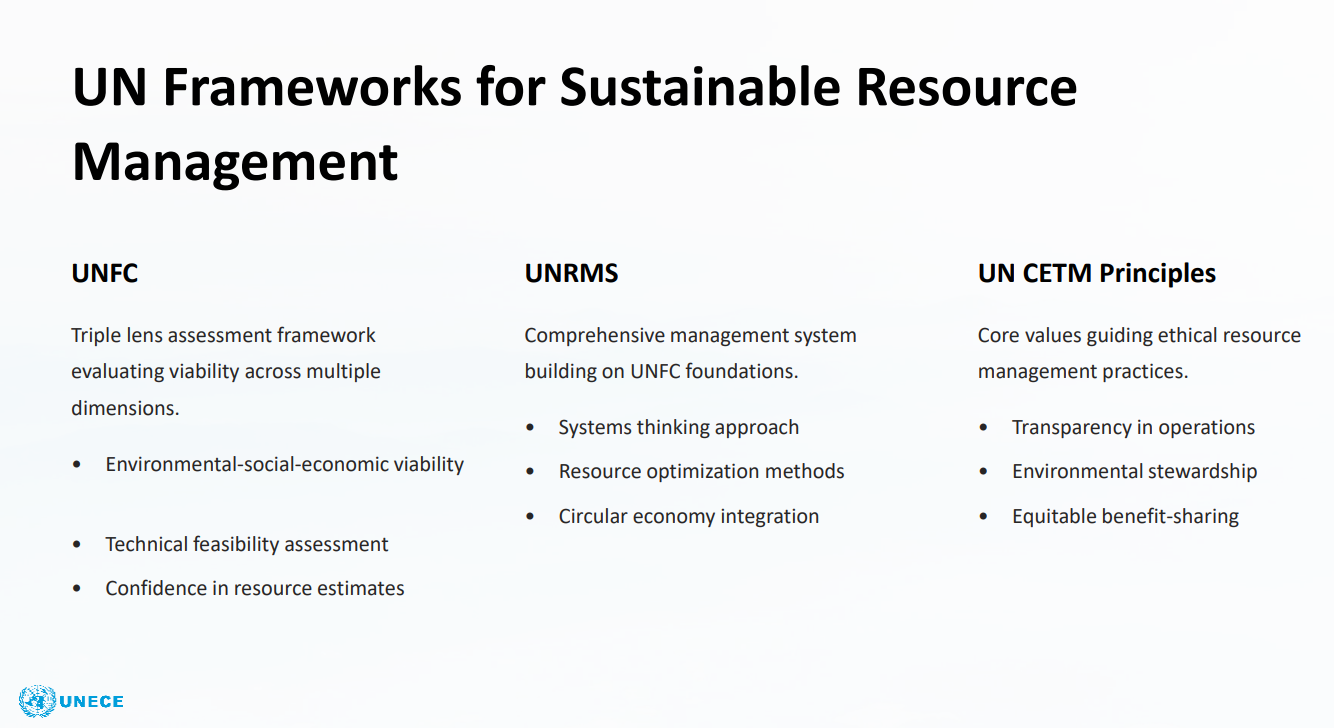
- United Nations Framework Classification for Resources (UNFC) | United Nations Resource Management System (UNRMS) | Principles and Actionable Recommendations for Critical Energy Transition Minerals (CETM)
- Technologies, capital, methodologies and tools are out there. What is missing is their governance to allow the use of this toolbox in a coherent way and with clear objectives. Activating that toolbox requires a governance infrastructure, developing it through government actions, industry initiatives and must be measured through success metrics.
- This top-down approach needs to be met with bottom-up initiatives with bottom-up approval and engagement from the different stakeholders.
Bend the Trend: Pathways to a livable planet as resource use spikes
Janez POTOČNIK | Co-chair, International Resource Panel
- We should never underestimate the importance of natural resources. Access to and use of natural resources in human history have been always closely related to the level of the well-being achieved by nations, stability, security, conflicts and wars. Access to land, water, oil, minerals, precious metals and their way to drive geopolitical efforts of consumption countries to politically control the resource-rich countries and the history of “colonialization of nature” is central to fairness and equity.
- When we talk about materials, we talk about biomass, fossil fuels, metals and non-metallic minerals: everything extracted from the earth.
- One of the conclusions of the Global Resources Outlook 2024 (GRO 2024) is that the economy championed by industrialized nations is wasteful and unjust and we must shift away from the prevailing resource wasteful economic approach. It is simply ethically and ecologically unsustainable. We must set the order right: the economy was invented to serve humans and not the opposite.
- Trends show that, in the last 50 years, global material use – everything extracted from earth – has more than tripled. The fastest growing element are non-metallic minerals, explained by the growth of cities’ infrastructure in the most populated regions.
- Applying a material footprint approach allows to look at these progresses by observing which countries are using their materials in their consumption. The material footprint is domestic extraction (material harvested or extracted domestically) + raw material trade balance (imports- exports of raw materials to produce materials and consumer goods).
- In the last 20 years, the material footprint has not been increasing in Europe and North America, as new population growth and economic growth was neutralized by technology. On the other hand, in Africa and West Asia the material footprint has increased a lot but mainly due to population growth in Asia Pacific. In South Europe it was increasing a lot due to the economic growth. At the World level, the material footprint has been increasing by 62%, two-thirds of which could be explained by economic growth and one-third by population growth.
- The human needs which are the most material intensive are the built environment, mobility, food and energy. These account for more than 90% of global material demand but distribution across countries varies greatly.
- In low income countries, the highest material demand is for food provision;
- In lower middle income countries, the highest material demand is for food provision, built environment and housing;
- In upper middle income countries the highest material demand is for mobility and built environment;
- In high income countries, food, mobility and the built environment account for similar shares.
- This gives an impression on what is most important and what people on various kinds of levels of development need first.
- High income countries use six times more materials per capita than low-income countries and are responsible for 10 times more climate impacts.
- The quickest growing are middle income countries.
- Low income countries remain comparatively very low and mostly unchanged.
- Extraction and processing of materials drives all aspects of the triple planetary crisis: it drives 60% of global climate change impacts, 40% of air pollution health impacts and practically all water stress and global land and water eutrophication related biodiversity loss (over 90%).
- Analysing these impacts through human needs provisioning systems, climate impacts are distributed between all human needs while pollution is more related to household fuel use (heating and private mobility). Water stress and biodiversity loss are more related to food production.
- The GRO 2024 lists policy recommendations:
- Institutionalizing resource governance and defining resource use paths and setting science-based resource targets, in particular in high income countries,
- Direct finance towards sustainable resource use,
- Making trade an engine of sustainable resource use,
- Mainstreaming sustainable consumption options,
- Creating circular, resource-efficient and low-impact solutions and business models.
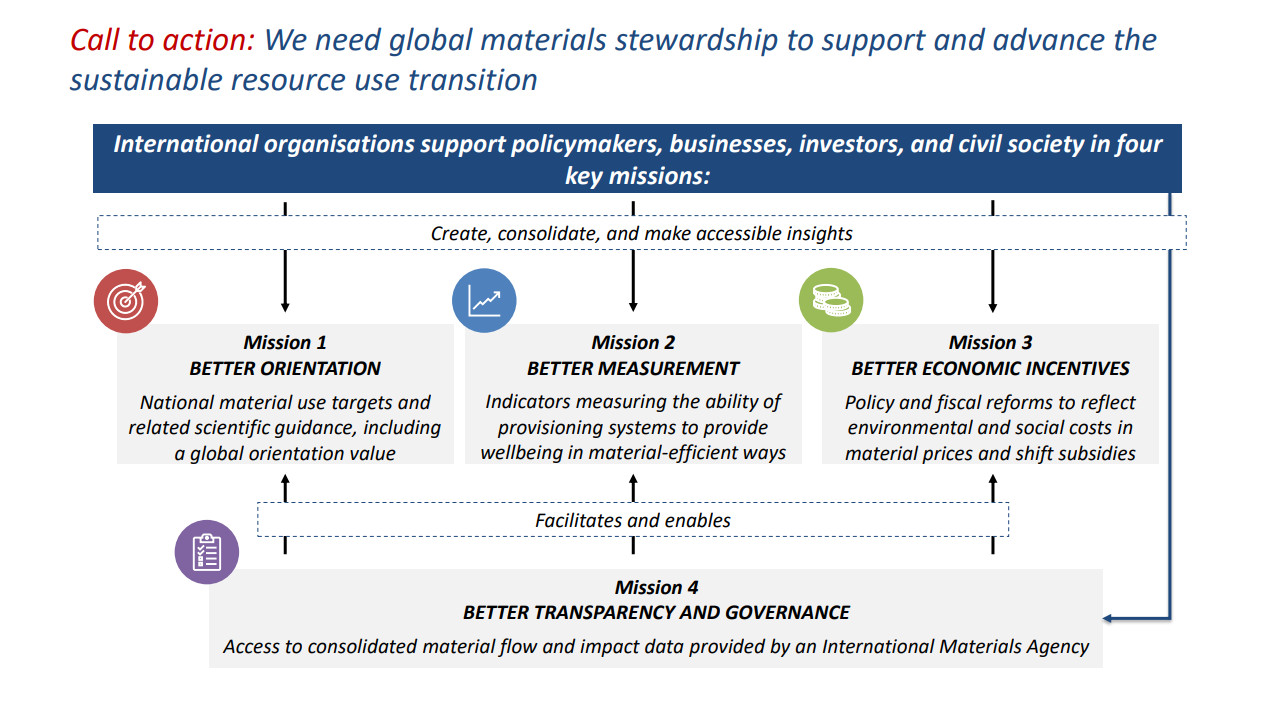
- The co-chairs have launched a call to action tackling the need for global materials stewardship to support and advance the sustainable resource use transition, defining four missions: better orientation, better measurement, better economic incentives, and better transparency and governance.
- The growth of well-being should be decoupled from the growth of economic activity, both from the growth of resource use and all together from environmental impacts. We should look at all natural resources, and the most resource intensive ones.
- Circular economy is an instrument helping to deliver decoupling of economic growth from resource use and environmental impacts in practice. It is also a part of the bigger picture of economic, societal and cultural transformation needed to deliver SDGs. Circular economy is using common sense: all nature is based on the principles of circularity (nothing is lost and everything has a purpose), it’s the oldest concept on planet Earth. The question behind is: are we, humans, part of Nature, and if we are part of nature, why are we not behaving accordingly?
- The point of perception is very important in the circularity logic: if you would ever complain that you are caught in a traffic jam, you are wrong, you are a traffic jam. We need to look at it from a personal perspective. We don’t need cars, we need mobility; we don’t need light bulbs, we need light; we don’t need chairs, we need to sit; we don’t need refrigerators, we need chilled healthy food; we don’t need CDs, we want to listen to the music; we need we don’t need pesticides, we want healthy plants. We need dematerialization, rethinking ownership, efficiency complemented with sufficiency, and to ask a very simple question: how can we meet the same human needs in the most energy and resource efficient way?
- Sufficiency (optimizing supply and demand) could be addressed from the consumption side through reducing consumption and optimizing what is sufficient to meet human needs, but also from a production side by meeting human needs using less energy and materials and by improving energy and resource efficiency.
- Circular economy is an important part of the solution to climate change.
- Come climate change related facts: Global CO2 emissions are still increasing and reaching the highest levels ever; Global surface temperature increase according to Copernicus on the monthly level last year was between 1.5 and 1.7 degrees above pre-industrial levels, meaning the level set as a target to not be crossed has already be crossed; the system that moves water around the Earth is off the balance for the first time in human history; and fossil fuel subsidies are still taking a huge percentage of GDP on a global, according to IMF. It’s a kind of global hypocrisy indicator.
- Focus on the ecological overshoot and material footprint. Energy transition and technological improvement are important to respond to climate breakdown and climate change. But climate breakdown is a symptom of ecological overshoot and the material footprint is dangerously under-discussed, and there is urgent need to focus also on the overshoot which highlights the material usage waste output, which is showing also the wastefulness of the economic system and growth in human society, which was more than doubling in the last 50 years.
- The transition of the energy system must come alongside asking what that energy will be used for and taking into account production and consumption patterns. Hart Hagan, environmental journalist, summarized that by saying: “Species causing the extinction of 150 species per day does not need more energy to do more of what it does.”
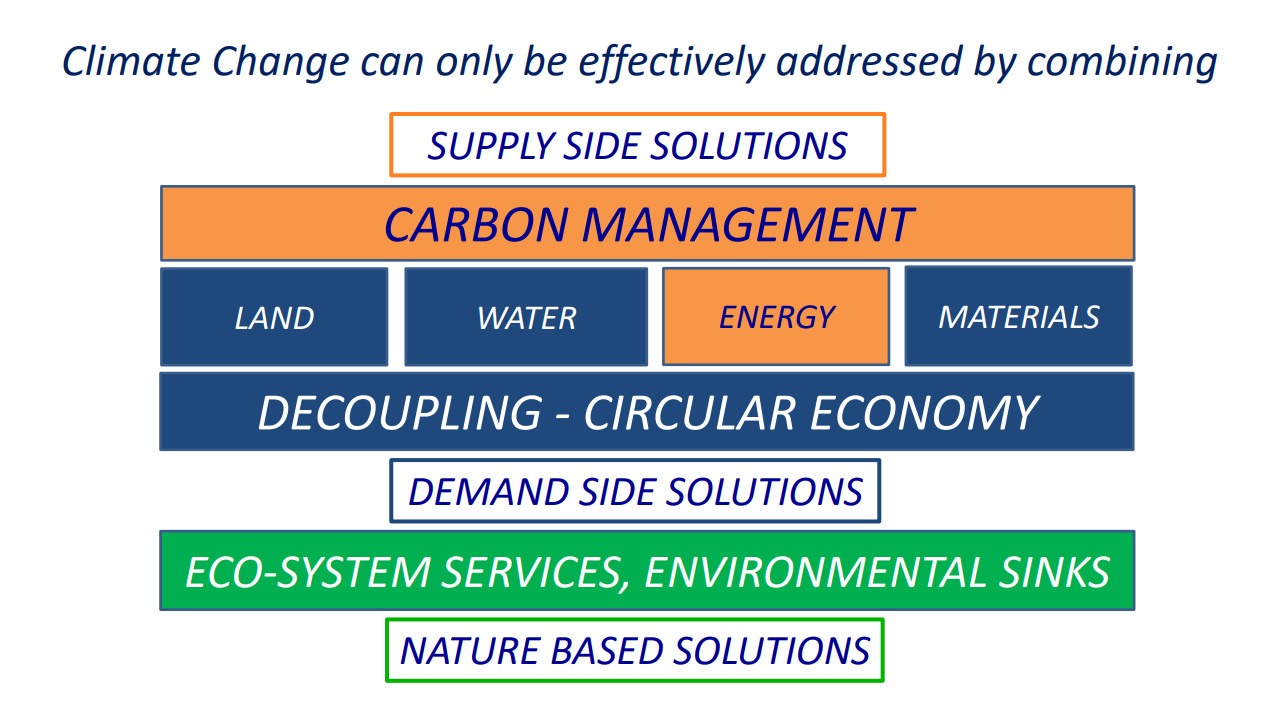
- Climate change can only be effectively addressed by combining supply side solutions (carbon management, energy transition) with demand side solutions (decoupling, circular economy), and with nature-based solutions. The current focus in the COPs is predominantly on carbon management and supply side solutions, meaning there is a lot of potential to improve human response to climate change.
- The growth of well-being should be decoupled from the growth of economic activity, both from the growth of resource use and all together from environmental impacts. We should look at all natural resources, and the most resource intensive ones.
- Circular economy is an instrument helping to deliver decoupling of economic growth from resource use and environmental impacts in practice. It is also a part of the bigger picture of economic, societal and cultural transformation needed to deliver SDGs. Circular economy is using common sense: all nature is based on the principles of circularity (nothing is lost and everything has a purpose), it’s the oldest concept on planet Earth. The question behind is: are we, humans, part of Nature, and if we are part of nature, why are we not behaving accordingly?
- The point of perception is very important in the circularity logic: if you would ever complain that you are caught in a traffic jam, you are wrong, you are a traffic jam. We need to look at it from a personal perspective. We don’t need cars, we need mobility; we don’t need light bulbs, we need light; we don’t need chairs, we need to sit; we don’t need refrigerators, we need chilled healthy food; we don’t need CDs, we want to listen to the music; we need we don’t need pesticides, we want healthy plants. We need dematerialization, rethinking ownership, efficiency complemented with sufficiency, and to ask a very simple question: how can we meet the same human needs in the most energy and resource efficient way?
- Sufficiency (optimizing supply and demand) could be addressed from the consumption side through reducing consumption and optimizing what is sufficient to meet human needs, but also from a production side by meeting human needs using less energy and materials and by improving energy and resource efficiency.
- Circular economy is an important part of the solution to climate change.
- Come climate change related facts: Global CO2 emissions are still increasing and reaching the highest levels ever; Global surface temperature increase according to Copernicus on the monthly level last year was between 1.5 and 1.7 degrees above pre-industrial levels, meaning the level set as a target to not be crossed has already be crossed; the system that moves water around the Earth is off the balance for the first time in human history; and fossil fuel subsidies are still taking a huge percentage of GDP on a global, according to IMF. It’s a kind of global hypocrisy indicator.
- Focus on the ecological overshoot and material footprint. Energy transition and technological improvement are important to respond to climate breakdown and climate change. But climate breakdown is a symptom of ecological overshoot and the material footprint is dangerously under-discussed, and there is urgent need to focus also on the overshoot which highlights the material usage waste output, which is showing also the wastefulness of the economic system and growth in human society, which was more than doubling in the last 50 years.
- The transition of the energy system must come alongside asking what that energy will be used for and taking into account production and consumption patterns. Hart Hagan, environmental journalist, summarized that by saying: “Species causing the extinction of 150 species per day does not need more energy to do more of what it does.”
- Climate change can only be effectively addressed by combining supply side solutions (carbon management, energy transition) with demand side solutions (decoupling, circular economy), and with nature-based solutions. The current focus in the COPs is predominantly on carbon management and supply side solutions, meaning there is a lot of potential to improve human response to climate change.
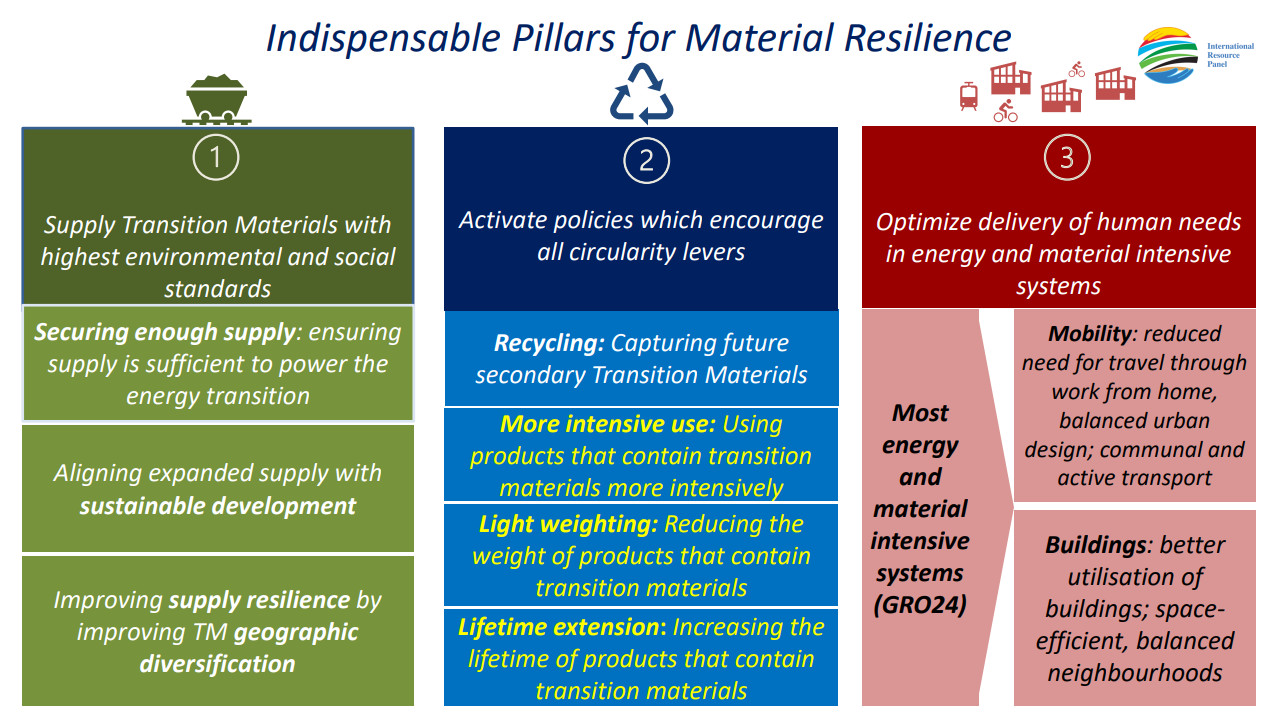
- The baseline is too high, particularly in high income and high demand countries, and needs to be moved down. This would make it easier to meet future needs and make future energy demands more reasonable. The Global Resource Outlook – International Resource Panel (GRO IRP) modeling shows that it is possible to mitigate material use by 30% and global energy demand by 25% by 2060 compared to 2020 levels.
- From the point of view of Low Income / High Supply countries, transition should be just and equitable and provide energy needs for all. Resource-rich nations should not merely serve as suppliers of raw materials, but benefit from value addition, job creation and long-term resilience. Sustainable mining practices, fair market structures and responsible consumption in high-demand countries are essential to ensuring that the energy transition does not come at the expense of those who provide its foundational resources, but rather benefits them.
Concluding Remarks
- Global supply chains are becoming increasingly volatile. Europe and its economy is very import dependent and fragile when it comes to energy and the majority of materials. When the times were good, not many really cared about that fact. Competitiveness and strategic autonomy can only be based on responsible resource use and management, including fossil fuels. Circular economy is also a European quest for competitiveness.
- Regarding the signals from the markets, “Don’t waste your time chasing butterflies. Mend your garden, and the butterflies will come”, as said by Mario Quinatana. Industry needs clear strategic direction, predictability, support for the agreed travel direction and as good a level playing field as it gets, all based on a clear vision designed by policy makers based on science and public interest.
- Humans are now indebting future generations financially and by depleting nature. If humans are the most intelligent species on Earth, they have yet to prove it. More than an economic or a technological choice, this is a moral choice.
- Sustainability is a major business opportunity because it’s unavoidable and because all who are innovative, those who dare and those who understand the essence of the challenges ahead of us will be ahead of the curve. The World Economic Forum Global Risk Assessment shows that, in 10 years’ perspective, the business leaders estimate the four major global risks to be Extreme weather events, Biodiversity loss and ecosystem collapse, Critical change to Earth systems and Natural resource shortages. They are not entirely following that path because the economic system as it is driven would result in them losing sooner or later their jobs. Changing our relationship with the rest of nature is not only environmental but also economic, equity, security, imperative to strengthen our resilience. Current instability and balance can be resolved only in two ways, with collective wisdom and effort or in a hard, painful way. The future will be green and fairer and more equal or there will be simply no sustainable future which humans would like to live in.
- As the detective Hercule Poirot said, it is human’s collective challenge to establish a healthy distance to ourselves, understanding that humans are not the first nor the last and not the only ones, it’s the essential way of the challenge which we have to deal with.
Critical Transitions — Circularity, equity, and responsibility in the quest for energy transition minerals
Mona MOHAMMED | Programme Management Officer, Life Cycle Initiative, UNEP
- The speaker presents the main findings of the UNEP Working Paper published in October 2024: “Critical Transitions – Circularity, equity, and responsibility in the quest for energy transition minerals”. The Secretary General panel worked on Critical Energy Transition Minerals and came out with five actionable recommendations covering topics such as benefit sharing, transparency and accountability, legacy mines, artisanal and small scale mining. The fifth recommendation focused on equitable targets and timelines for the implementation of material efficiency and circularity approaches across the entire life cycle of critical energy transition minerals.
- 26 minerals are essential to clean energy technologies, including minerals needed for batteries, for some extension and network connections and for the production of electricity. The list can be found in the Annex of the Report.
- The International Energy Agency estimates that equipping the world for net zero by 2050 implies a six-fold increase in production of the minerals from the 2022 levels, generating large environmental and social footprints. How quickly the demand curve for these minerals will rise will depend on many different factors and particularly on technological developments, behavioral change, government policies and industrial action.
- Unlike fossil fuels, minerals are infinitely recyclable. It is possible to keep them in the system for longer. Increasing efficiency and using principles like circularity should enable reducing the cumulative need for new energy transition minerals. This is caveated by the levels where the demand starts in different countries.
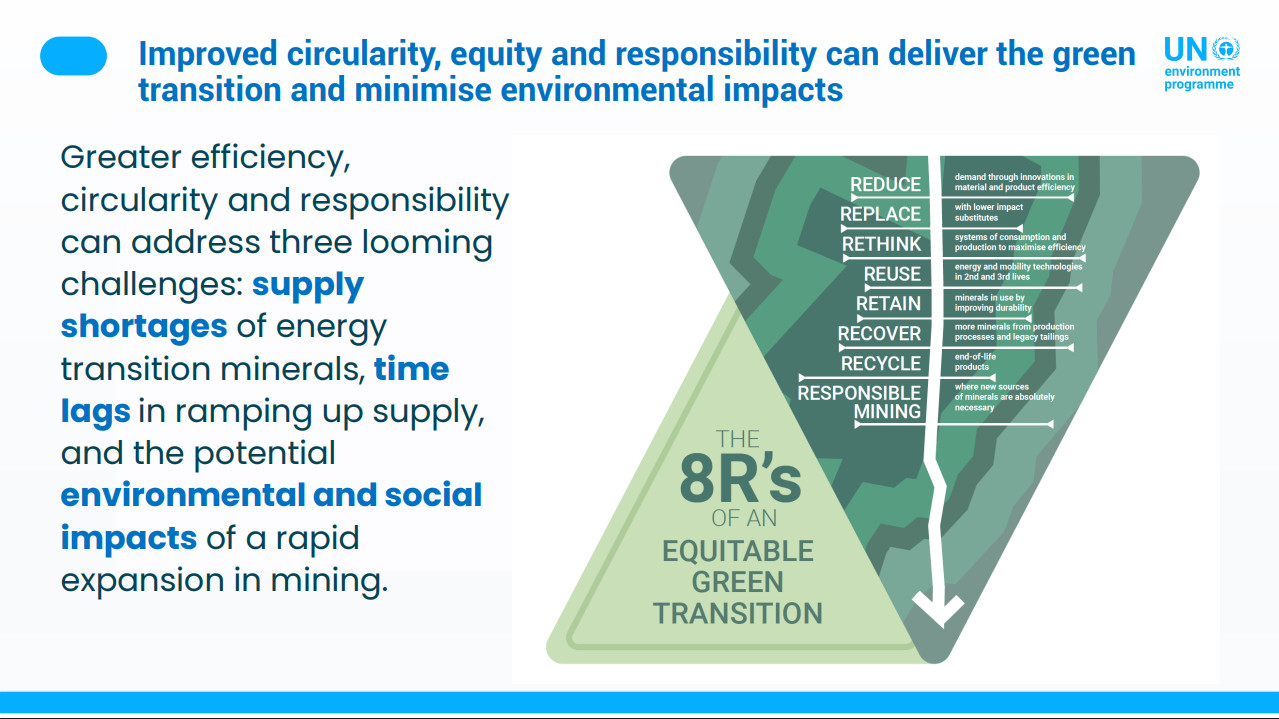
- The 8Rs framework for an equitable green transition shows that improved circularity, equity and responsibility can deliver the green transition and minimize environmental impacts. To reduce the need for new mining, systemic changes will have to be made to promote greater circularity. We need to:
- Have standards and regulations to drive the investment and create more efficient markets, circular innovation and processes products.
- Have public incentives for greater efficiency and circularity.
- Have greater accountability and transparency.
- Rethink our systems, for instance in terms of mobility, housing and industry – how do we meet the needs in new ways and with fewer minerals?
- Reduce demand for energy transition minerals through improvements in material and energy efficiency.
- Replace energy transition minerals for lower impact substitutes where possible.
- Reuse products in second and third lives while finding ways to retain the minerals in use for longer.
- Recover minerals more effectively from production processes and legacy tailing sites and recycle them into new products.
- Make sure that the minerals that need to be extracted are extracted in a responsible way adhering to the environmental, social and governance standards.
- Across these 8 Rs, equity both in access to the energy transition minerals and in sharing the benefits generated by the energy transition remains central and must be used as a guiding principle.
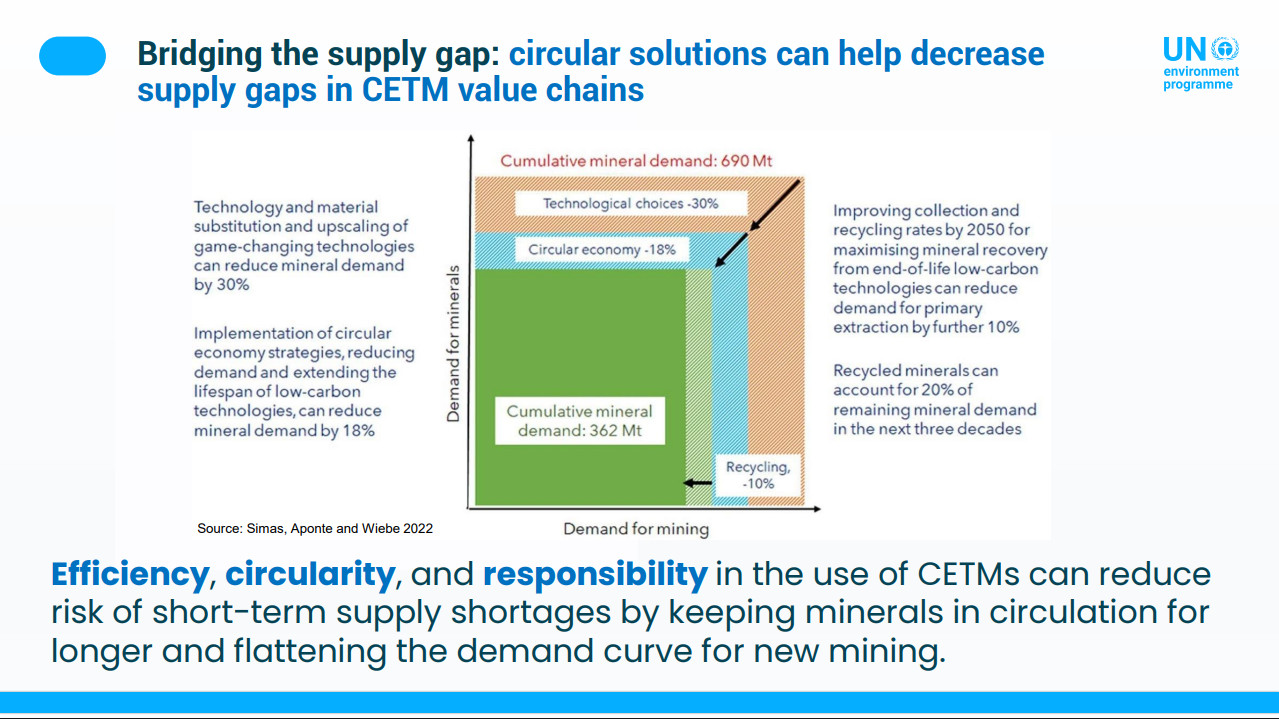
- The projected cumulative demand for seven different minerals (lithium, manganese, cobalt, nickel, rare Earth elements, platinum and copper) between 2022 and 2050 is about 690 million tons. Different things can be done to reduce that demand:
- Technological choices.This includes both rethinking the system and improvements such as material efficiency and the use of less materials overall. This could result in a 30% reduction in demand for these minerals.
- Circular economy. Keeping these minerals in circulation longer may reduce the demand by a further 18%.
- Recycling. Improving recycling at the end of a life cycle, which may enable a 10% drop in the projected demand.
- This shows that there is not a single solution but rather multiple things that need to be done. We need to think on how to bridge the supply gap and reduce the risk of short-term supply shortages of key critical energy transition minerals.
- Everyone has a role to play in delivering a sustainable energy transition, needing to achieve several features simultaneously and at unprecedented scale. This will require coherent policies supported by effective regulatory frameworks, effective incentives and standards that are applied throughout the value chain, and collaboration at both national and international levels.
- Delivering energy transition requires all the stakeholders throughout the value chain to:
- Harmonize, improve and support implementation of the existing international standards for responsible mining. New standards and targets for responsible mining are also needed, ensuring that their implementation goes both throughout governments and industry.
- Strengthen data collection and transparency regarding circularity in mineral value chains. This will require innovation in terms of labeling and information on the durability, recyclability and repairability of mineral products.
- Develop new technology for circular solutions and promote technology-sharing. This will require increased investment in research and development of circular solutions to create more efficient technology and to promote technology transfer between countries.
- Direct mineral revenue to local development and mineral wealth funds. Financial institutions have an important role to play and considerations such as creating mineral wealth funds, implementing dynamic royalty systems as well as reconsidering the finance infrastructures and enabling it for recycling industries and reinvesting mineral profits in local developments will be key elements to consider.
- Develop and implement policies and legislative guidelines that promote and support circularity as well as its national implementation, and create circularity and efficiency road maps and targets for the mining industry.
Financing the Responsible Supply of Energy Transition Minerals for Sustainable Development
Paul EKINS | International Resource Panel and Professor, Resources and Environmental Policy, UCL Institute for Sustainable Resources, University College London
- A significant rise in the demand for minerals and metals is expected due to the global energy transition, with estimates pointing to tens of millions of tons needed under different climate scenarios. Despite these increases, the total volume of mining may decrease substantially compared to today, especially if fossil fuel use drops, as countries like China and India currently consume over a billion tons of coal annually. However, the nature of mining must evolve, becoming more responsible and sustainable to align with low-carbon transitions.
- A large portion of future mineral supply will not come from virgin ores but from secondary sources, including billions of tons of mining tailings and circular economy activities. There is a clear need for major investment to support both responsible mining and circularity, with projections showing a requirement of around 800 billion USD in investment by 2040 under current climate commitment scenarios. Encouragingly, financial capital is available, but attracting private investment depends heavily on improving incentives and correcting market structures that currently favour the linear economy.
- One of the core challenges in financing the circular economy lies in the existing economic environment, where markets fail to reward circular approaches adequately. Governments must take a leading role in adjusting incentives and regulatory frameworks to shift the balance from linear to circular systems, thereby enabling the finance sector to participate meaningfully and for businesses to operate profitably within circular models.
- Investment in mineral extraction—whether from new mining projects or from secondary sources like tailings—faces numerous hurdles, including price volatility. A stark example is lithium, which saw dramatic price fluctuations that caused instability in investment cycles. Such volatility discourages sustainable investment and highlights the need for better price stability and governance to reduce financial risk.
- The geopolitical distribution of mineral extraction and processing is highly concentrated, particularly with China playing a dominant role. For regions like Europe, which lack domestic access to many critical minerals, it becomes crucial to maximize the efficiency and reuse of imported materials rather than disposing of them after a single use. Circularity in this context is not only environmentally wise but also strategically important for resource security.
- The waste hierarchy emphasizes that recycling, while important, is among the least preferred options, with greater focus ideally placed on the other Rs of waste management: reuse, repair, and refurbishment. These higher-order circular actions are significantly underrepresented in current policy frameworks, especially in Europe, and without deliberate policy effort to strengthen incentives and remove obstacles, a true shift towards circularity will remain out of reach.
- Recycling alone cannot meet short- or even medium-term mineral demands, particularly for emerging technologies like electric vehicle batteries. These products will remain in circulation—first in vehicles, then in secondary uses like utility or home storage—for decades, meaning that their recycling potential will only be realized long after the current energy transition needs are addressed. As such, while recycling is vital in the long term, it will not significantly contribute to the mineral supply needed during the transition itself.
- Technological choices and circular design can dramatically reduce mineral requirements before even resorting to recycling. One example is reversing the trend toward larger vehicles, such as SUVs, which consume nearly double the minerals of smaller cars. By making smarter design and consumption decisions, societies can cut mineral needs significantly and reduce environmental impact without compromising mobility.
- Ultimately, the majority of minerals needed for the energy transition will come from primary extraction, but if fossil fuel use declines, overall mining could shrink. However, this requires mining to drastically improve its environmental, social, and governance performance. Some of these changes may increase costs, and markets must adapt—similar to adjustments seen in the EU for low-carbon imports—to reflect these new sustainability standards. Circular economy strategies, especially those occurring before the recycling stage, will be essential for reducing primary demand, but both circular and recycling strategies face major challenges and need strong policy intervention to scale effectively.
- A forthcoming report developed under the UNEP International Resource Panel will provide a comprehensive overview of responsible mining and circularity, including investment needs, market challenges, and governance solutions. It aims to support stakeholders in navigating the complex shift toward a more sustainable and equitable mineral economy.
Panel Discussion | Towards a Circular Economy
UK Government Circular Economy Task Force | Peter HOPKINSON | Professor, Circular Economy and Co-Director of the UK Exeter Centre for the Circular Economy | Member, UK Government Circular Economy Task Force
- The presentation focuses on how global circular economy data and insights translate into national-level policy and implementation, using the UK as a test case. The aim is to understand what it means to implement circular economy strategies on the ground, particularly in terms of data-driven policy and infrastructure development.
- Peter Hopkinson brings experience from three roles: founding member of the UN-backed International Center of Excellence on Sustainable Resource Management in the Circular Economy; member of the UK Government Circular Economy Task Force; and a researcher working over the past decade to improve the data and evidence base underpinning circular economy claims, many of which are currently unsubstantiated and unfounded when scrutinized.
- The UK Circular Economy Task Force, launched in November, is centered on supporting the government’s economic growth mission by enabling investment in circular business models and infrastructure. Its structure includes the development of a national vision, setting of targets, engagement with stakeholders, and production of sector-specific roadmaps to guide implementation and desired outcomes.
- The task force comprises around 20 members and serves in an advisory role to civil servants and ministers across government. It focuses on key sectors central to the UK’s circular economy strategy—construction, transport and mobility, food, textiles, plastics, and packaging—providing guidance on how circular approaches should be developed in each.
- In parallel, efforts have been ongoing to build a national Circular Economy Data Observatory aimed at consolidating relevant data and evidence to support both policy and investment decisions. This involves taking a value chain approach that covers the full system from extraction and harvesting to end-of-life, incorporating the “R-strategies” that represent key moments of value creation and capture in circular systems.
- The data model uses color-coded elements to highlight areas of focus, with green areas representing value creation opportunities and red arrows pointing to the areas prioritized for early work. While the work has so far focused primarily on the UK context, it is now expanding to engage with global partners. A core question across this work is how to increase the utility and reusability of materials already circulating in the economy, ensuring productive reuse through second and subsequent life stages.
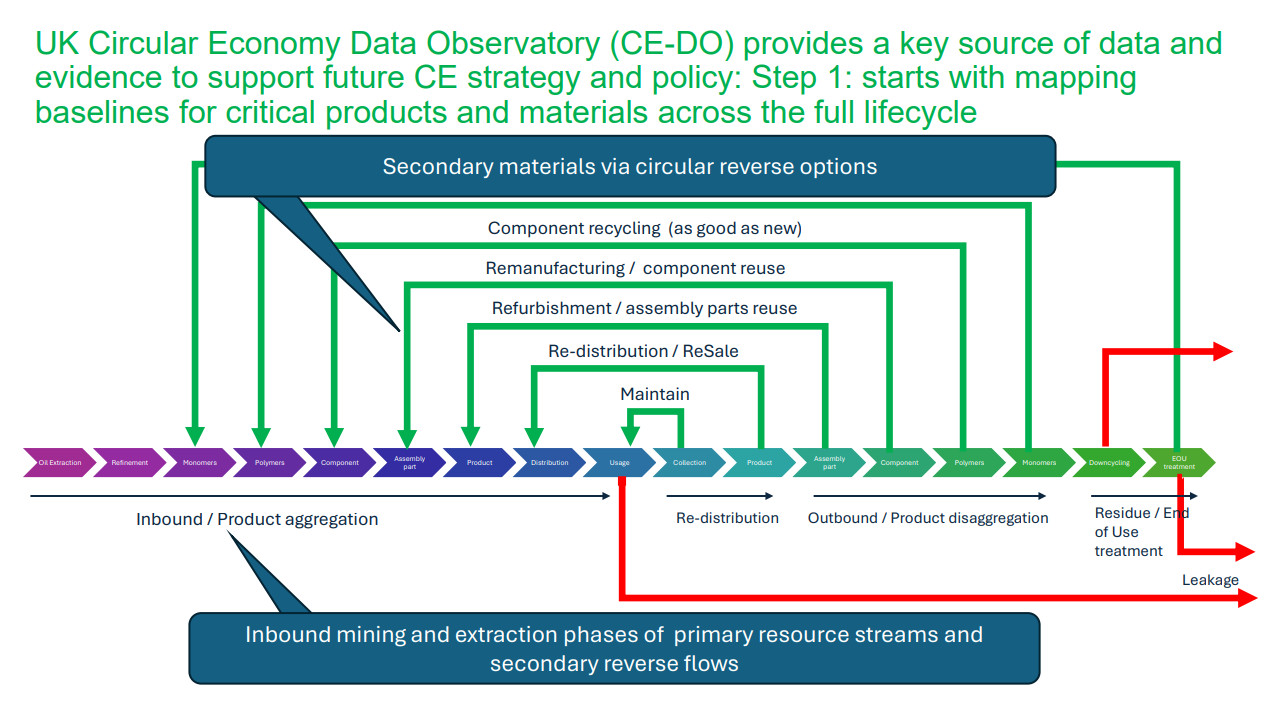
- One example from this observatory work involves a 10-step methodology, with three steps highlighted. The first step is to quantify baseline material stocks, exemplified by real-time tracking of wind turbine installations in the UK that contain rare earth permanent magnets. The goal is to assess how much material exists, where it is, who owns it, its condition, and its potential value upon exit from the economy in future years.
- Forecasting based on current policy commitments projects that by 2050, the UK economy could contain £7.5 billion worth of rare earth oxides—specifically neodymium and dysprosium—embedded in electric vehicles and wind turbines. These projections serve as a basis for assessing future opportunities for material recovery and reuse.
- This data is integrated into an interactive dashboard forming part of the Circular Economy Observatory. The dashboard allows policymakers, researchers, and stakeholders to visualize the potential impacts of different circular strategies, such as extending the life of products or improving recycling. These impacts are shown in both material quantities and economic value, with similar dashboards developed for a range of product and material flows.
- Insights from four years of work, including six completed case studies and six more planned, suggest that current research and policy disproportionately emphasize “circular” aspects while neglecting the “economy” across micro, meso, and macro levels. This imbalance limits understanding and effective implementation and needs to be corrected.
- A major challenge is the lack of an agreed, consistent, and flexible taxonomic framework for data, metrics, and indicators. Without this harmonization, the proliferation of unaligned studies and datasets risks confusion and inefficiency. Alignment with global guidance systems—such as UNRMS, UNFC, SEEA, UNEP, UNITAR, and IRP—is essential to bridge national and global circular economy efforts.
- Practical progress has been strongest when focusing on specific applications at the product and bill-of-materials level. Technologies like fuel cells, heat pumps, small-scale nuclear systems, and solar technologies provide tangible entry points that are easier for stakeholders to understand and engage with, as opposed to more abstract discussions of data, thereby facilitating action and collaboration on circular economy transitions.
Circular Economy Policy Innovation and Good Practice in Europe | Emanuele DI FRANCESCO Senior Manager, Communications & Partnerships, World Resources Forum
- The concept of circularity in relation to minerals and metals varies significantly depending on one’s position along the value chain. On the extraction side, it may involve the re-mining of tailings, whereas the downstream perspective emphasizes urban mining and recycling of electronic waste. Despite this diversity in interpretations, there is a lack of a systemic understanding of how circularity can enable more effective use of minerals and metals within planetary boundaries. While policies, trade, and geopolitics are often discussed, one frequently missing element is innovation—not only technological or product-level innovation, but innovation in how entire systems are designed and structured to operate circularly.
- In the European context, the European Environment Agency produces country profiles every two years at the request of the European Commission, assessing the status of public and private circular economy policies. Data from 2015—the first observation year—showed no countries had a national circular economy roadmap. By 2023, this number had increased to 24 countries, including both EU members and countries affiliated with a broader European network. This represents substantial progress over a relatively short period, highlighting how much was lacking just a decade ago and the momentum that has since developed.
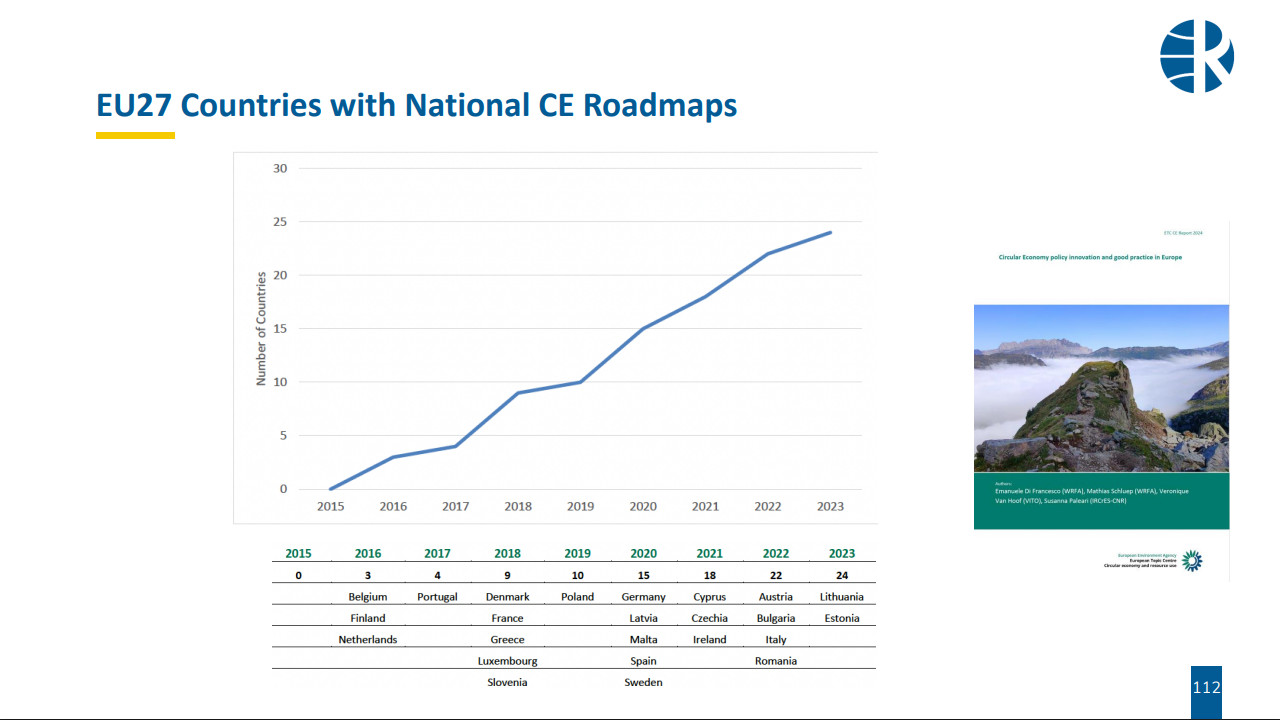
- Analysis of these national roadmaps reveals that the most frequently reported public policy categories are research and innovation, followed by education and awareness-raising, and then financial support for circular economy initiatives. However, these policies are generally broad and systemic and do not focus specifically on minerals and metals. In fact, the topic of minerals and metals remains largely absent from circular economy strategies. While there are specific cases—such as Austria’s investments in metal recycling, Croatia’s efforts to recover mineral waste from earthquake-damaged structures, and France’s reparability and longevity index for electronics—the broader integration of minerals and metals into circular policy remains limited.
- A key issue is the disconnection between discussions on circularity and those on raw materials policies. Conversations around recovering resources, like urban mining, often occur in isolation from those focused on securing resources for emerging clean technologies. This lack of integration significantly hampers efforts to embed circular economy principles into the minerals and metals value chains effectively. A 2022 report highlighted that raw materials policy is the public policy area with the least integration of circular economy considerations, further underscoring this disconnect.
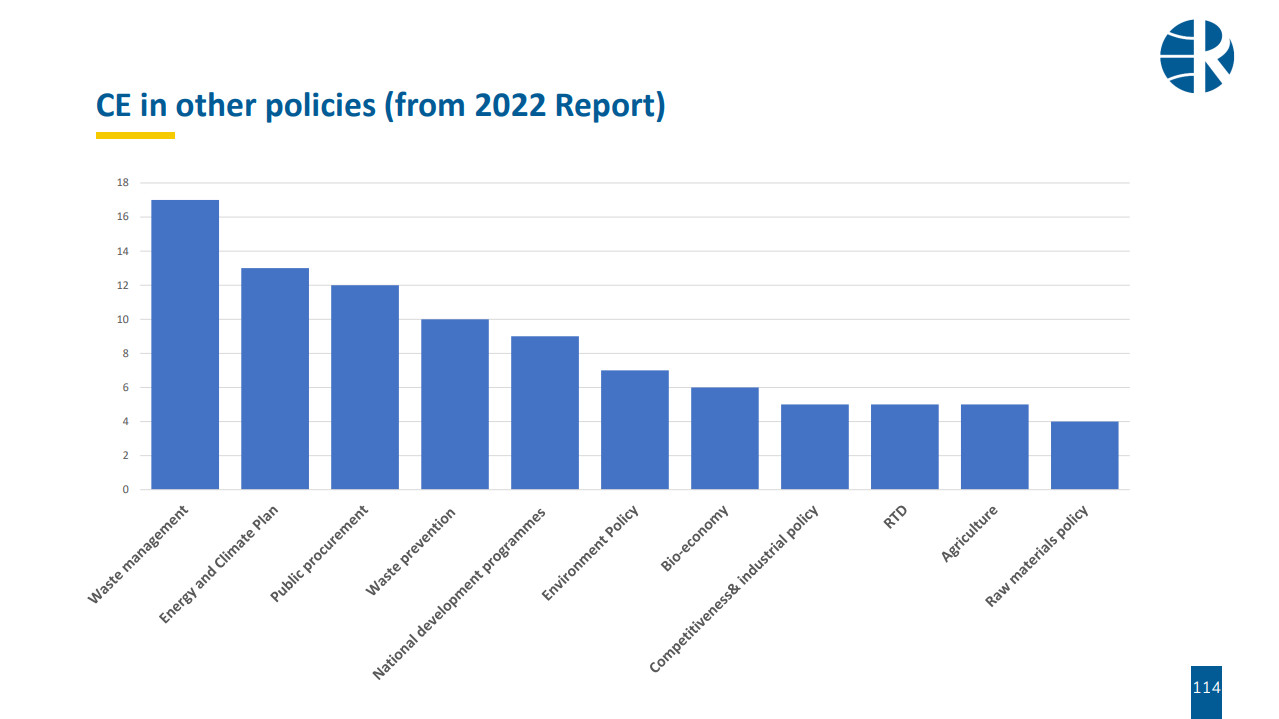
- Although there is some positive movement, such as the recent announcement from the European Commission of 47 strategic projects—10 of which focus on recycling—the gap between raw materials policy and circular economy principles remains substantial. Addressing this divide requires reframing circular strategies through three key lenses: closing the loop, slowing the loop, and narrowing the loop. Closing the loop involves technical innovations and logistical optimization to improve collection, sorting, and recycling processes for mineral- and metal-containing products, though economic viability remains a challenge. Slowing the loop pertains to product-level strategies like reuse and repurposing, which are important yet underutilized. Narrowing the loop involves broader, more conceptual strategies like refusing, rethinking, and reducing, aimed at reshaping provisioning systems to meet human needs with lower demand for new minerals and metals.
- The current challenge lies in designing circular systems that fulfill human needs while operating within planetary boundaries. This entails identifying which provisioning systems—such as mobility, energy, or the built environment—are most resource-intensive and determining how circularity can be implemented within them to reduce or avoid the demand for primary mineral and metal inputs. Circular products and services must be viewed as components of these broader systems rather than standalone end goals. It is also important to develop ways to measure how circularity contributes to reducing resource consumption across different sectors and provisioning systems.
- Three key takeaways are emphasized for advancing circularity in minerals and metals: first, the need to shift from siloed policy approaches to integrated ones that connect raw materials policy with circular economy strategies; second, the importance of moving from isolated product-level circularity toward system-level circularity that considers entire provisioning systems; and third, a call to transition from innovation led by individual actors to innovation through collaboration among multiple stakeholders, including businesses, governments, and civil society. This collaborative approach is essential to embed circularity effectively into complex systems.
- The upcoming World Resources Forum 2025, taking place on 2–3 September in Geneva, will explore these themes in greater depth across three different sectors, fostering dialogue and collaboration around system-wide circular innovation.
Circular Transition | Bringing About a Paradigm Shift in Material Resource Consumption | Colette VAN DER VEN | Director, TULIP Consulting & Senior Researcher, Europe Jacques Delors
- Two main paradigm shifts are needed: in the way the circular economy is looked at and in the shift from a world focusing on decarbonization towards a world that needs to focus more on dematerialization. How to operationalize that and what is the role of governments?
- The speaker focused on a proposal developed by Tulip consulting to create an EU resources law that would focus on reducing consumption instead of focusing on batteries, packaging, waste management or recycling, as a lot of the circular economy initiatives, regulations and directives in the EU are doing. This approach focuses on the very first most effective level of prevention in the waste hierarchy framework.
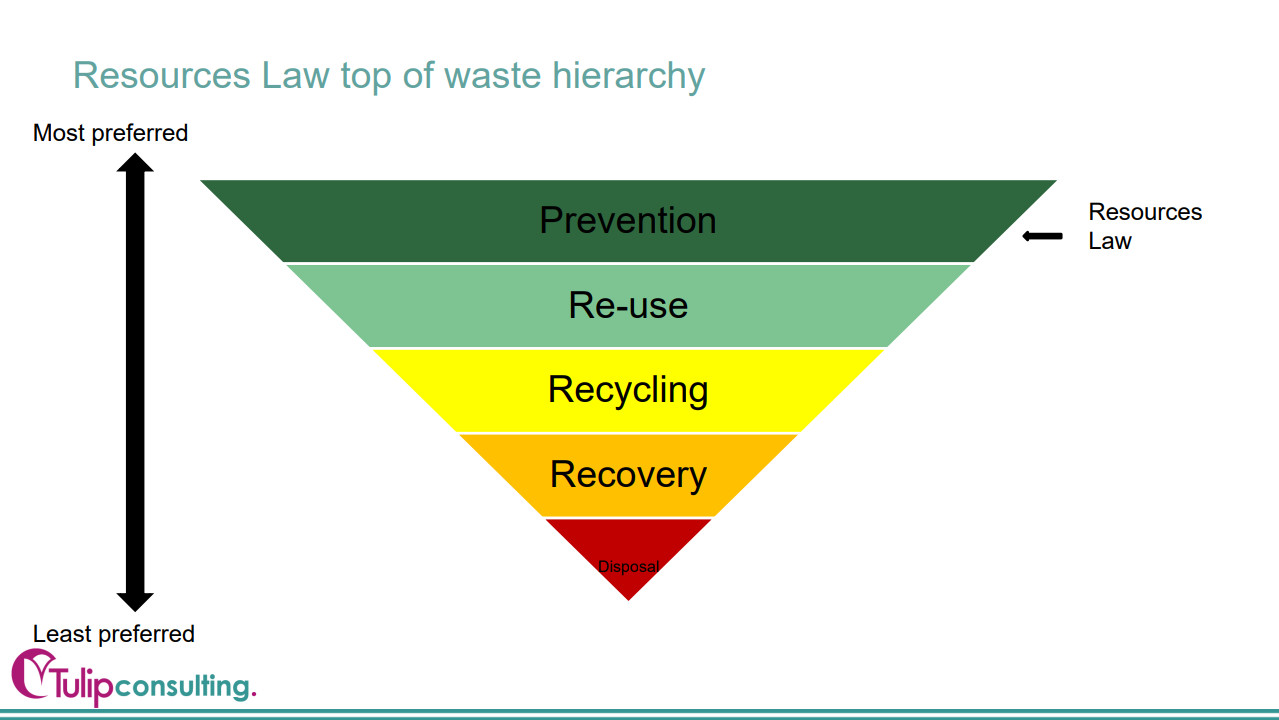
- In the EU, there is a political opportunity to advance the work on reducing consumption, as reducing resource consumption is connected to new EU priorities.
- In the recently adopted Clean Industrial Deal (CID), the circular economy is set as a consistent priority and is presented as key to maximising the EU’s limited resources, reducing dependencies and enhancing resilience.
- The EU has a key interest in reducing reliance on imports of various different materials, as it imports 46% of metals as well as 100% of battery grade lithium and a lot of those are concentrated in key trading partners like China or Chile.
- Other reasons for which the case can be built to push for a resources law are the following:
- Reduce EU overconsumption. In 2021, EU raw material consumption stood 14.1 tonnes per capita – and now probably at 17 tons per capita, which is almost twice the sustainable consumption level
- Necessity to meet climate objectives. Material efficiency can reduce emissions from hard-to-abate industries by over 50% in the EU and can lower overall energy demand.
- Address regulatory shortcomings. Existing circular economy initiatives or laws are ineffective in reducing resource consumption. They predominantly focus on the less efficient prongs of the waste hierarchy such as re-use, recycling, recovery and disposal instead of focusing on prevention.
- Address gaps in EU Member States. Different EU member states such as Belgium, Finland, the Netherlands and Austria have adopted targets to cap or reduce material resource consumption. However, none of these are binding, which creates problems in terms of lack of harmonization and implementation.
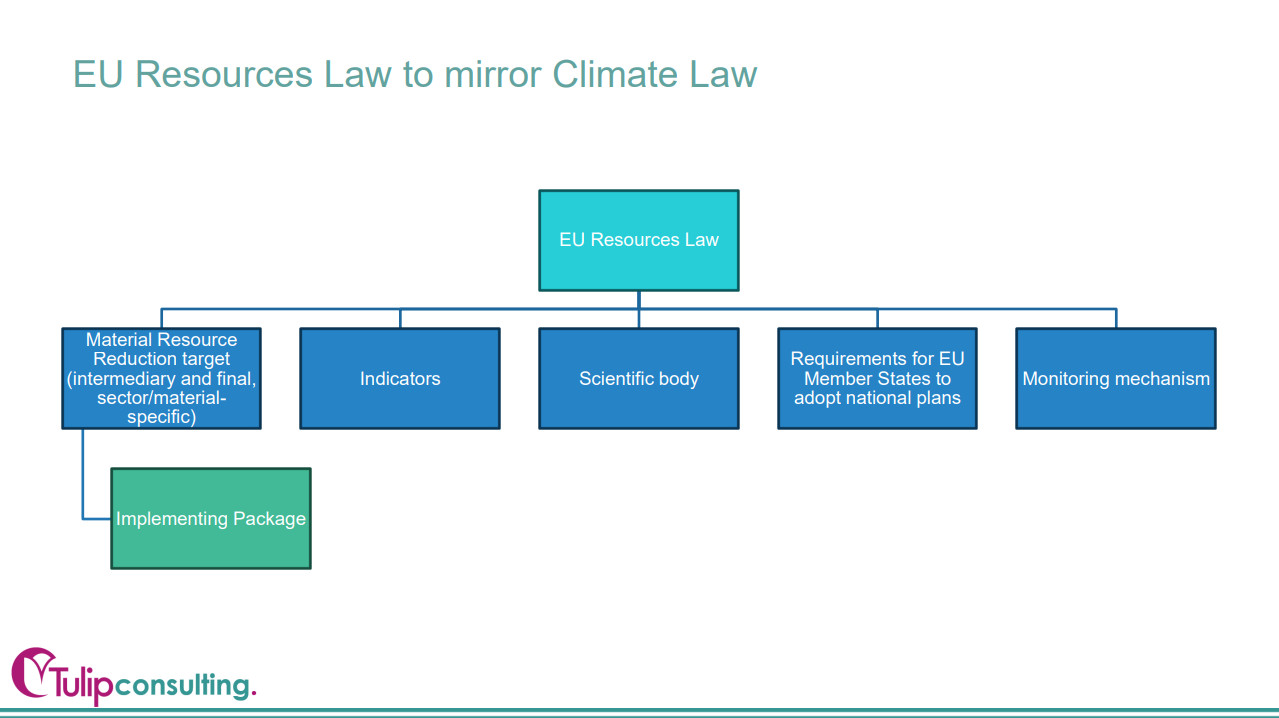
- The proposition is to create an EU Resources Law to mirror the EU Climate Law. The EU Climate Law is legally binding and requires the EU member states to reduce greenhouse gas emissions to a Net Zero by 2050. Because it’s legally binding, it guides a lot of the work done currently by the commission. A similar structure can be used as the basis to start thinking about what a Resources Law would look like.
- One key element is a binding national reduction target, which is connected to the need for high income countries to establish legally binding targets. There can be sector specific targets focused on specific industries or transport or other high material intensive industries but that’s to be worked out.
- Indicators are key to be linked to these targets.
- There needs to be a scientific body at EU level to ensure that evidence is being supplied.
- Monitoring mechanisms by States are also required.
- There must be requirements for EU Member States to adopt national plans as well as implementation plans. Not all EU member states are the same, some are a lot more circular than others and similarly to climate change and the Climate Law, that needs to be reflected in the implementation package.
- Excessive consumption of material resources is really at the heart of the triple planetary crisis. It is time that resources developed by governments and other organizations are going beyond recycling and other lower efficiency elements to tackle the key issue which is the consumption part.
- The Clean Industrial Deal doesn’t specifically highlight resource consumption reduction as a priority but there is scope to link that and it is politically aligned with priorities today.
The narrative is important. It is not about a world that dictates how much to eat or how many flights can be taken at the personal level but rather a narrative that can go hand in hand with individual freedom and economic growth.
Photo Gallery


Documents
Links
- UNECE Resource Management Week 2025
- Geneva Dialogues on Mineral and Metal Resources
- Critical Transitions: Circularity, equity, and responsibility in the quest for energy transition minerals | UNEP | 18 November 2024
- Global Resources Outlook 2024 | International Resources Panel | 1 March 2024
- Circular Economy policy innovation and good practice in Europe | ETC CE Report 2024
- Understanding circularity | UNEP