
Event Conference
Role of Basel, Rotterdam and Stockholm Conventions in Sustainable Circular Models for Minerals and Metals | Geneva Dialogues on Mineral and Metal Resources | 2025 BRS COPs Side Event

05 May 2025
13:15 – 14:45
Venue: CICG | Room B & Online | Webex
Organization: Geneva Environment Network, Basel, Rotterdam and Stockholm Conventions
This side event to the 2025 meetings of the Conference of the Parties to the Basel, Rotterdam and Stockholm Conventions, organized within the framework of the Geneva Dialogues on Mineral and Metal Resources, is co-organized with the Partnership for Action on Challenges relating to E-waste (PACE II) under the Basel Convention and discussed the role of the Conventions in circular models for mineral and metal resources.

About this Event
Sustainable management of minerals has never been so high on the global political agenda. Mineral and metal resources are essential for the future, including for the efforts to reduce emissions and fulfil internationally agreed goals, thus ensuring a just transition and enhancing the protection of everyone’s human rights, including the right to a clean, healthy and sustainable environment.
The Digital Economy Report 2024, released by UN Trade and Development, emphasizes the significant dependence of digital technology and infrastructure on raw materials, as well as the escalating environmental impact caused by the growing production and disposal of devices, coupled with increasing demands for water and energy resources. The report also stresses that developing countries bear the brunt of the environmental costs of digitalization while reaping fewer benefits, as they export low-value-added raw materials and import high-value-added devices, along with increasing digital waste. It calls for bold action from policymakers, industry leaders and consumers, urging a global shift towards a circular digital economy, focusing on circularity by design through durable products, responsible consumption, reuse and recycling, and sustainable business models.
Addressing the surging demand for transition minerals will require rethinking models of consumption and production, looking not only at the supply side of the minerals, including secondary supply from recycling but also at the demand side, in terms of reducing excessive consumption. The circular digital economy approach can contribute to environmental benefits through the sound management of digitalization-related waste, and by reducing the demand for natural resources, as well as through potential economic opportunities, including in developing countries.
Current rates of formal collection of digitalization-related waste remain low, especially in developing countries. Moreover, only one in four developing countries has adopted relevant legislation for managing waste from digitalization. In these countries, e-waste management primarily takes place in the informal economy under poor working conditions. Containing both highly hazardous substances and valuable materials, e-waste has become an increasingly vital resource for informal workers operating along the e-waste value chain.
Leading experts speaking at this event will highlight how policy policymakers, businesses and other stakeholders are working on policy reforms, new guidances and standards to address these issues. For example, the Basel Convention Partnership for Action on Challenges relating to E-waste (PACE II) has been supporting stakeholders in fostering best practices to strengthen the environmentally sound management (ESM) of various e-waste streams, including developing a guidance document on environmentally sound refurbishment and repair of used and ESM of these e-waste streams. The International Telecommunication Union Telecommunication Standardization Sector’s (ITU-T) Study Group 5, “EMF, Environment, Climate Action, Sustainable Digitalization, and Circular Economy” (SG5) has issued recommendations on procedures for recycling and measurement methods to characterize rare metals in information and communication technology goods (ITU-T L.1100).
The event discussed the role of the Basel, Rotterdam and Stockholm Conventions in circular models for mineral and metal resources, including the environmentally sound secondary extraction of minerals and metals from e-waste and waste batteries, their reuse or their life extension.
About the Geneva Dialogues on Minerals and Metals

The topic of sustainable management of minerals has never been so high on the global political environment agenda and the reason is that minerals are essential for the future. The energy transition, infrastructure and digitalization processes, among others, represent greener solutions. However, unsustainable extraction, manufacturing, use and disposal of resources is having important detrimental impacts on people and the planet. With an expected 500 per cent increase in the demand for minerals (from 2018 production levels), environmental challenges are going to be even more acute.
Various actors in Geneva are engaged in ensuring enhanced action to support the environmental sustainability management of minerals and metals along their full lifecycle. As Geneva is at the center of numerous debates and negotiations in the fields of science, health, human rights, development, trade and green finance, employment, peacebuilding and security, disaster risk reduction, humanitarian response, nature conservation, chemicals and pollution, as well as new technologies and innovation, the dialogues can be a conducive platform to explore interlinkages between these topics and mineral and metal resources governance.
The dialogues are organized by the Geneva Environment Network in partnership with Switzerland, Senegal, UNEP/GRID-Geneva, the United Nations Economic Commission for Europe (UNECE), the International Institute for Sustainable Development (IISD), the Intergovernmental Forum on Mining, Minerals, Metals and Sustainable Development (IGF), The Forum on Trade, Environment, & the SDGs (TESS) and the World Resources Forum.
2025 Meetings of the Conference of the Parties to the Basel, Rotterdam and Stockholm Conventions
The seventeenth meeting of the Conference of the Parties to the Basel Convention (BC COP-17), the twelfth meeting of the Conference of the Parties to the Rotterdam Convention (RC COP-12) and the twelfth meeting of the Conference of the Parties to the Stockholm Convention (SC COP-12) will be held back-to-back in Geneva from 28 April to 9 May 2025. Side events to the 2025 meetings of the BRS COPs will serve as a platform for Parties and observers to share knowledge, build capacity, network and exchange on experience in the implementation of the BRS conventions. They also contribute to fostering discussions on specific issues under consideration at the COPs.
Speakers
By order of intervention.

Rolph PAYET
Executive Secretary, Basel, Rotterdam and Stockholm Conventions

Oumar Diaouré CISSE
Ministry of the Environment, Sanitation and Sustainable Development, Mali | National Focal Point for UNEA Resolution 5/12

Pilar FAJARNES
Economic Affairs Officer, Division on Technology and Logistics, UN Trade and Development

Christoph ERNST
Lead, Investments, Sectoral Strategies and Transitions, ILO

Reina KUWASHIMA
Junior Professional Officer, ILO

Leila DEVIA
Co-Chair, PACEII and Senior Advisor, BCRC Argentina

Federico ZANOTTI
Bureau of International Recycling & Co-Chair, PACE II Project Group 2

Paolo GEMMA
WP2/5 Chair, ITU-T Study Group 5 “Environment, EMF, Climate Action and Circular Economy”

Diana RIZZOLIO
Coordinator, Geneva Environment Network | Moderator
Highlights
Video
Live from CICG
Summary
Opening
Oumar Diaouré CISSE | Ministry of the Environment, Sanitation and Sustainable Development, Mali | National Focal Point for UNEA Resolution 5/12
- It is important to highlight the critical connection between UNEA Resolution 5/12, focused on the environmental aspects of metals and minerals, and the Basel, Rotterdam, and Stockholm Conventions, with a specific emphasis on the Basel Convention.
- Resolution 5/12 is relevant particularly for mining countries and developing nations such as Mali. A significant portion of mining waste is categorized as hazardous waste due to the use of cyanide in large-scale gold mining and mercury in small-scale gold mining.
- It is crucial to address the environmental impact of industrial chemicals, including acids and oils used in factory machinery, linking it to the Basel Convention.
- There is a need for coordinated global action to manage the environmental aspects of metals and minerals to ensure sustainability and environmental protection. The scale of resource extraction is also exemplified by sand and gravel, the world’s most exploited resources after water, with 50 billion tons extracted annually, enough to build a wall around the planet.
- The exploitation of precious and strategic metals, such as gold, lithium, and cobalt, has gained attention due to their environmental consequences, particularly in artisanal gold mining. They welcomed the implementation of Article 7 of the Minamata Convention on Mercury, which addresses mercury use in gold mining. While these metals benefit humanity, their mining often leads to environmental disasters. There is a need for global action to harmonize legislation, create digital hubs, and enhance technology transfer, capacity building, and training to address these challenges. The goal is to develop a voluntary or binding legal instrument at the global level, starting with UNEP and UN efforts.
- There is a global importance of ensuring the environmental sustainability of metals and minerals throughout their life cycle, including those essential for the energy transition. Initiatives are underway, such as the appointment of national focal points for Resolution 5/12, the organization of regional workshops, and a global meeting in Geneva in September 2023 under UNEP’s auspices. The sixth session of the UN Environment Assembly has kept the momentum for the resolution, with increased ambition expected in UNEA 7.
Minerals in E-waste | UNCTAD Digital Economy Report 2024
Pilar FAJARNES | Economic Affairs Officer, Division on Technology and Logistics, UN Trade and Development
- The Digital Economy Report is one of UNCTAD’s flagship publications, typically focusing on the socioeconomic benefits of digitalization due to its mandate on trade and development. However, in the 2024 edition, an additional dimension has been introduced: environmental sustainability. As global challenges become increasingly interconnected, it is crucial to better understand the links between digitalization and development, particularly in the context of sustainability.
- There is an unequal ecological exchange, with wealthier countries benefiting more while facing fewer environmental impacts. In contrast, vulnerable populations, particularly marginalized groups in hotter, less affluent regions, bear the brunt of climate change and extreme weather events. These groups experience the greatest losses from environmental challenges.
- Digitalization has negative environmental impacts, particularly from the production of digital devices, which rely on mineral extraction and generate waste. These activities often affect developing countries, where mineral production is concentrated, while wealthier, consuming countries are less impacted. Additionally, digital divides mean that developing countries are less able to leverage digitalization to address environmental issues. Therefore, it is crucial to approach the relationship between development, environmental sustainability, and digitalization in a holistic way.
- The report is structured around the environmental impacts of digitalization throughout its entire lifecycle: production, use, and end of life. Mineral extraction impacts are most prominent during production and end-of-life stages, particularly in terms of waste and circularity. However, the use stage also plays a role, especially with the rise of AI and the expansion of data centers, which increases construction demands and device usage. This growth is expected to contribute to higher levels of e-waste. The direct negative effects of digitalization include resource depletion, energy consumption, water use, greenhouse gas emissions, pollution, and waste, collectively referred to as the environmental footprint of ICTs. Indirect effects, while important, are beyond the scope of the report.
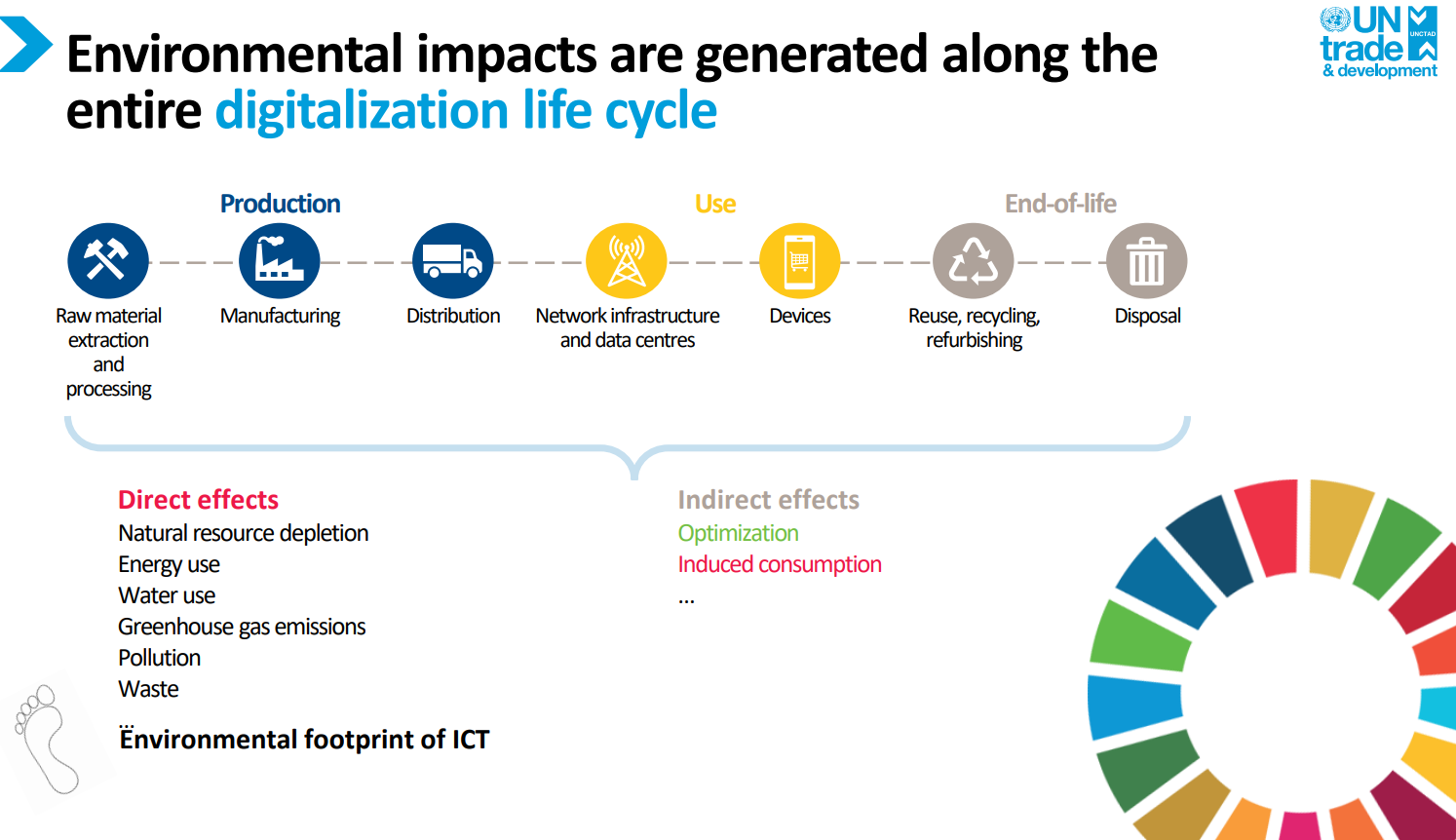
- The report focuses on reducing the environmental impacts of digitalization, starting with the production phase. It challenges the common perception of digital technologies as intangible or “in the cloud”, emphasizing instead their significant material footprint. Digitalization relies heavily on physical resources, and its environmental impact is often underestimated or overlooked.
- Electronic devices contain various materials—plastics, ceramics, and especially minerals, which are the report’s focus due to their development implications. For instance, producing a 2 kg PC can require moving up to 800 kg of material. Devices are also becoming increasingly complex, using more elements over time, rising from 10 in the 1960s to 63 in a modern smartphone. These elements are present in small, blended quantities, making recycling difficult and highlighting the need to consider the entire lifecycle of digital products.
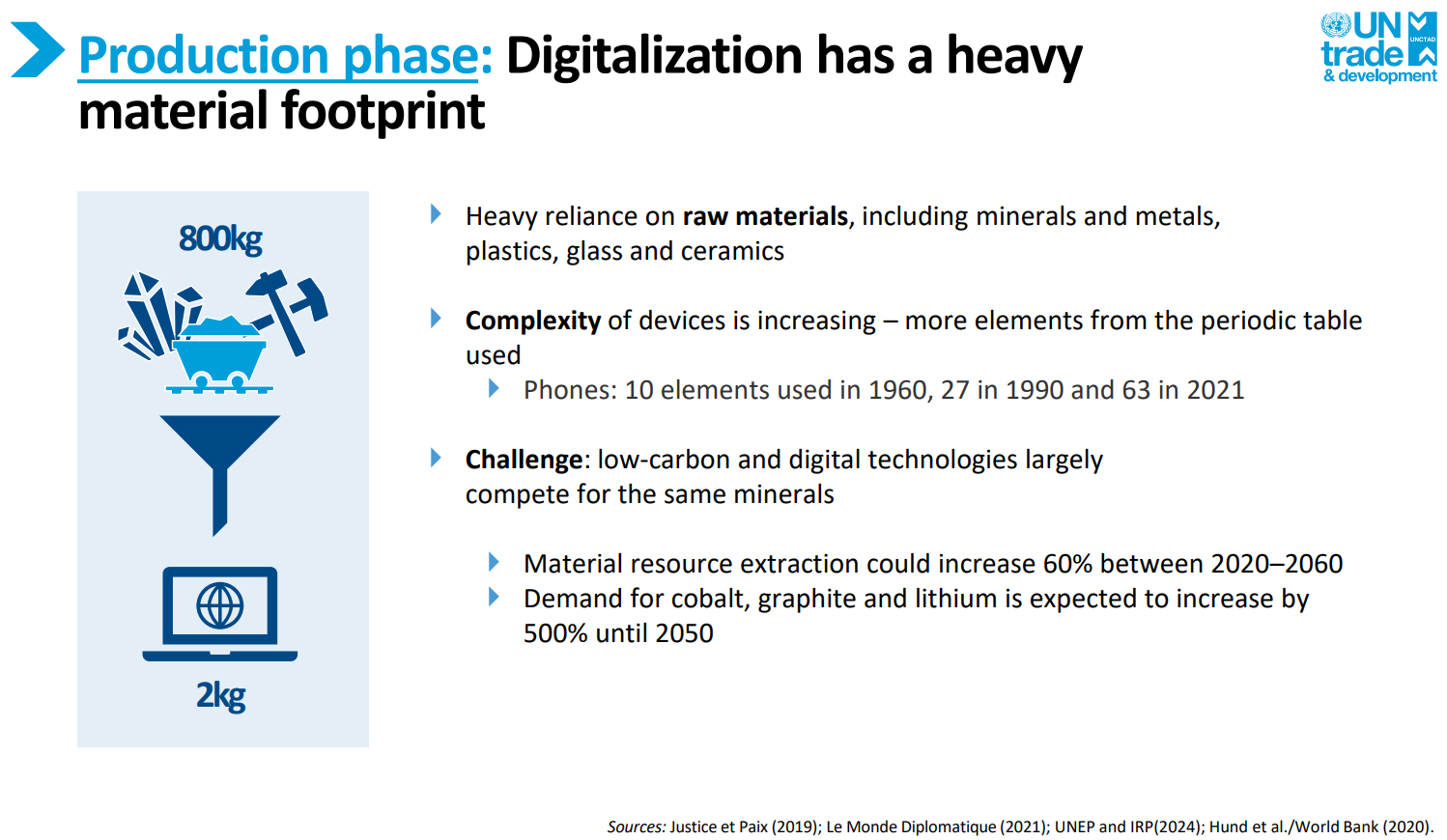
- Another key point is the growing demand for critical minerals, driven not only by the transition to renewable energy and electric vehicles but also significantly by digital technologies. These sectors compete for the same minerals, many of which are identified in national critical mineral lists. The increasing use of ICT and internet services is a major contributor to this demand. Data shows a sharp rise in device usage globally from 2018 to 2023, with stark disparities—North America averaged 13.4 devices per capita in 2023, compared to just 1.5 in regions like Africa. This consumption gap also contributes to a growing divide in e-waste generation and mobile data use.

- The high demand for critical minerals has significant geopolitical implications. Extraction is heavily concentrated in a few developing countries, like cobalt in the Democratic Republic of Congo, lithium in Latin America’s “lithium triangle”, and manganese in Gabon and South Africa, while processing mainly occurs in China and other developed nations. As demand grows, developed countries are implementing industrial policies to secure supply, citing economic and security concerns. However, this scramble risks expanding the environmental footprint through over-extraction, stockpiling, and unsustainable practices.
- Rising demand for critical minerals is driving the expansion of mining into new, often vulnerable areas, especially in developing countries, causing serious environmental and social impacts. This includes illegal mining in places like the Amazon, as well as emerging risks from deep-sea and space mining, both of which lack proper regulation and pose unknown ecological threats.
- To address these issues, the report calls for a shift away from past extractive models. Developing countries should be empowered to add value locally, reduce dependence on raw material exports, and ensure fairer, more sustainable practices. Regional cooperation and balanced policy approaches are key to achieving this.
- Moreover, international cooperation is essential to promote sustainable sourcing practices and balance stakeholder interests. This will help resource-rich countries leverage their mineral wealth for development, enabling value chain diversification and broader structural transformation.
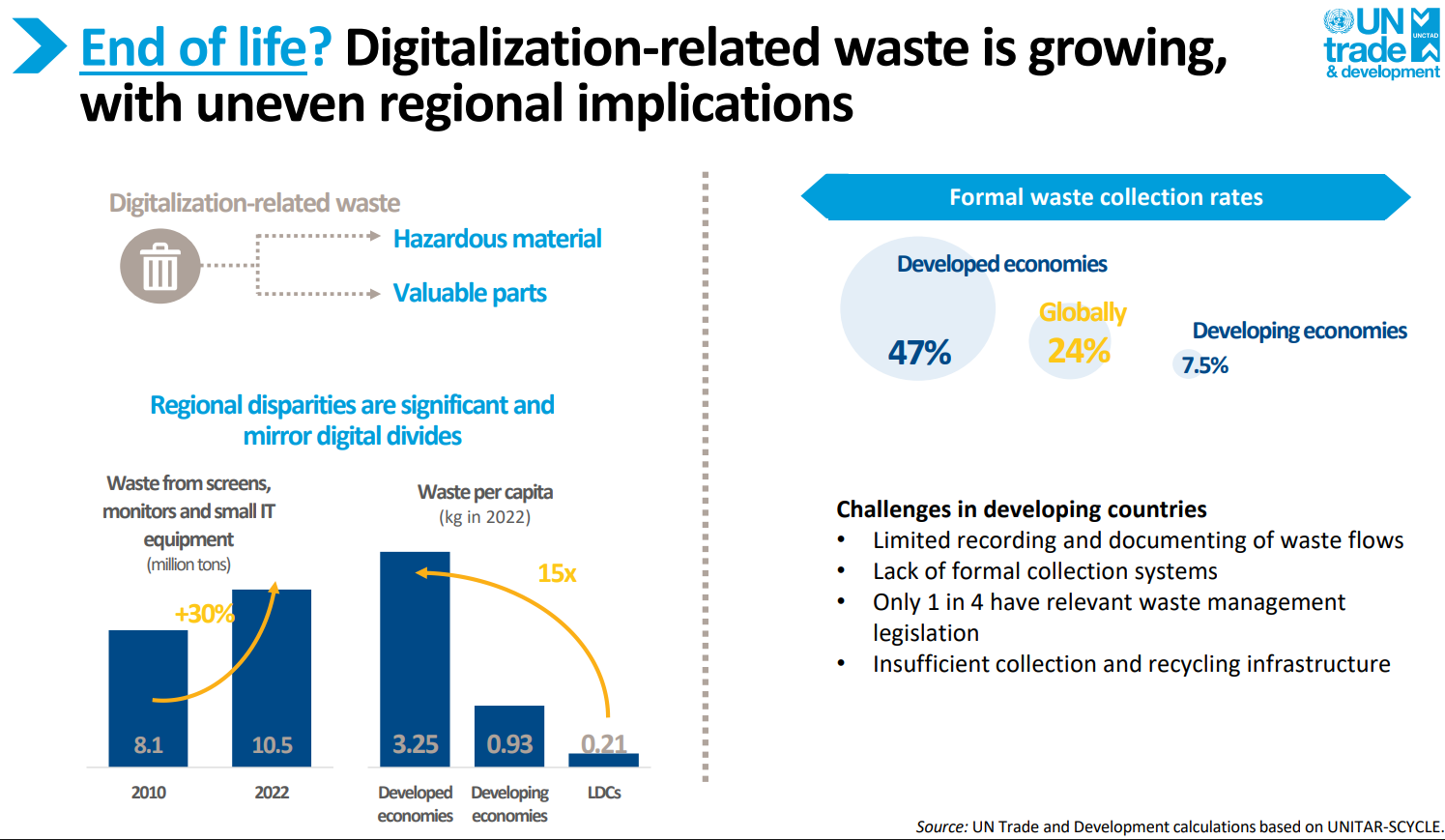
- E-waste from digitalization is rapidly increasing, with significant regional disparities reflecting global digital divides. This waste has a dual nature: it poses environmental risks but also contains valuable materials that could support development. Defining and tracking digital-related waste is complex and evolving. Current classifications, used in collaboration with UNITAR, mainly cover electronics and electrical equipment, but emerging technologies—like IoT devices, EVs, satellites, and solar panels—blur boundaries. As digitalization expands, a more inclusive and adaptive approach to e-waste definitions and management is needed.
- E-waste statistics are helpful but incomplete, as much of the waste, especially from illegal trade, is undocumented. Between 2010 and 2022, waste from screens and small IT devices rose by 30%. Developed countries generate significantly more digital-related waste per capita (3.25 kg) than least developed countries (0.21 kg). Formal collection rates remain low—under 50% in developed countries, 25% globally, and just 7.5% in developing nations. Key challenges include poor documentation, lack of formal collection systems, limited legislation, and insufficient recycling infrastructure. With digitalization accelerating, e-waste is expected to grow even further.
- The main drivers of growing e-waste include increased consumption, short device lifespans, declining prices, low consumer awareness, a linear production model, and limited repair options. Issues like planned obsolescence remain widespread, although some progress is being made, such as bans in France and Quebec. Civil society calls for laws addressing obsolescence, durability, repairs, and consumer education.
- Internationally, e-waste flows often move from high-income to low-income regions, with valuable components like printer circuit boards going from developing to developed countries for recycling. This creates an unequal ecological exchange: developed countries benefit from the valuable parts of e-waste, while developing countries bear the environmental impact, often without the infrastructure to manage it sustainably.
-
The waste hierarchy emphasizes waste reduction as the top priority, followed by reuse, and then recycling. While recycling is important, it should be the last resort. Addressing e-waste requires joint responsibility from all stakeholders, including production, consumption, and policy.
- In the context of the SDGs, particularly SDG12 (responsible production and consumption), sustainability in the digital economy should focus on digital sufficiency—delivering well-being within planetary boundaries. This means promoting sustainable digitalization for developed countries by reducing overconsumption and enabling greater digitalization in developing countries.
- A circular economy model should be adopted, emphasizing the transition from waste to valuable resources, minimizing disposal, increasing recycling (urban mining), and reducing consumption through remanufacturing, refurbishing, redistribution, and repair.
- The transition to a circular digital economy offers significant opportunities for developing countries, including value addition, job creation, and reducing digital divides through repair, refurbishing, and secondhand markets. It also helps lower resource use and waste. Regional cooperation is key to this shift, with a focus on designing circular systems, building resilient infrastructure, and using low-carbon energy. Prioritizing repair, reuse, refurbishing, and recycling can help recover resources while fostering business growth and job creation.

- Addressing the challenges of digitalization requires a new policy mindset, focusing on innovative business models and strategies to maximize positive impacts while minimizing negatives. This includes reducing consumption, cutting carbon emissions, and leveraging digital waste for circular economy activities.
- Developed and developing countries must adopt a common but differentiated responsibilities approach, with developed countries taking the lead in promoting a sustainable digital future and supporting capacity building in developing countries. Key needs include strengthening monitoring and enforcement of international conventions, fostering multilateralism and cross-sector dialogue, and aligning digitalization with environmental policies. A critical aspect is tracking the environmental footprint of the ICT sector comprehensively.
- Action is needed at both the national and international levels to integrate digital, socio-economic, and environmental sustainability strategies. The focus should be on reducing emissions, water use, and waste while using digital solutions to support environmental sustainability. Internationally, it’s important to consider the diverse needs of countries and the opportunities digitalization can offer, with support from development partners. Ongoing policy dialogues, such as the Global Digital Compact and the World Summit on the Information Society, emphasize the interface between digitalization and sustainability. Upcoming discussions, like the UNCTAD intergovernmental group of experts on e-commerce and digital economy, will further explore these issues. As our Secretary-General said, “Together we can harness the benefits of digitalization while closing the digital divide and protecting our planet.”
Extraction of Minerals from E-Waste | Sector Constraints
Reina KUWASHIMA Junior Professional Officer, ILO
- E-waste is the fastest-growing waste stream worldwide, containing valuable materials like critical minerals, making it both an environmental issue and an economic opportunity. However, up to 80% of e-waste is illegally exported to developing countries, where inadequate legislation and enforcement make safe management difficult. As a result, e-waste is often mixed with general waste, causing significant environmental and health problems.
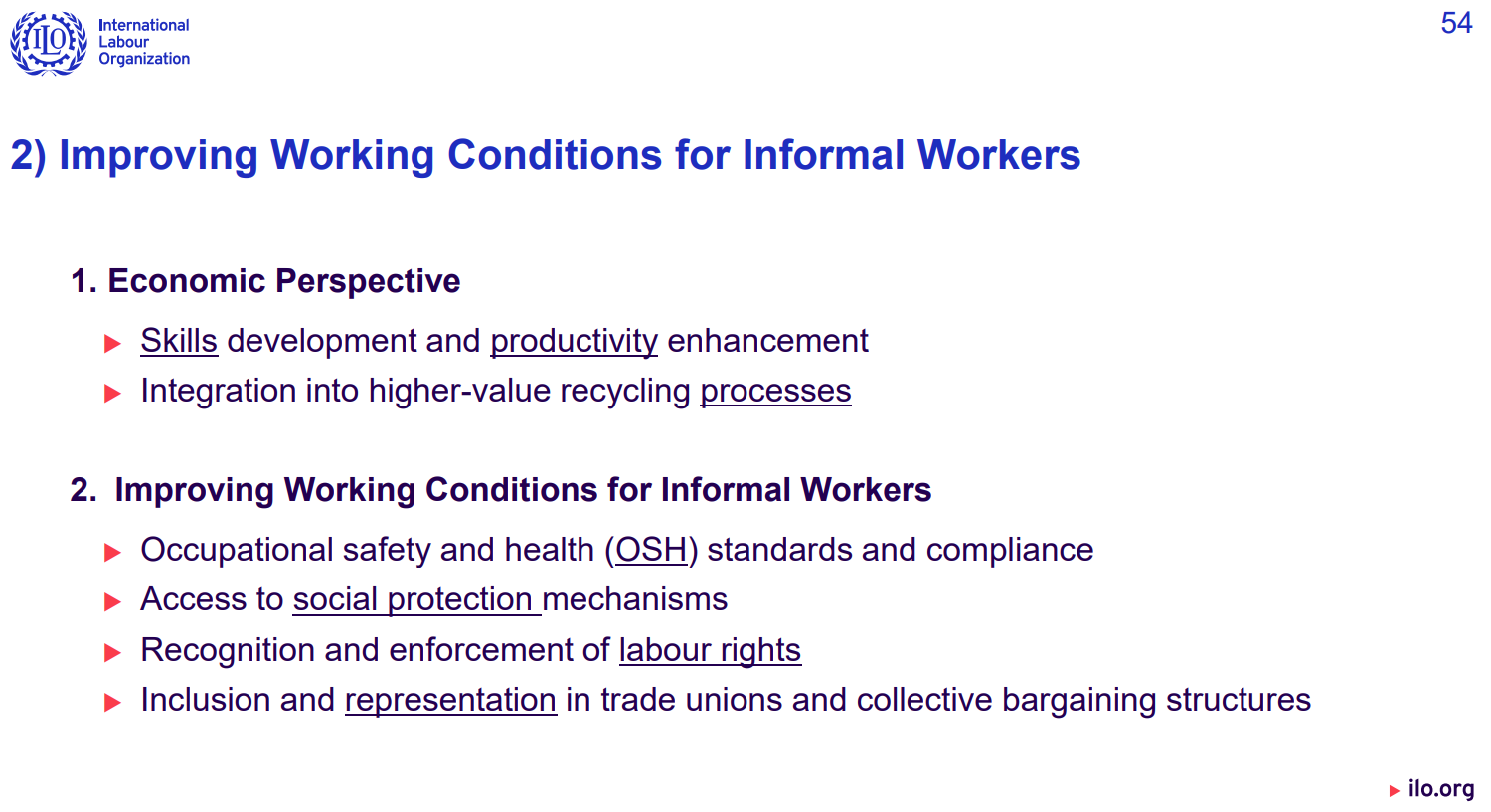
- E-waste is hazardous, costly, and difficult to treat due to toxic substances. Most e-waste is recycled informally by workers in unsafe conditions without proper protection. In 2022, 62 billion kilograms of e-waste were generated, but only 22% was formally recycled, with the remaining 78% being handled informally or disposed of improperly, causing environmental damage and health risks. To address this, two solutions are proposed: creating more formal employment opportunities for safer, regulated jobs and improving working conditions for informal workers through better regulations, skills training, and social protection.
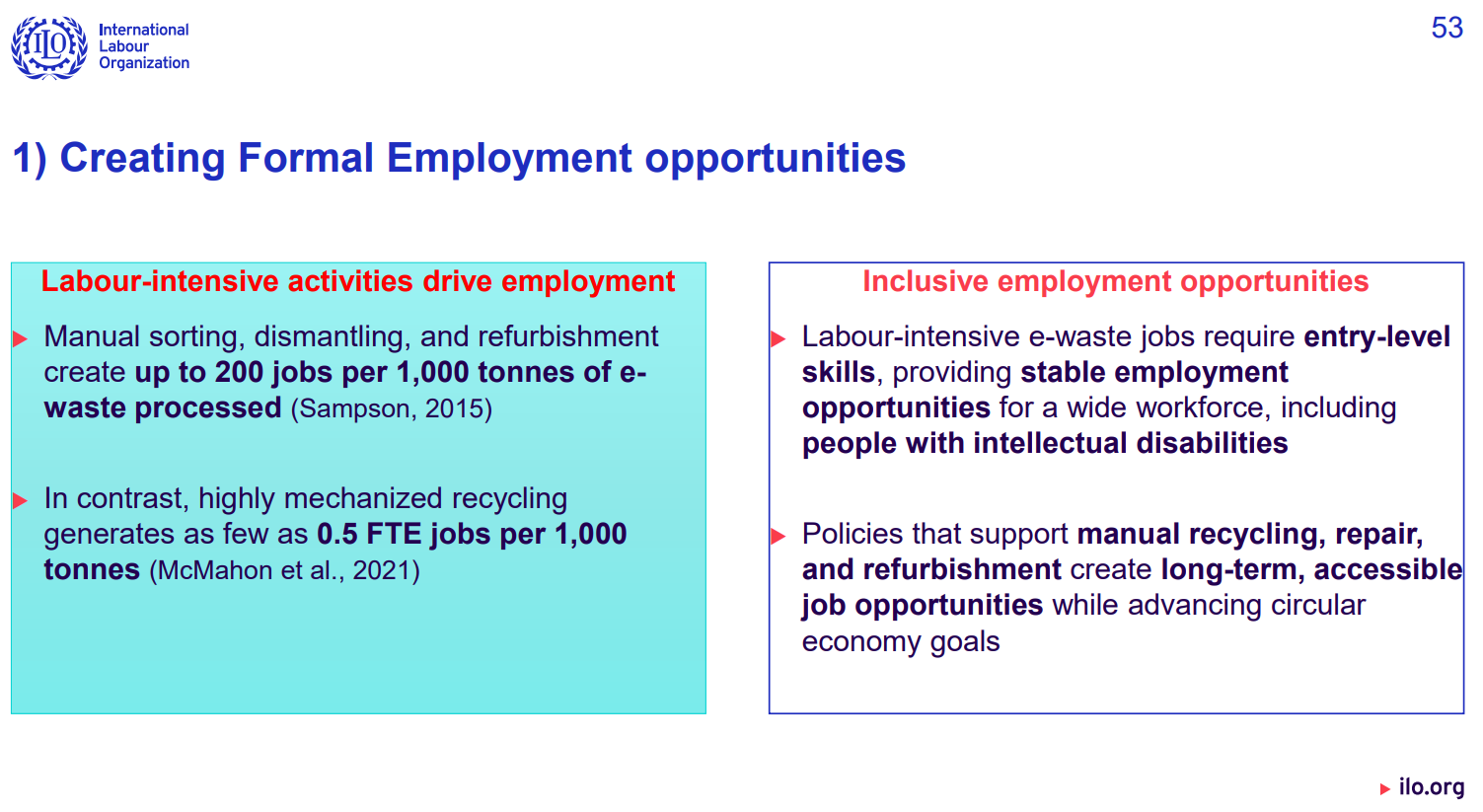
- One of the biggest opportunities in e-waste management is job creation. Manual processes like sorting, dismantling, and refurbishment are labor-intensive and can generate more jobs than mechanized systems. For example, manual recycling creates up to 200 jobs per 10,000 tons of e-waste, while mechanized recycling only creates 0.5 jobs per 1,000 tons. Prioritizing labor-intensive methods can significantly boost employment, particularly in inclusive roles accessible to many people, including those with intellectual disabilities.
- Investing in formal e-waste systems supports both the environment and decent, inclusive work. While long-term efforts aim to formalize the sector, improving conditions for informal workers is an urgent priority. This includes helping workers develop skills to transition into higher-value roles, improving working conditions to ensure safety, and providing access to social protection and labor rights. These steps support secure, decent work and contribute to a circular economy.
Christoph ERNST | Lead, Investments, Sectoral Strategies and Transitions, ILO
- E-waste workers face significant occupational safety and health challenges, including the handling of heavy materials, exposure to heat, dust, hazardous chemicals, and unsafe use of electricity and machinery. The transport of toxic materials also creates risks and logistical issues. Workers often engage in strenuous postures, long hours, and irregular working schedules, leading to health problems. Additionally, those working from home expose their families, including children, to these hazards.
- To address these issues, the Chintan NGO in India has taken steps to improve the situation by building partnerships with key stakeholders such as the Silicon Valley Toxic Coalition, Nokia, and development partners. They focus on mapping the workforce to understand workers’ skills and conditions, and they analyze the dynamics of the e-waste value chain to gather data on informal workers. This information is crucial for improving working conditions and implementing targeted interventions.
- To better organize the informal e-waste sector, it is crucial to register workers in associations like the Safi Center, which can provide support, social protection, training, and help with business planning and collection centers. Advocacy for policy changes is also key, including participation in discussions on India’s e-waste legislation, promoting the formalization of informal workers, and raising awareness about the value of e-waste. This includes rethinking extended producer responsibility (EPR) to ensure informal workers are treated equally to formal workers. The goal is to unlock job opportunities and improve working conditions through these efforts.
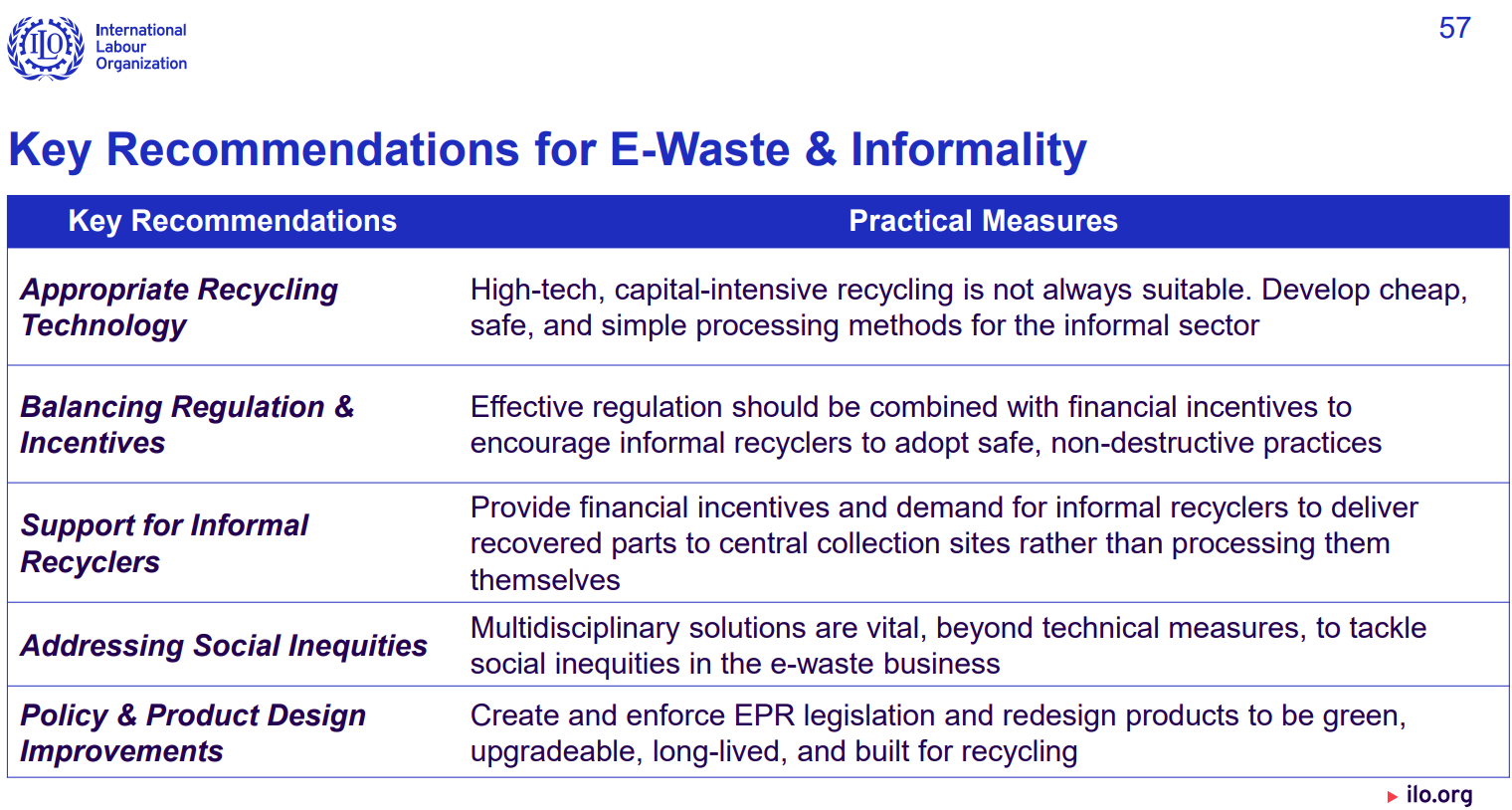
- Another recommendation for improving employment in e-waste recycling considers the technology used in recycling. The key question is what technology is appropriate for the situation. For instance, in a project in Argentina, there were opportunities for informal workers, especially young ones, to engage with e-waste recycling. The challenge is determining whether to use high-tech, capital-intensive methods or safer, cheaper methods suitable for the informal sector. The question is also about what informal workers can handle—tasks like extraction and repair work are feasible, but redesign work is not. The focus is on finding the right technology for the right people.
- Additionally, balanced regulations and incentives are important to encourage informal recyclers to adopt safe, non-destructive practices. This includes providing financial incentives and creating demand for informal recyclers to deliver recovered parts to central collection sites, either by the government or large companies.
- Addressing social inequities is crucial, and solutions should be multidisciplinary, not just technical. The circular economy offers opportunities, such as including young people in the labor market and improving policy and product design. This involves EPR, designing and enforcing legislation, and creating recyclable, upgradable products.
Extraction of Minerals from E-Waste | Guidance Documents on Material Recovery and Recycling
Leila DEVIA | Co-Chair, PACE II and Senior Advisor, BCRC Argentina
- Phase two of the Basel Convention Follow-up Partnership to PACE revised its terms of reference to include new waste types and adopted a new name for the partnership into “Partnership for Action on Challenges relating to E-waste”. The decisions of phase two (1522 and 1620) established a new membership structure, with two components: one vessel and stock regional centers. Unlike phase one, which was governed by parties, phase two is led by regional centers, with representation from 23 countries, the private sector (including Federico), 10 international organizations, 3 NGOs, 2 development agencies, and 9 observers.
- Phase two of PACE II has an expanded scope, moving beyond mobile phones and computers to focus on waste TV screens, CRTs, audio equipment, and refrigerators for cooling and heating. A parallel initiative aligns the Montreal Protocol with PACE II’s work on cooling and heating. Seven pilot projects and developed guidance on environmental management of new e-waste types, repair, and refurbishment have been finalised.
- The most important points to remember are that there are two partnerships: Partnership I and Partnership II. Partnership Two is significant due to its expanded scope. Two key guidelines are crucial for the parties: one focuses on the management of used and waste TV screens, audio, and video equipment, and the other provides general guidance for refrigerators.

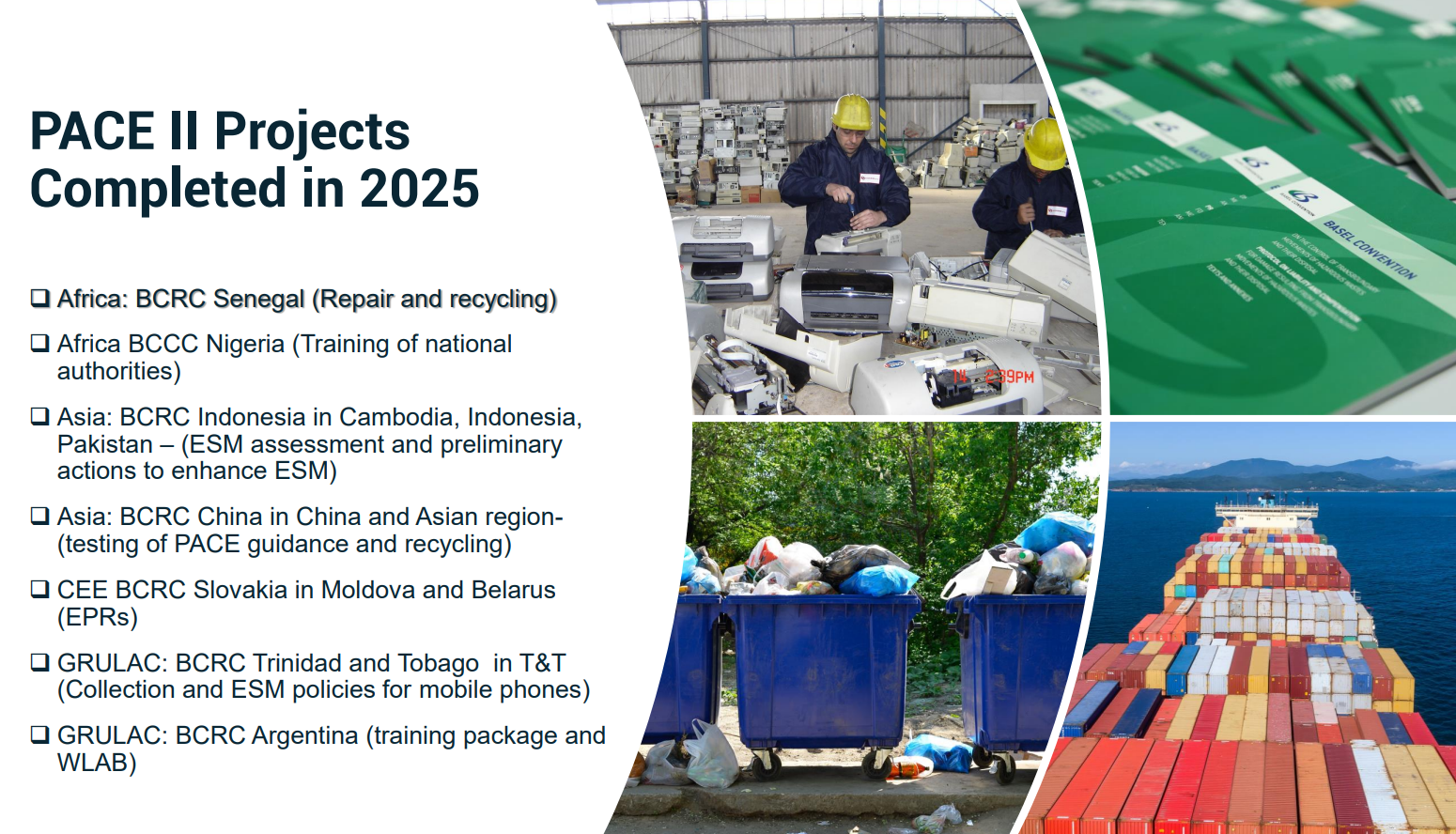
- The key highlight of PACE II’s progress is that it goes beyond just providing guidance; it includes tangible, completed projects. In 2000, we completed seven projects, including one in Africa focused on repair and recycling, training national authorities, and enhancing environmental sound management (ESM). We also worked on recycling guidance, mobile phone collection policies in Trinidad and Tobago, and a training package on ULAB in the Latin American region. It’s crucial to highlight that these seven projects were developed in developing countries, not just the guidance.
Federico ZANOTTI | Bureau of International Recycling & Co-Chair, PACE II Project Group 2
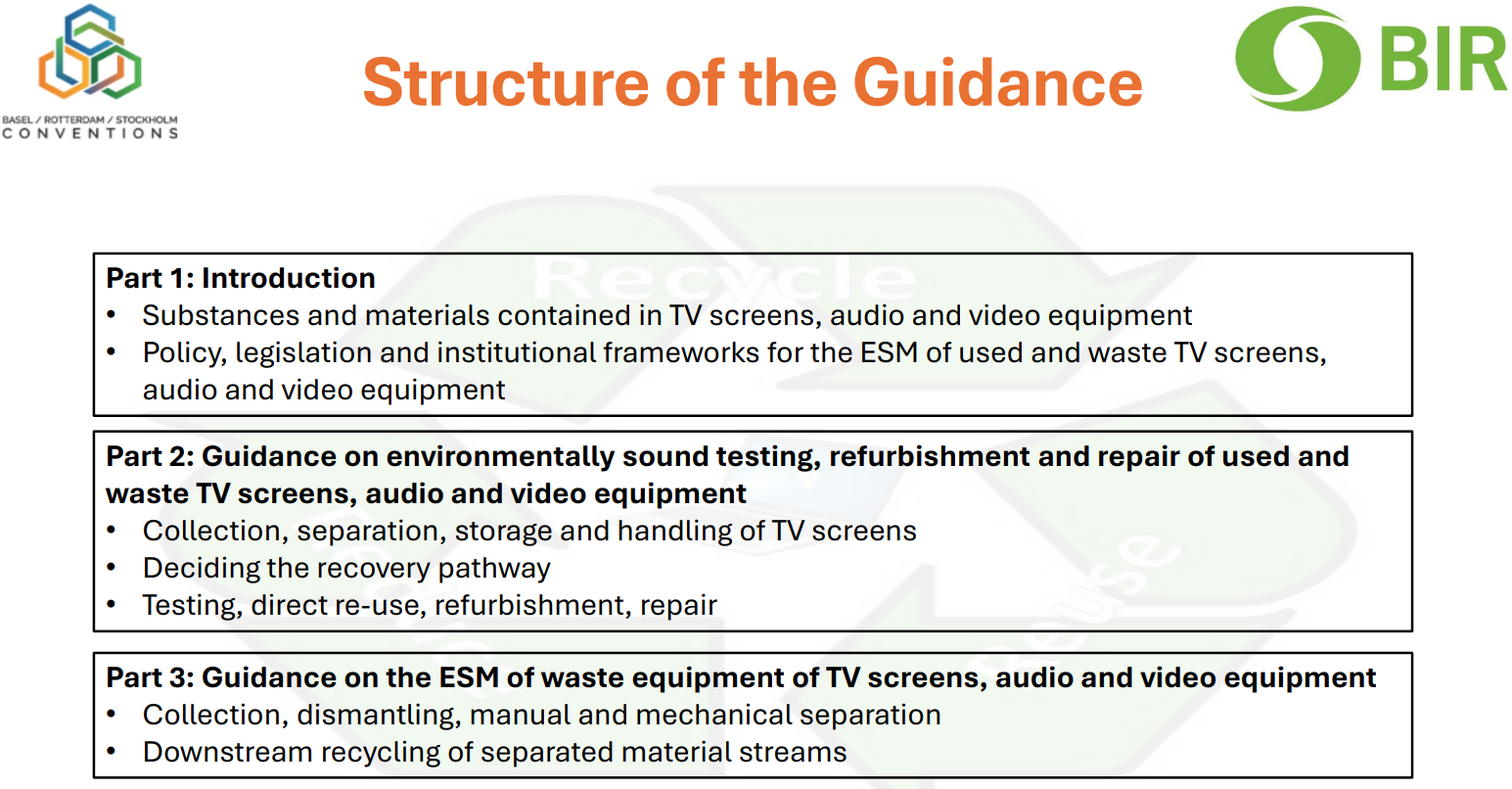
- As part of the Bureau of International Recycling (BIR) and co-chair of the Basel Convention PACE II Project Group 2, I am responsible for developing a guidance document on the repair, refurbishment, and environmental sound management of TV screens, audio, and video equipment. The role is to bring industry expertise into this process.
- The first challenge the industry faces in recovering metals from electronics is the E-waste volume. It is already massive and is expected to double in the next 25 years. In 2022, e-waste contained over 31 billion kilograms of metals, which, if properly recovered, could meet much of the current demand for clean technologies. This emphasizes the strategic importance of improving electronics recycling.
- Currently, metal recycling from electronics is relatively good for metals like copper, aluminum, nickel, and even precious metals like gold. However, recovery rates are significantly lower for cobalt, zinc, and other rare elements, with recovery for some falling below 1%. This is alarming, especially since rare metals are crucial for the energy transition. To improve these rates, technological progress is important, but policy frameworks and regulatory support are also needed.
- The PACE II guidance document aims to help countries build technical capacity for recycling complex electronics in an environmentally sound way. It gathers best practices from around the world, covering the entire ESM value chain, from collection and transport to dismantling, separation, and recycling of components. The guidance follows the Basel Convention’s waste hierarchy, prioritizing repair and refurbishment first, then recycling. The document’s development will continue after the COP, with ongoing input from governments and industry, and invites active engagement in the process.
- Two case studies illustrating the technical and policy challenges in recovering critical metals from electronics, particularly TV screens, are :
- LCD screens contain indium, a rare and essential metal for clean technologies. The challenges include low concentration, complex design, and the presence of hazardous substances like mercury in older models, making recovery costly and non-viable without financial incentives for recyclers.

-
- Printed circuit boards (PCBs), which are valuable due to containing over 40 metals, but are complicated to recycle due to hazardous substances and complex composition. Recovery requires advanced mechanical and chemical processes, which are only available at a few integrated metal facilities.

- There is an important need for eco-design and safe mobility of resources, ensuring that PCBs reach the facilities capable of recycling them in an environmentally sound manner. The Basel Convention plays a crucial role by improving and digitizing the trade control mechanism to make legal shipments for recycling faster, safer, and more efficient. Despite these challenges, through cooperation within the Basel framework, these challenges can be transformed into practical opportunities for enhancing circularity in critical metals recycling.
ITU Standards as a Policy Tool
Paolo GEMMA | WP2/5 Chair, ITU-T Study Group 5 “Environment, EMF, Climate Action and Circular Economy”
- ITU (International Telecommunication Union), alongside ISO and IC, defines a standard as a way to define objectives, prioritize, share best practices, and provide specifications for recovered materials, particularly in waste management. Standards help inform policies and design for circular economy practices, especially regarding the qualification of recycled materials.
- The development of standards is a consensus-based process, involving stakeholders from telecommunications, industry, regulators, academia, and research. These standards are open and available for free to the public. The purpose of the standards is not to create laws but to provide tools that governments and agencies can reference when implementing policies. For example, standards can specify the percentage of recycling materials or provide technical guidelines for e-waste management.
- ITU is a global organization with over 194 member states, 700 private sector organizations, and around 150 academic institutions. They have numerous partnerships, including with organizations like the Basel Convention, where they collaborate extensively, particularly on e-waste management.
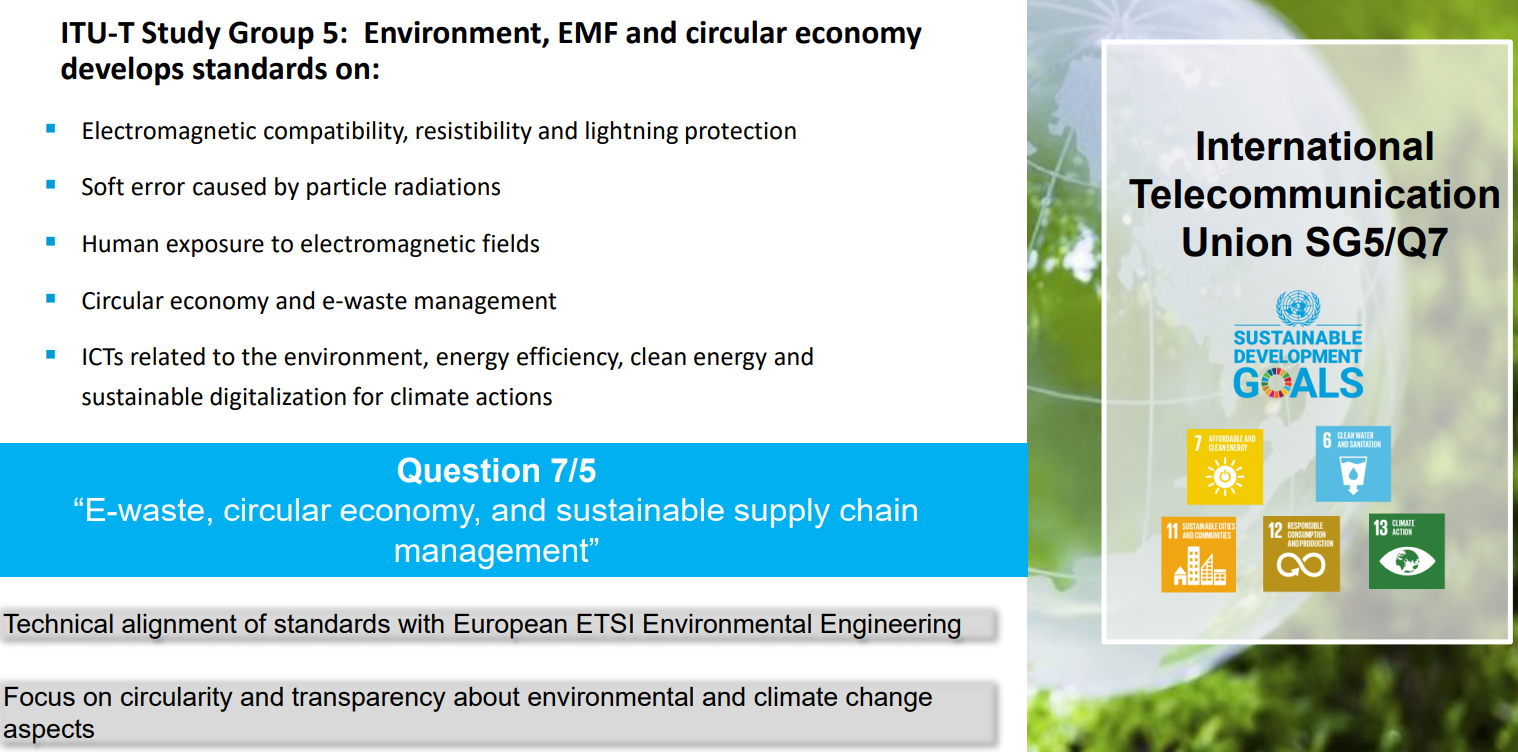
- ITU works across various themes, such as compatibility, human exposure to fields, and crucially, circular economy and waste management. Their focus is on ICT-related environmental issues, energy efficiency, green energy, and sustainable solutions for climate action. A key group within ITU, known as Question 7/5, focuses directly on e-waste, circular economy, and sustainable supply chain management, aiming to advance efforts on climate change and improve the management of e-waste.
- ITU defines the concept of the “urban mine” as the potential for recovering valuable materials from e-waste. For example, one million cell phones can yield about 20 kilograms of gold. However, not all e-waste is properly recycled due to technological limitations or access to the right technologies.
- In the past, ITU developed standards like L1100: Procedure for recycling rare metals in information and communication technology goods, which outlined procedures for recycling rare materials in ICT products. This standard focused on providing essential information to recyclers, such as the types and quantities of materials in products, but it was based on older technologies.
- Nowadays, the idea of a “digital product passport” has emerged, which could provide crucial information about materials in products, helping recyclers recover valuable materials more effectively. This is a step towards more efficient and transparent recycling processes.
- ITU’s standard L1101: Measurement methods to characterize rare metals in information and communication technology goods focuses on identifying materials within e-waste and determining their quantities. The standard recommends two methodologies for this process: XRF (X-ray fluorescence) for homogeneous materials and ICP-MS (Inductively Coupled Plasma Mass Spectrometry) for heterogeneous materials. These technologies help recyclers identify the type and amount of materials in e-waste products like smartphones and LCD screens. The standard emphasizes the importance of providing this material information throughout the product’s lifecycle, from raw material extraction to production, ensuring that end-of-life recyclers have the necessary data to efficiently recover valuable materials. This approach promotes transparency and responsibility across the entire supply chain.
Photo Gallery
More photos can be found on the BRS dedicated album.


Documents
Links
- Towards the 2025 Meetings of the Conference of the Parties to the Basel, Rotterdam and Stockholm Conventions
- Road to 2025 BRS COPs
- Digital Economy Report 2024 | UNCTAD | 10 July 2024
GEN @ 2025 BRS COPs


Gender, Toxics Exposures and the Right to a Clean, Safe, Healthy, and Sustainable Environment | 2025 BRS COPs Side Event
29 April 2025 | 18:15 – 19:45 CEST


Preventing Plastic and E-Waste Trafficking: Lessons from the Frontlines | 2025 BRS COPs Side Event
4 May 2025 | 18:15 – 19:15 CEST

The Potential of the Bamako Convention in Furthering Implementation of the Basel Convention in Africa | 2025 BRS COPs Side Event
6 May 2025 | 18:15 – 19:45 CEST


One Health Approach to Addressing Pharmaceuticals in the Environment Across Key Sectors | 2025 BRS COPs Side Event
9 May 2025 | 13:15 – 14:45 CEST